Department of Biochemistry and Molecular Biology, Yamaguchi University School of Medicine, Minami-Kogushi 1-1-1, Ube 755-8505, Japan.
Nat Commun. 2015 Mar 12;6:6580. doi: 10.1038/ncomms7580.
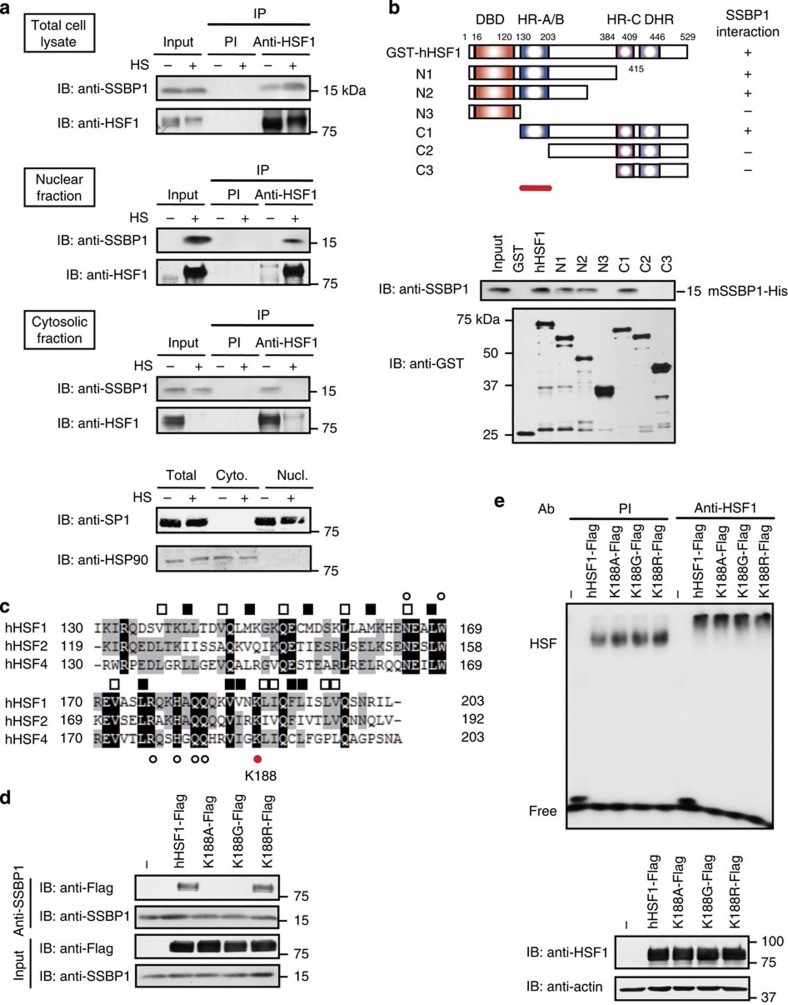
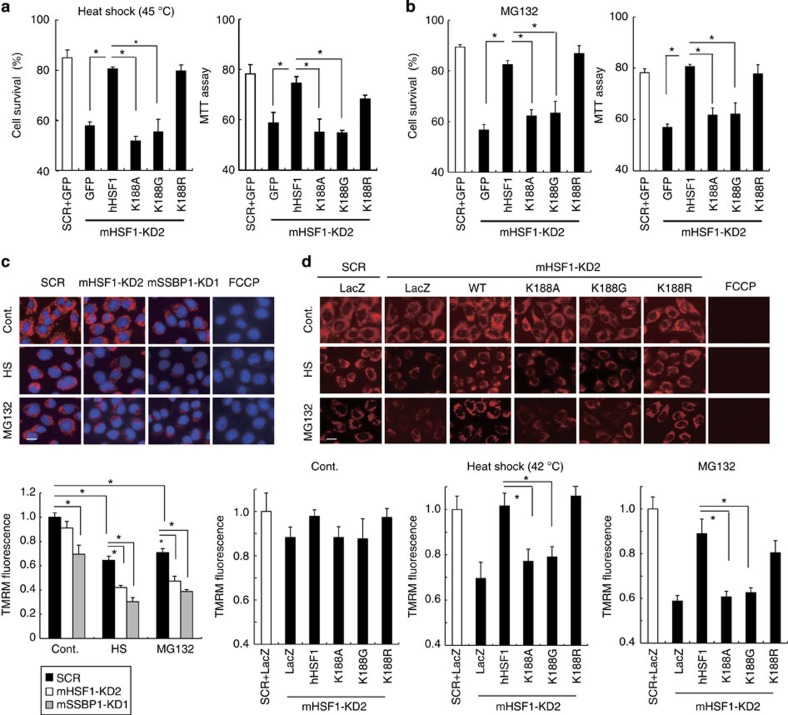
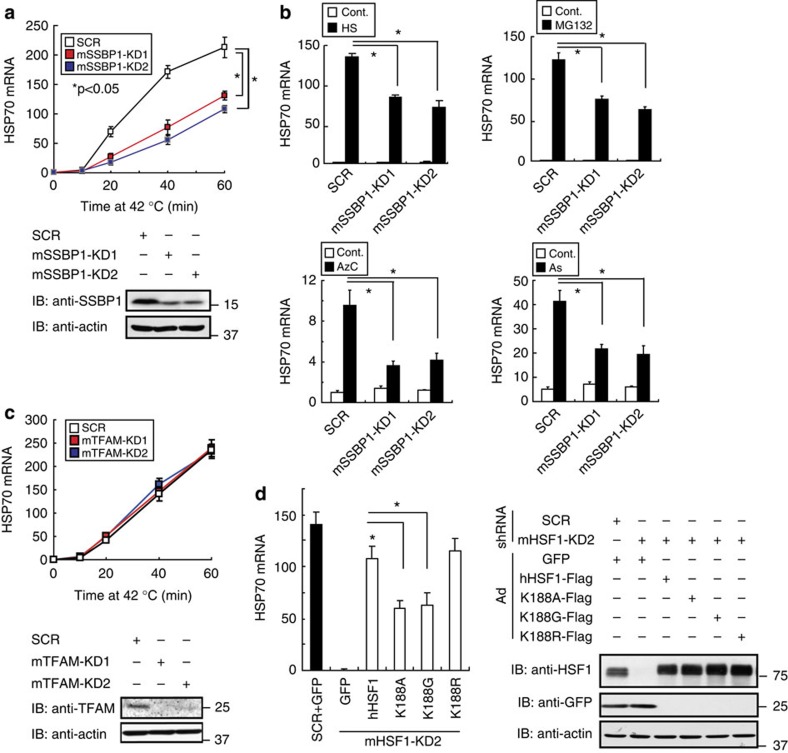
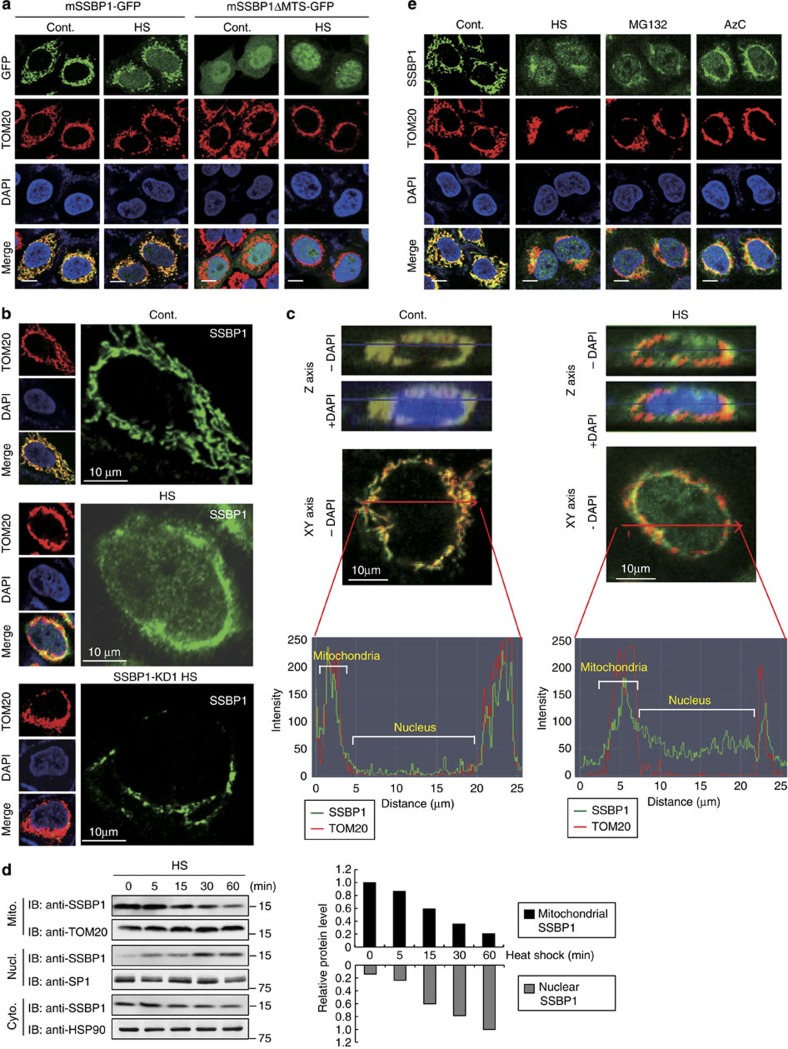
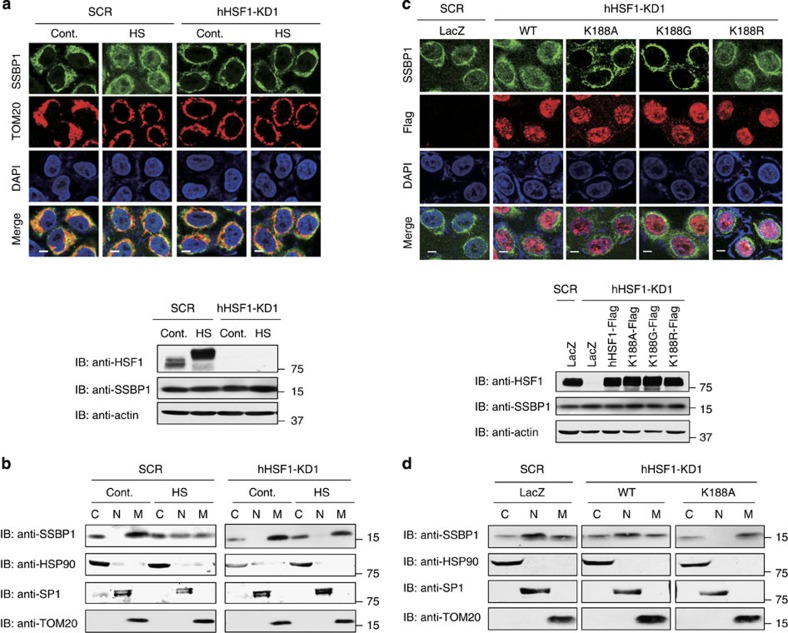
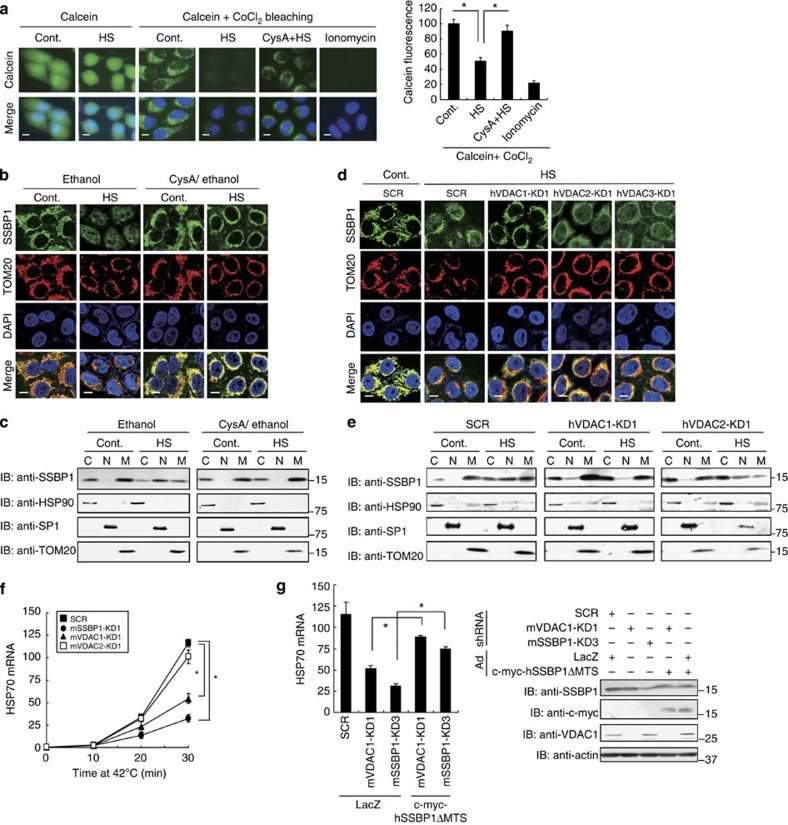
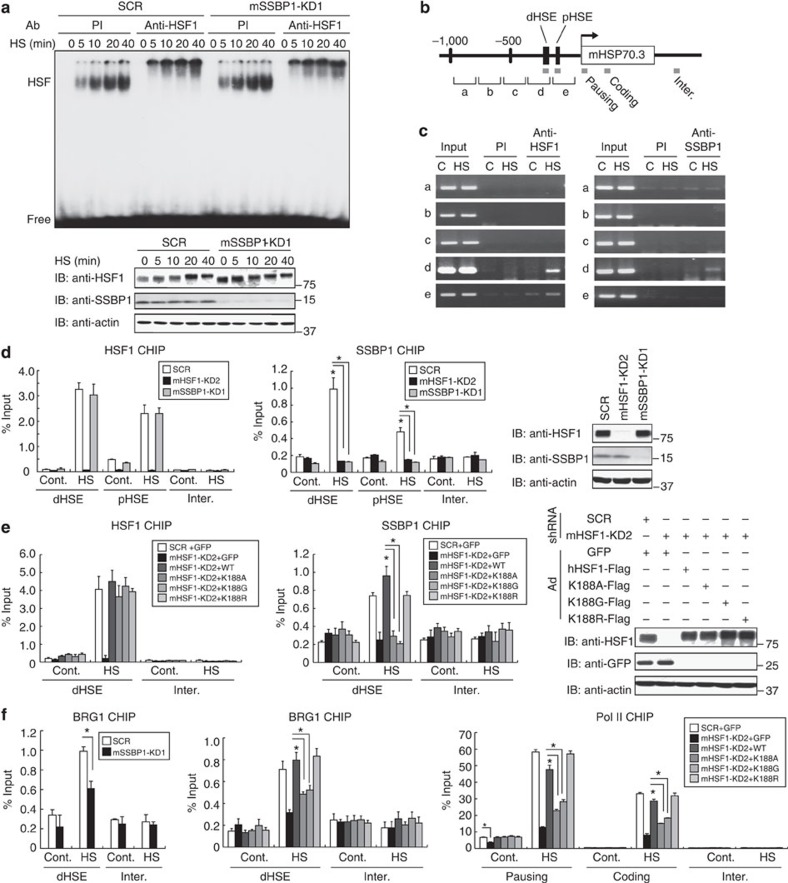
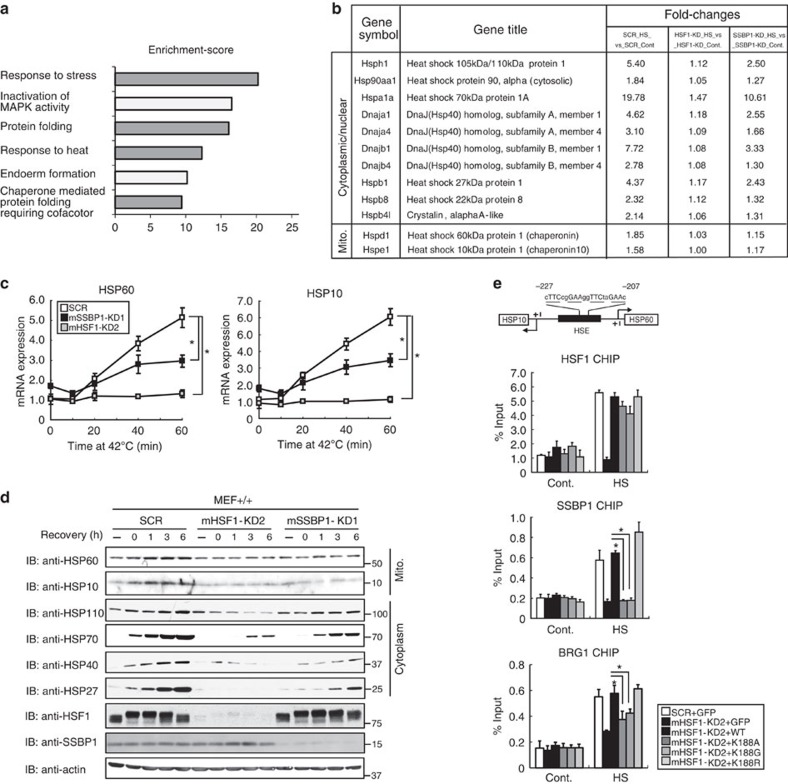
Heat-shock response is an adaptive response to proteotoxic stresses including heat shock, and is regulated by heat-shock factor 1 (HSF1) in mammals. Proteotoxic stresses challenge all subcellular compartments including the mitochondria. Therefore, there must be close connections between mitochondrial signals and the activity of HSF1. Here, we show that heat shock triggers nuclear translocation of mitochondrial SSBP1, which is involved in replication of mitochondrial DNA, in a manner dependent on the mitochondrial permeability transition pore ANT-VDAC1 complex and direct interaction with HSF1. HSF1 recruits SSBP1 to the promoters of genes encoding cytoplasmic/nuclear and mitochondrial chaperones. HSF1-SSBP1 complex then enhances their induction by facilitating the recruitment of a chromatin-remodelling factor BRG1, and supports cell survival and the maintenance of mitochondrial membrane potential against proteotoxic stresses. These results suggest that the nuclear translocation of mitochondrial SSBP1 is required for the regulation of cytoplasmic/nuclear and mitochondrial proteostasis against proteotoxic stresses.
热休克反应是一种对包括热休克在内的蛋白毒性应激的适应性反应,在哺乳动物中由热休克因子 1(HSF1)调节。蛋白毒性应激挑战包括线粒体在内的所有亚细胞区室。因此,线粒体信号与 HSF1 的活性之间必须存在紧密的联系。在这里,我们表明热休克以一种依赖于线粒体通透性转换孔 ANT-VDAC1 复合物和与 HSF1 的直接相互作用的方式触发线粒体 SSBP1 的核易位,线粒体 SSBP1 参与线粒体 DNA 的复制。HSF1 将 SSBP1 募集到编码细胞质/核和线粒体伴侣的基因的启动子上。HSF1-SSBP1 复合物通过促进染色质重塑因子 BRG1 的募集来增强它们的诱导,并且支持细胞存活和维持线粒体膜电位对抗蛋白毒性应激。这些结果表明,线粒体 SSBP1 的核易位是调节细胞质/核和线粒体蛋白稳态对抗蛋白毒性应激所必需的。