Salci Kyle R, Lee Jong-Hee, Laronde Sarah, Dingwall Steve, Kushwah Rahul, Fiebig-Comyn Aline, Leber Brian, Foley Ronan, Dal Cin Arianna, Bhatia Mickie
McMaster Stem Cell and Cancer Research Institute, Michael G. DeGroote School of Medicine, Faculty of Health Sciences.
Department of Biochemistry and Biomedical Sciences, McMaster University, Hamilton, Ontario, Canada.
Stem Cells. 2015 Jun;33(6):1839-49. doi: 10.1002/stem.1994.
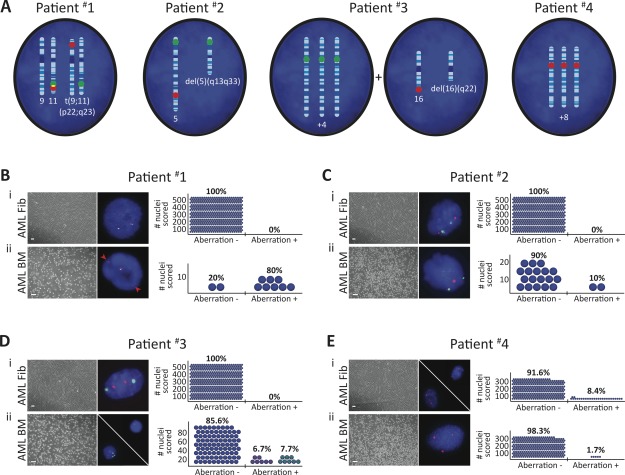
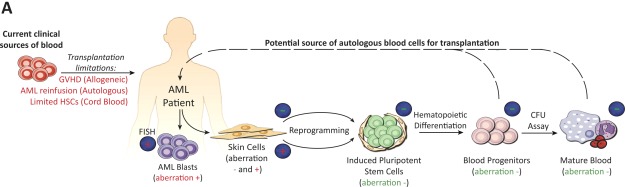
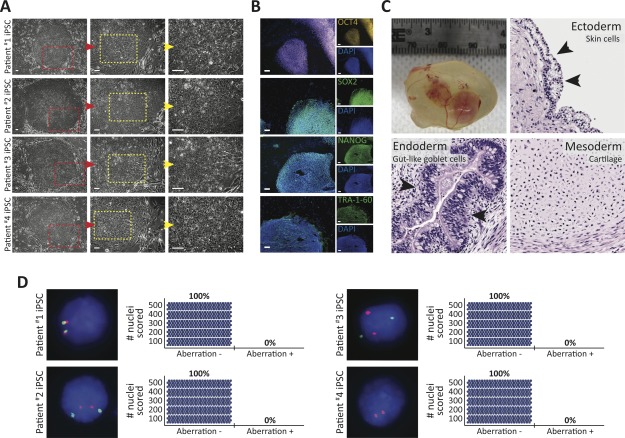
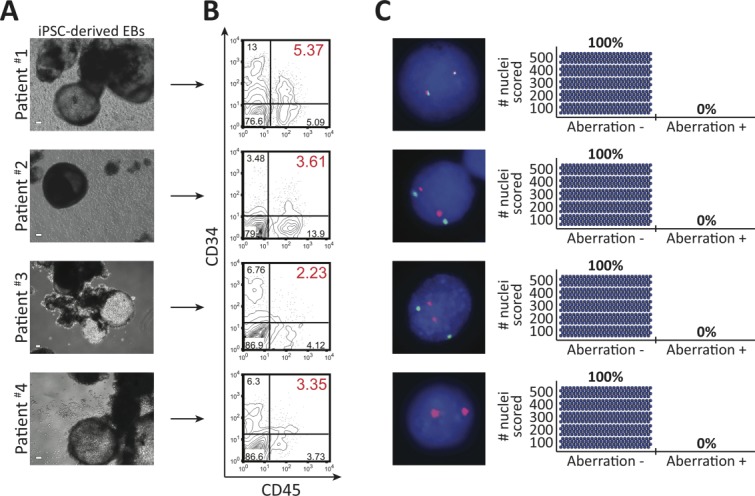
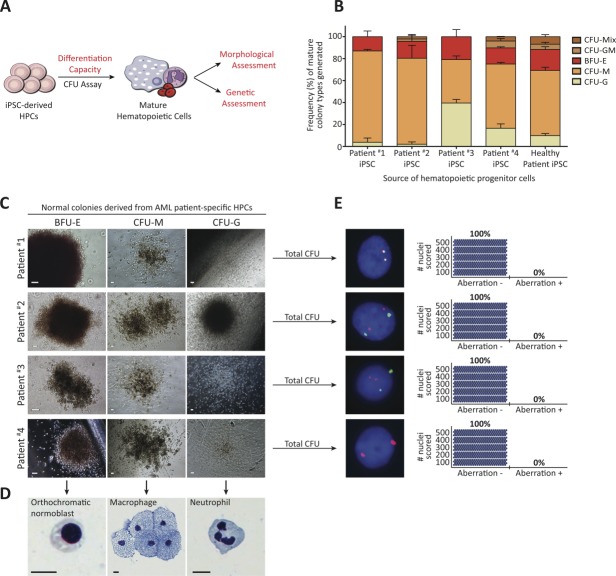
Current treatments that use hematopoietic progenitor cell (HPC) transplantation in acute myeloid leukemia (AML) patients substantially reduce the risk of relapse, but are limited by the availability of immune compatible healthy HPCs. Although cellular reprogramming has the potential to provide a novel autologous source of HPCs for transplantation, the applicability of this technology toward the derivation of healthy autologous hematopoietic cells devoid of patient-specific leukemic aberrations from AML patients must first be evaluated. Here, we report the generation of human AML patient-specific hematopoietic progenitors that are capable of normal in vitro differentiation to myeloid lineages and are devoid of leukemia-associated aberration found in matched patient bone marrow. Skin fibroblasts were obtained from AML patients whose leukemic cells possessed a distinct, leukemia-associated aberration, and used to create AML patient-specific induced pluripotent stem cells (iPSCs). Through hematopoietic differentiation of AML patient iPSCs, coupled with cytogenetic interrogation, we reveal that AML patient-specific HPCs possess normal progenitor capacity and are devoid of leukemia-associated mutations. Importantly, in rare patient skin samples that give rise to mosaic fibroblast cultures that continue to carry leukemia-associated mutations; healthy hematopoietic progenitors can also be generated via reprogramming selection. Our findings provide the proof of principle that cellular reprogramming can be applied on a personalized basis to generate healthy HPCs from AML patients, and should further motivate advances toward creating transplantable hematopoietic stem cells for autologous AML therapy.
目前在急性髓系白血病(AML)患者中使用造血祖细胞(HPC)移植的治疗方法可大幅降低复发风险,但受免疫相容健康HPC可用性的限制。尽管细胞重编程有可能为移植提供一种新的自体HPC来源,但这项技术对于从AML患者中获得无患者特异性白血病畸变的健康自体造血细胞的适用性,必须首先进行评估。在此,我们报告了人类AML患者特异性造血祖细胞的生成,这些祖细胞能够在体外正常分化为髓系谱系,且不存在匹配患者骨髓中发现的白血病相关畸变。皮肤成纤维细胞取自白血病细胞具有独特白血病相关畸变的AML患者,并用于创建AML患者特异性诱导多能干细胞(iPSC)。通过AML患者iPSC的造血分化,结合细胞遗传学检测,我们发现AML患者特异性HPC具有正常的祖细胞能力,且不存在白血病相关突变。重要的是,在罕见的患者皮肤样本中,会产生继续携带白血病相关突变的嵌合成纤维细胞培养物;通过重编程选择也可以产生健康的造血祖细胞。我们的研究结果提供了原理证明,即细胞重编程可以在个性化基础上应用于从AML患者中生成健康的HPC,这应进一步推动为自体AML治疗创建可移植造血干细胞的进展。