Wang Baolan, Li Gen, Zhang Wen-Hao
State Key Laboratory of Vegetation and Environmental Change, Institute of Botany, the Chinese Academy of Sciences, Beijing 100093, P. R. China.
State Key Laboratory of Vegetation and Environmental Change, Institute of Botany, the Chinese Academy of Sciences, Beijing 100093, P. R. China Research Network of Global Change Biology, Beijing Institutes of Life Sciences, Chinese Academy of Sciences, Beijing, P. R. China
J Exp Bot. 2015 May;66(9):2749-61. doi: 10.1093/jxb/erv079. Epub 2015 Mar 14.
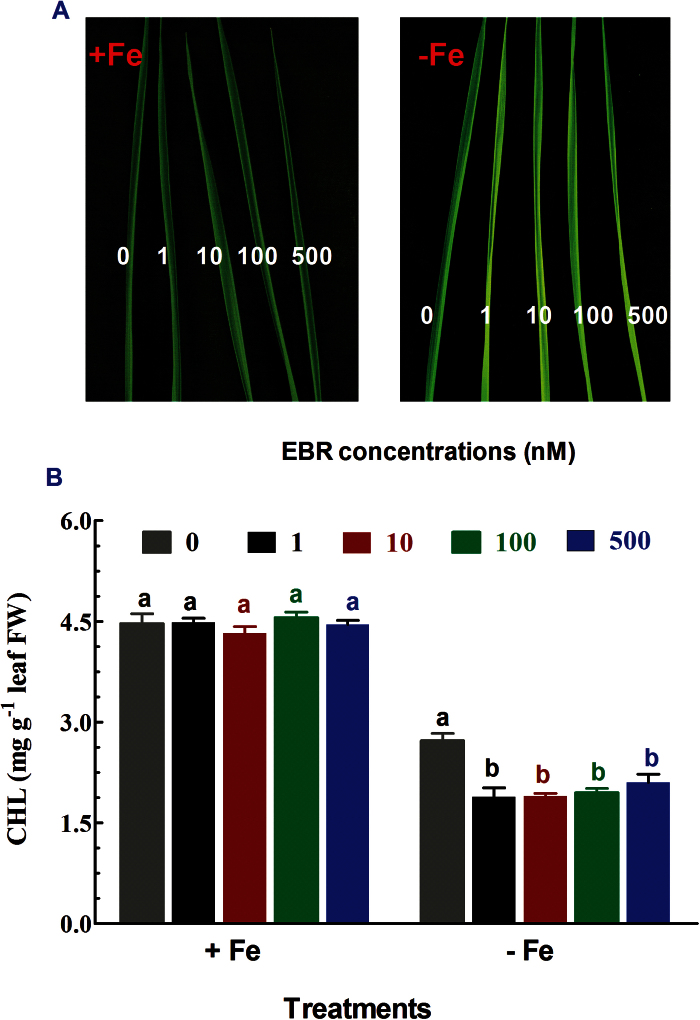
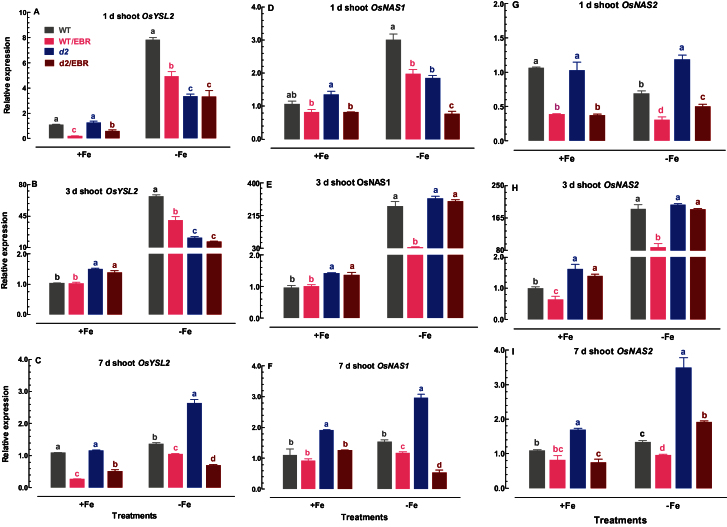
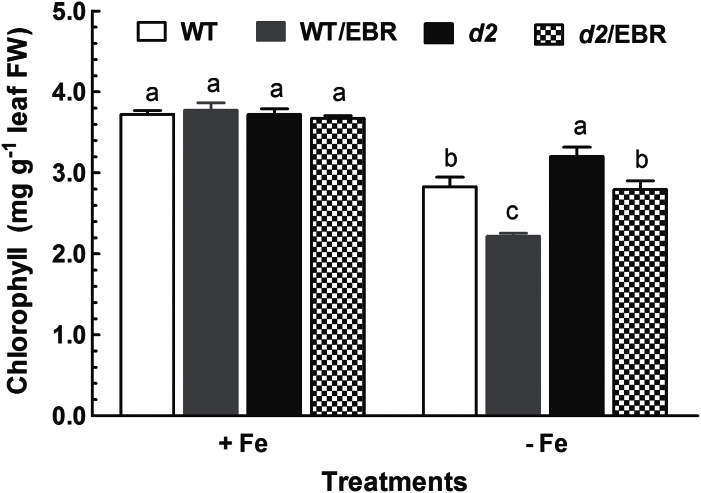
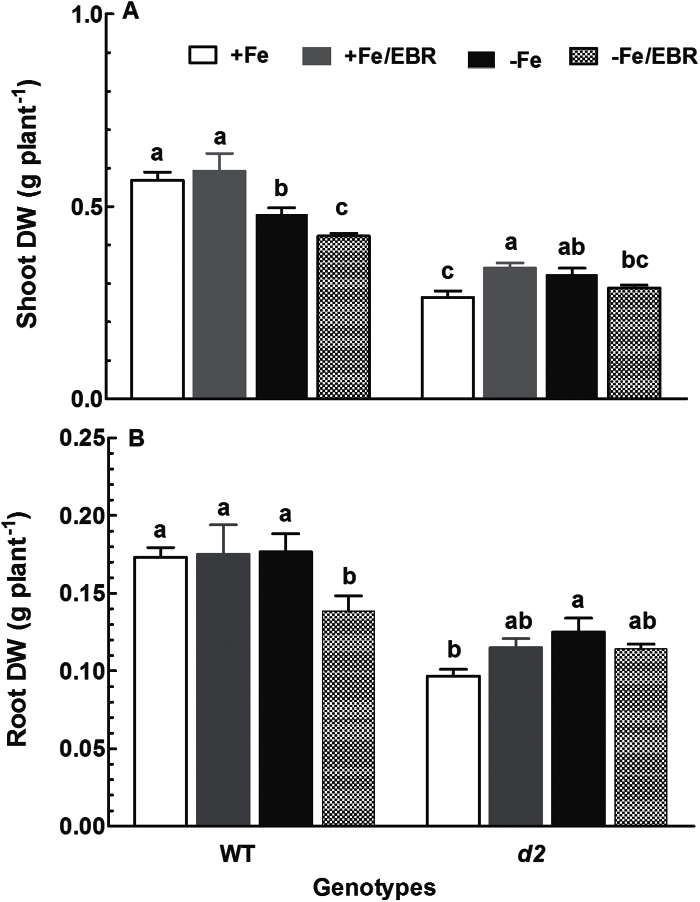
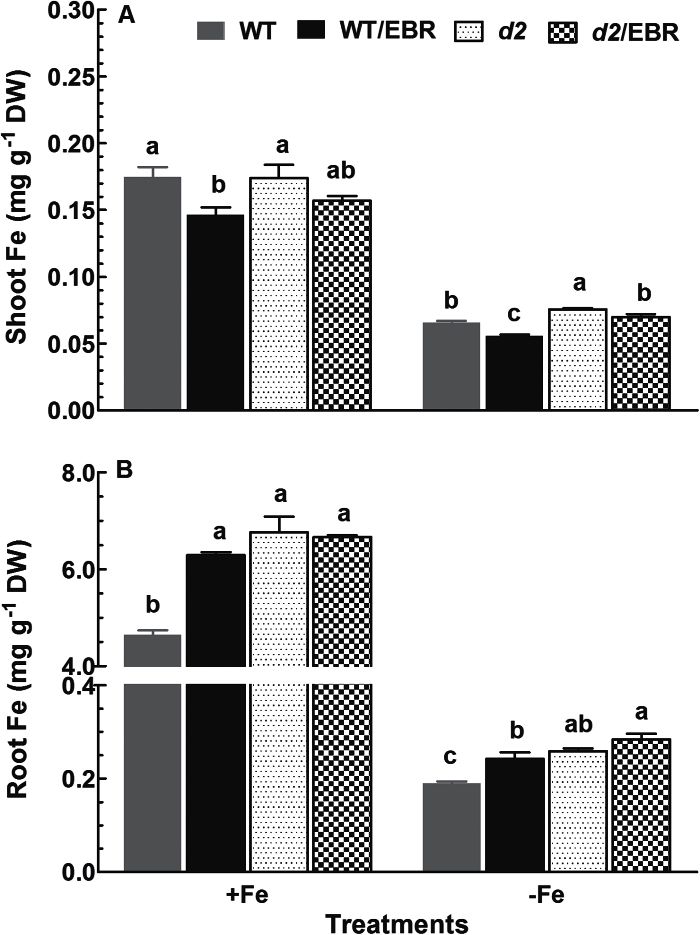
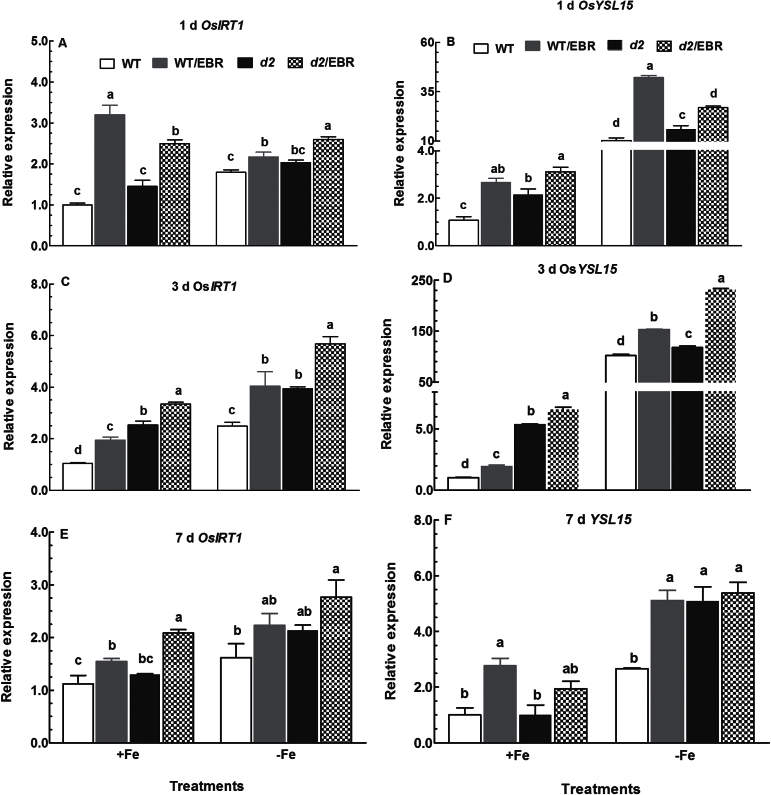
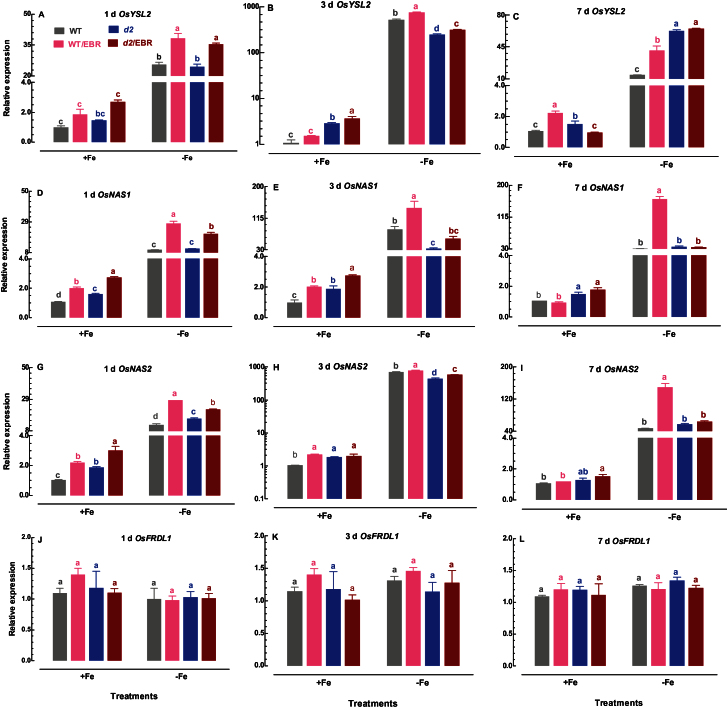
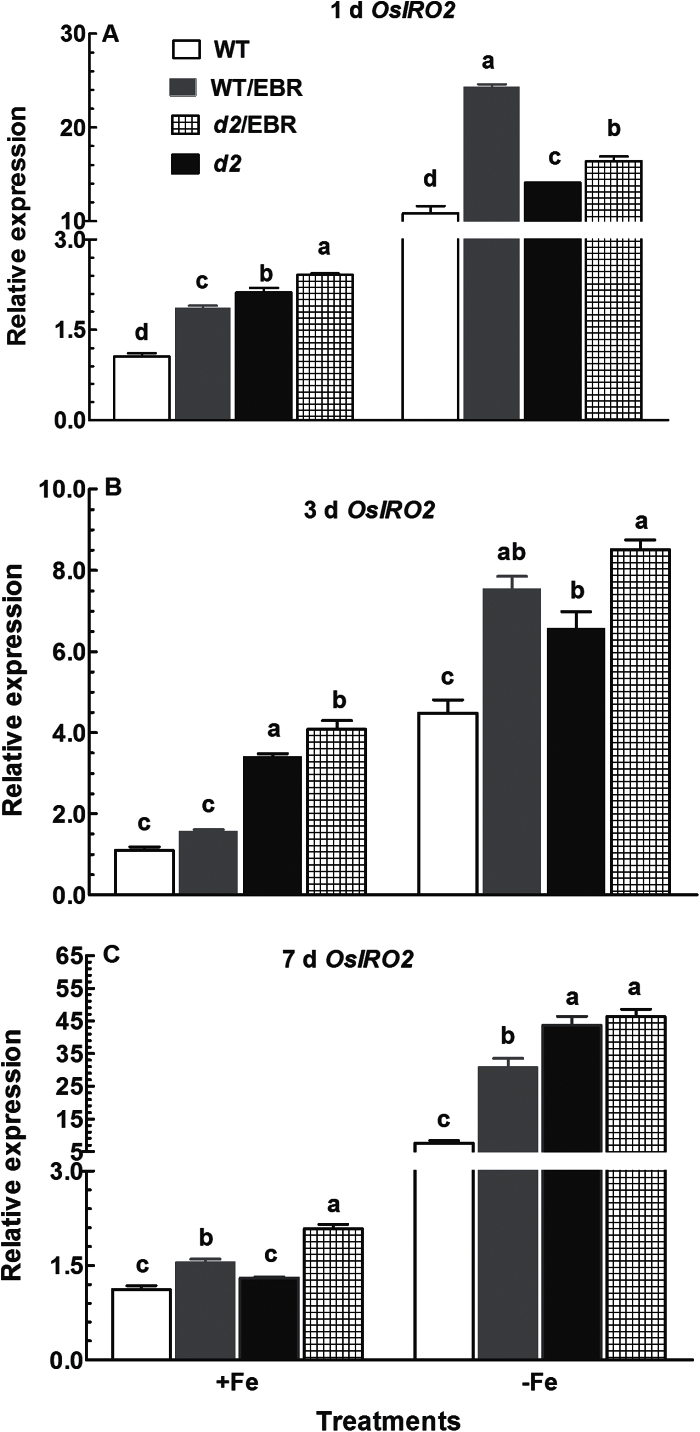
Brassinosteroids (BRs) are steroid hormones that modulate numerous physiological processes in plants. However, few studies have focused on the involvement of BRs in sensing and responding to the stress of mineral nutrient deficiency. In the present study, we evaluated the roles of BRs in the response of rice (Oryza sativa) to iron (Fe) deficiency during Fe uptake, transport, and translocation. Exogenous application of 24-epibrassinolide (EBR) to wild-type (WT) plants exaggerated leaf symptoms of Fe deficiency and suppressed growth. EBR increased and decreased Fe concentrations in roots and shoots, respectively, under both Fe-deficient and Fe-sufficient conditions. Transcripts involved in Fe homeostasis, including OsIRT1, OsYSL15, OsYSL2, OsNAS1, and OsNAS2, were enhanced by EBR under Fe-deficient conditions. EBR depressed expression of OsNAS1, OsNAS2, and OsYSL2 in shoots, and inhibited Fe transport and translocation via the phloem. Rice mutant d2-1, which is defective in BR biosynthesis, was more tolerant to Fe deficiency than the WT, and accumulated greater amounts of Fe in roots than the WT under Fe-sufficient conditions. A greater upregulation of OsIRT1, OsYSL15, OsYSL2, OsNAS1, and OsNAS2 in the d2-1 mutant compared to the WT was found under Fe-sufficient conditions, while expression of these genes in the d2-1 mutant was lower than in the WT under Fe-deficient conditions. The greater tolerance of the d2-1 mutant could be partly mitigated by exogenous application of EBR. These novel findings highlight the important role of BR in mediating the response of strategy II plants to Fe deficiency by regulating Fe uptake and translocation in rice.
油菜素甾体类化合物(BRs)是一类调节植物众多生理过程的甾体激素。然而,很少有研究关注BRs在感知和响应矿物质营养缺乏胁迫中的作用。在本研究中,我们评估了BRs在水稻(Oryza sativa)铁(Fe)吸收、运输和转运过程中对缺铁响应的作用。向野生型(WT)植株外源施加24-表油菜素内酯(EBR)会加剧缺铁叶片症状并抑制生长。在缺铁和铁充足条件下,EBR分别增加和降低了根和地上部的铁浓度。在缺铁条件下,EBR增强了参与铁稳态的转录本,包括OsIRT1、OsYSL15、OsYSL2、OsNAS1和OsNAS2。EBR抑制了地上部OsNAS1、OsNAS2和OsYSL2的表达,并抑制了铁通过韧皮部的运输和转运。BR生物合成存在缺陷的水稻突变体d2-1比WT更耐缺铁,并且在铁充足条件下根中积累的铁比WT更多。在铁充足条件下,与WT相比,d2-1突变体中OsIRT1、OsYSL15、OsYSL2、OsNAS1和OsNAS2的上调幅度更大,而在缺铁条件下,这些基因在d2-1突变体中的表达低于WT。外源施加EBR可部分缓解d2-1突变体更强的耐受性。这些新发现突出了BR通过调节水稻中铁的吸收和转运来介导策略II型植物对缺铁响应的重要作用。