Lian Feng, Cui Yong, Zhou Chenliang, Gao Kewei, Wu Liwen
Department of Orthopedics, The Fourth Affiliated Hospital of Harbin Medical University, Harbin, 150001, Heilongjiang, China.
PLoS One. 2015 Mar 16;10(3):e0121499. doi: 10.1371/journal.pone.0121499. eCollection 2015.
Circulating microRNAs (miRNAs) are emerging as promising biomarkers for human cancer. Osteosarcoma is the most common human primary malignant bone tumor in children and young adults. The objective of this study was to investigate whether circulating miRNAs in plasma could be a useful biomarker for detecting osteosarcoma and monitoring tumor removal dynamics.
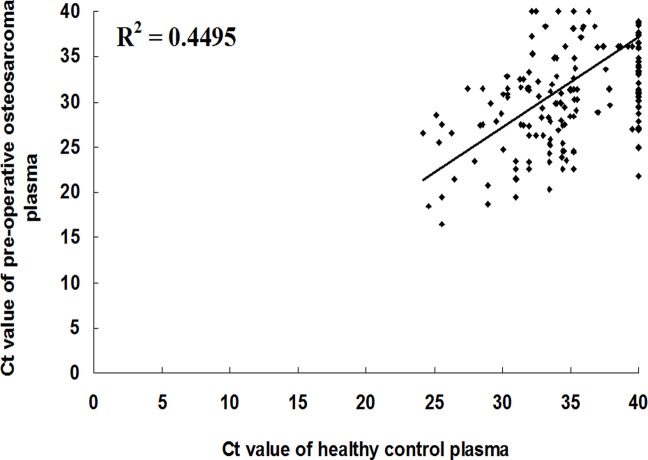
Plasma samples were obtained from 90 patients before surgery, 50 patients after one month of surgery, and 90 healthy individuals. The study was divided into three steps: First, initial screening of the profiles of circulating miRNAs in pooled plasma samples from healthy controls and pre-operative osteosarcoma patients using a TaqMan low density array (TLDA). Second, evaluation of miRNA concentration in individual plasma samples from 90 pre-operative osteosarcoma patients and 90 healthy controls by a quantitative real time PCR (qRT-PCR) assay. Third, evaluation of miRNA concentration in paired plasma samples from 50 pre- and post-operative osteosarcoma patients by qRT-PCR assay.
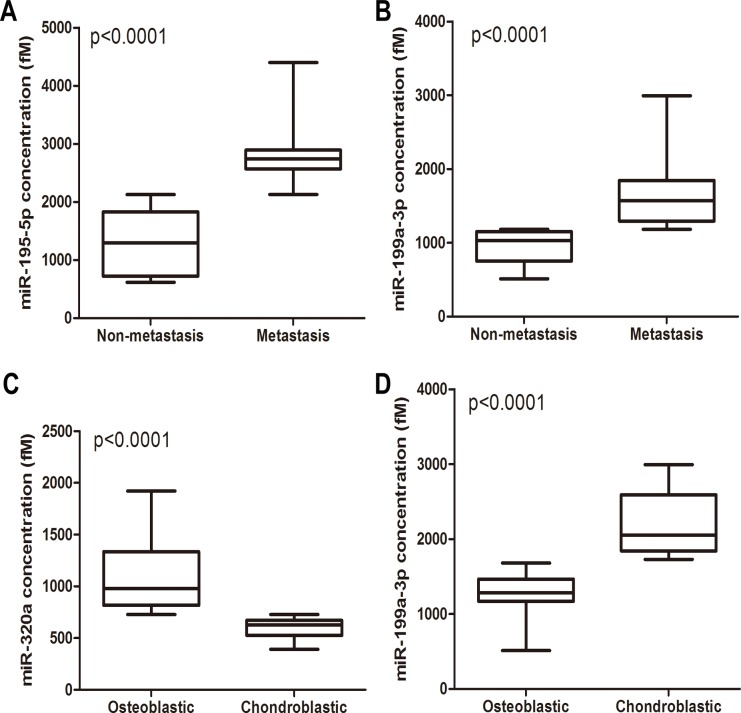
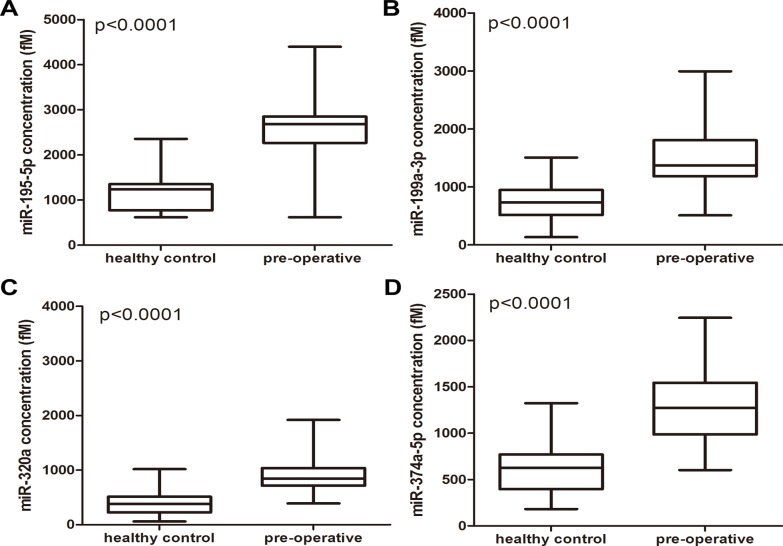
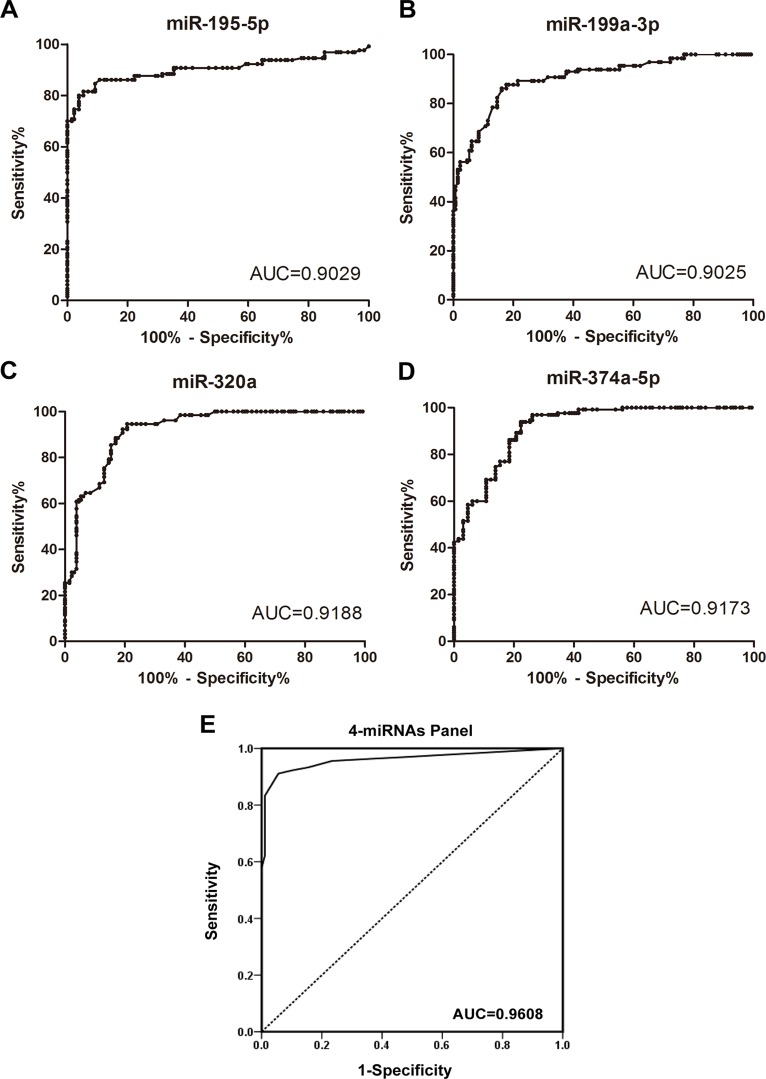
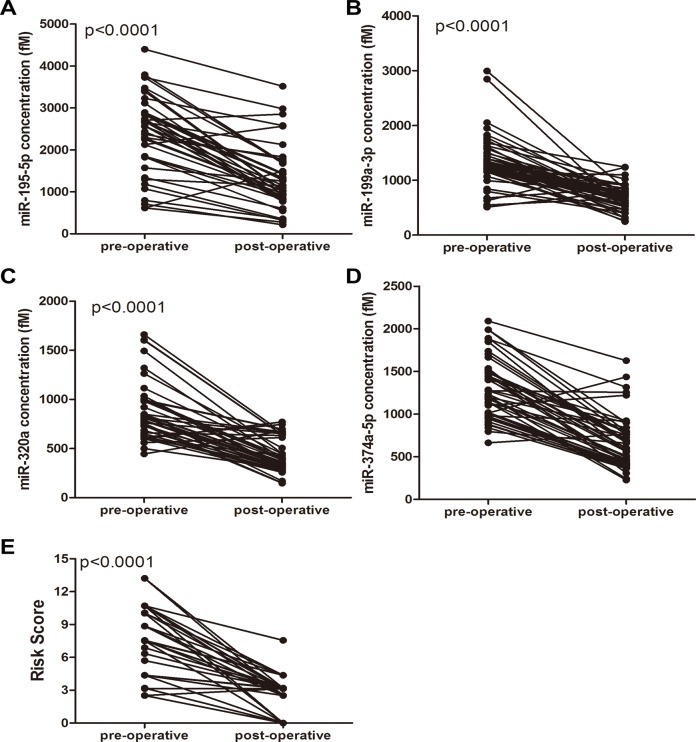
Four plasma miRNAs including miR-195-5p, miR-199a-3p, miR-320a, and miR-374a-5p were significantly increased in the osteosarcoma patients. Receiver operating characteristics curve analysis of the combined populations demonstrated that the four-miRNA signature could discriminate cases from controls with an area under the curve of 0.9608 (95% CI 0.9307-0.9912). These 4 miRNAs were markedly decreased in the plasma after operation. In addition, circulating miR-195-5p and miR-199a-3p were correlated with metastasis status, while miR-199a-3p and miR-320a were correlated with histological subtype.
Our data suggest that altered levels of circulating miRNAs might have great potential to serve as novel, non-invasive biomarkers for osteosarcoma.
循环微RNA(miRNA)正成为人类癌症颇具前景的生物标志物。骨肉瘤是儿童和青年中最常见的人类原发性恶性骨肿瘤。本研究的目的是调查血浆中的循环miRNA是否可作为检测骨肉瘤及监测肿瘤切除动态的有用生物标志物。
采集了90例手术前患者、50例手术后1个月患者及90名健康个体的血浆样本。该研究分为三个步骤:首先,使用TaqMan低密度阵列(TLDA)对健康对照和术前骨肉瘤患者的混合血浆样本中的循环miRNA谱进行初步筛选。其次,通过定量实时PCR(qRT-PCR)测定法评估90例术前骨肉瘤患者和90名健康对照个体血浆样本中的miRNA浓度。第三,通过qRT-PCR测定法评估50例术前和术后骨肉瘤患者配对血浆样本中的miRNA浓度。
骨肉瘤患者中有四种血浆miRNA,即miR-195-5p、miR-199a-3p、miR-320a和miR-374a-5p显著升高。对合并人群的受试者工作特征曲线分析表明,这四种miRNA特征可区分病例与对照,曲线下面积为0.9608(95%可信区间0.9307 - 0.9912)。这四种miRNA在术后血浆中显著降低。此外,循环miR-195-5p和miR-199a-3p与转移状态相关,而miR-199a-3p和miR-320a与组织学亚型相关。
我们的数据表明,循环miRNA水平的改变可能有很大潜力作为骨肉瘤新型的非侵入性生物标志物。