Panneerselvam Janani, Jin Jiankang, Shanker Manish, Lauderdale Jason, Bates Jonathan, Wang Qi, Zhao Yan D, Archibald Stephen J, Hubin Timothy J, Ramesh Rajagopal
Department of Pathology, University of Oklahoma Health Sciences Center, Oklahoma City, Oklahoma, United States of America; Stephenson Cancer Center, University of Oklahoma Health Sciences Center, Oklahoma City, Oklahoma, United States of America.
Department of Thoracic and Cardiovascular Surgery, The University of Texas MD Anderson Cancer Center, Houston, Texas, United States of America.
PLoS One. 2015 Mar 16;10(3):e0122439. doi: 10.1371/journal.pone.0122439. eCollection 2015.
The stromal cell derived factor (SDF)-1/chemokine receptor (CXCR)-4 signaling pathway plays a key role in lung cancer metastasis and is molecular target for therapy. In the present study we investigated whether interleukin (IL)-24 can inhibit the SDF-1/CXCR4 axis and suppress lung cancer cell migration and invasion in vitro. Further, the efficacy of IL-24 in combination with CXCR4 antagonists was investigated.
Human H1299, A549, H460 and HCC827 lung cancer cell lines were used in the present study. The H1299 lung cancer cell line was stably transfected with doxycycline-inducible plasmid expression vector carrying the human IL-24 cDNA and used in the present study to determine the inhibitory effects of IL-24 on SDF-1/CXCR4 axis. H1299 and A549 cell lines were used in transient transfection studies. The inhibitory effects of IL-24 on SDF1/CXCR4 and its downstream targets were analyzed by quantitative RT-PCR, western blot, luciferase reporter assay, flow cytometry and immunocytochemistry. Functional studies included cell migration and invasion assays.
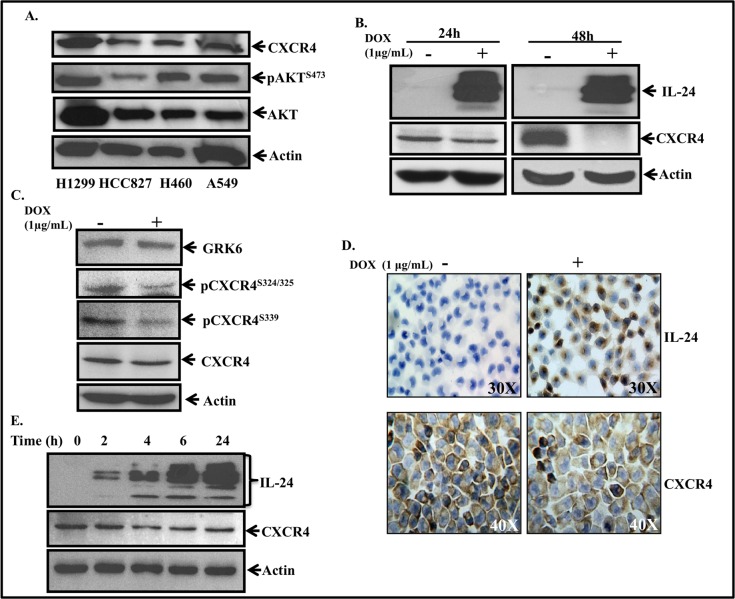
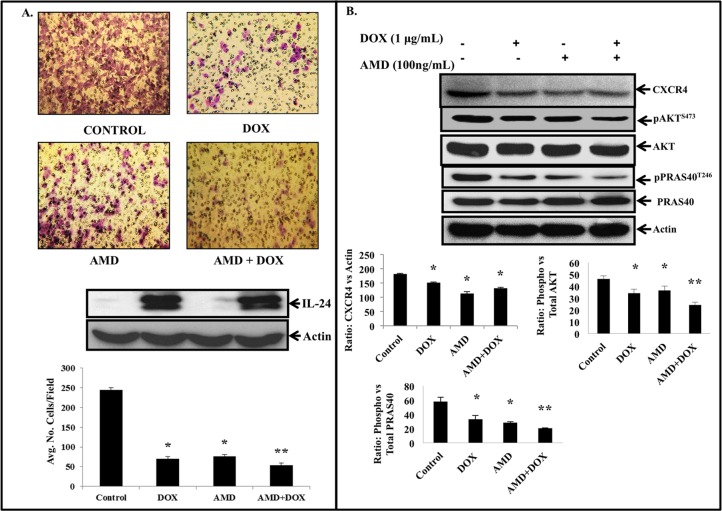
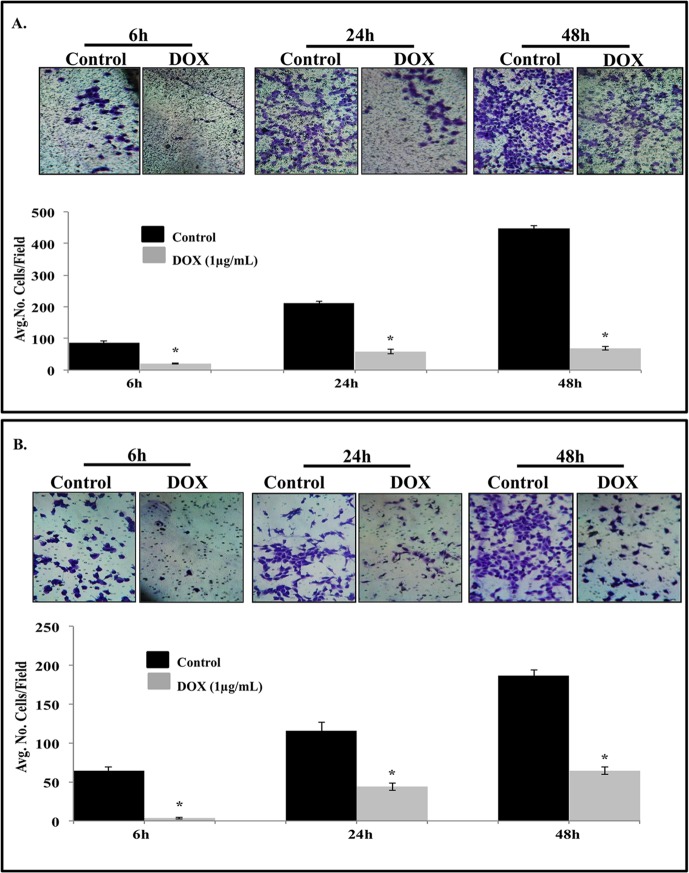
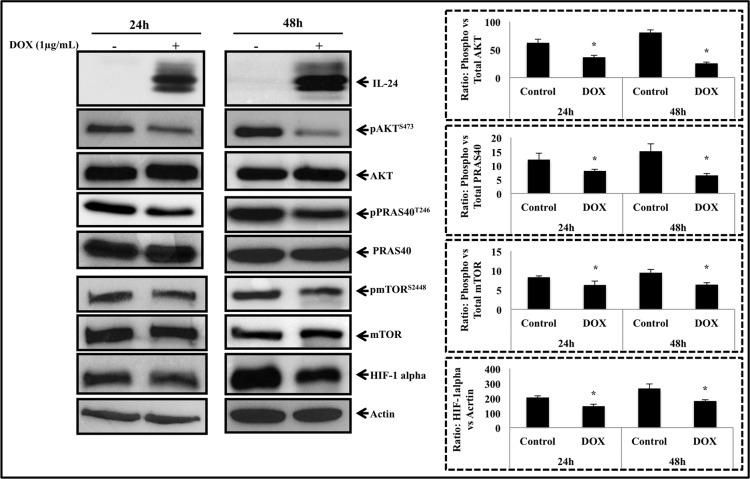
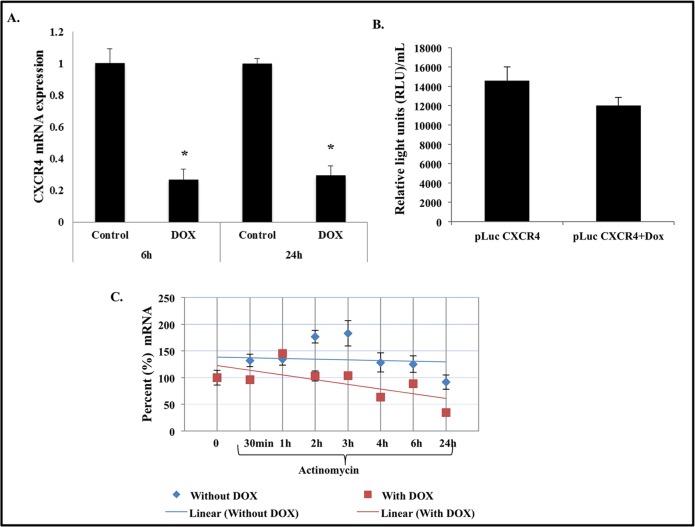
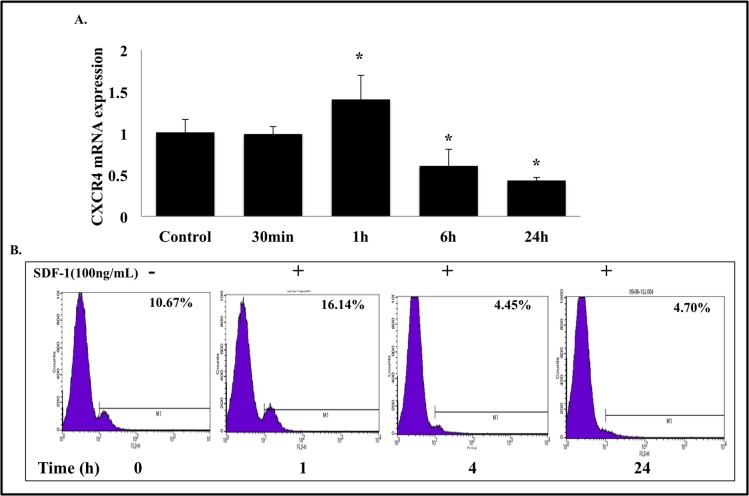
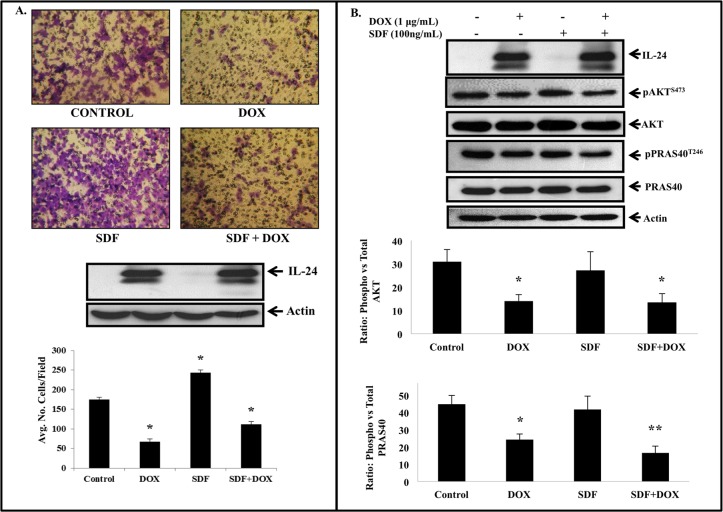
Endogenous CXCR4 protein expression levels varied among the four human lung cancer cell lines. Doxycycline-induced IL-24 expression in the H1299-IL24 cell line resulted in reduced CXCR4 mRNA and protein expression. IL-24 post-transcriptionally regulated CXCR4 mRNA expression by decreasing the half-life of CXCR4 mRNA (>40%). Functional studies showed IL-24 inhibited tumor cell migration and invasion concomitant with reduction in CXCR4 and its downstream targets (pAKTS473, pmTORS2448, pPRAS40T246 and HIF-1α). Additionally, IL-24 inhibited tumor cell migration both in the presence and absence of the CXCR4 agonist, SDF-1. Finally, IL-24 when combined with CXCR4 inhibitors (AMD3100, SJA5) or with CXCR4 siRNA demonstrated enhanced inhibitory activity on tumor cell migration.
IL-24 disrupts the SDF-1/CXCR4 signaling pathway and inhibits lung tumor cell migration and invasion. Additionally, IL-24, when combined with CXCR4 inhibitors exhibited enhanced anti-metastatic activity and is an attractive therapeutic strategy for lung metastasis.
基质细胞衍生因子(SDF)-1/趋化因子受体(CXCR)-4信号通路在肺癌转移中起关键作用,是治疗的分子靶点。在本研究中,我们调查了白细胞介素(IL)-24是否能在体外抑制SDF-1/CXCR4轴并抑制肺癌细胞的迁移和侵袭。此外,还研究了IL-24与CXCR4拮抗剂联合使用的疗效。
本研究使用了人H1299、A549、H460和HCC827肺癌细胞系。用携带人IL-24 cDNA的强力霉素诱导型质粒表达载体稳定转染H1299肺癌细胞系,并用于本研究以确定IL-24对SDF-1/CXCR4轴的抑制作用。H1299和A549细胞系用于瞬时转染研究。通过定量RT-PCR、蛋白质印迹、荧光素酶报告基因检测、流式细胞术和免疫细胞化学分析IL-24对SDF1/CXCR4及其下游靶点的抑制作用。功能研究包括细胞迁移和侵袭试验。
四种人肺癌细胞系中内源性CXCR4蛋白表达水平各不相同。强力霉素诱导H1299-IL24细胞系中IL-24表达导致CXCR4 mRNA和蛋白表达降低。IL-24通过降低CXCR4 mRNA的半衰期(>40%)在转录后调节CXCR4 mRNA表达。功能研究表明,IL-24抑制肿瘤细胞迁移和侵袭,同时CXCR4及其下游靶点(pAKTS473、pmTORS24,48、pPRAS40T246和HIF-1α)减少。此外,无论有无CXCR4激动剂SDF-1,IL-24均能抑制肿瘤细胞迁移。最后,IL-24与CXCR4抑制剂(AMD3100、SJA5)或CXCR4 siRNA联合使用时,对肿瘤细胞迁移的抑制活性增强。
IL-24破坏SDF-1/CXCR4信号通路,抑制肺肿瘤细胞迁移和侵袭。此外,IL-24与CXCR4抑制剂联合使用时表现出增强的抗转移活性,是一种有吸引力的肺转移治疗策略。