Shiferaw Bethel, Mukka Satish, Ha Lawrence, Bekele Ebisa, Ramos De Oleo Radhames
Department of Medicine, Nassau University Medical Center, East Meadow, NY, USA.
J Clin Med Res. 2015 May;7(5):361-3. doi: 10.14740/jocmr2056w. Epub 2015 Mar 1.
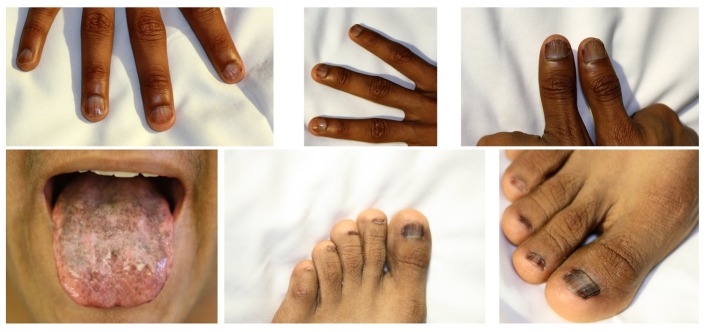
Dyskeratosis congenita (DC) is a rare hereditary disorder characterized by bone marrow failure, cancer predisposition (11-fold increase compared to general population), ectodermal dysplasia (nail dystrophy, oral leukoplakia, and abnormal skin pigmentation) and other additional somatic abnormalities. A 22-year-old man presented with fever, chills, and a painful throat. Leukoplakia was noted on his tongue and some of his fingers and toe nails were markedly dystrophic. His skin seemed spotted with pigmentation on the anterior chest and neck. Patient reported family history of "blood disease" and leukemia. He was admitted for the management of neutropenic fever (102.9 °F, WBC: 940, ANC: 404, platelets: 21,000 and Hb: 9.2), and was put on broad spectrum antibiotics. A bone marrow biopsy revealed normocellular marrow with erythroid predominance and mild dyserythropoiesis. Chromosomal analysis indicated no numerical or structural chromosomal abnormalities. The fluorescence in situ hybridization report did not reveal any assay specific abnormalities. Viral marker for hepatitis and studies of autoimmune antibodies showed negative results. CT scan had shown splenomegaly. Patient was discharged after he has been fever and symptoms free, with a follow-up at hematology clinic. Individuals with DC most commonly present with skin pigmentation, dystrophic nails and leukoplakia, as presented in this case. Genetic abnormality was not confirmed in our patient, but it is suggested that X-linked recessive pattern would be significant because of greater prevalence in men than in women (10:1). The distribution of blood counts and bone marrow biopsy categorizes our patient in the moderate aplastic anemia class which is the most prevalent pattern. When fever in young patients with a failing bone marrow is diagnosed, it is important that physicians rule out the possible underlying causes. DC is a rare disease, but can be diagnosed by simple inspection of the mucocutaneous abnormalities. DC is a severe multisystem disorder associated with premature morbidity and mortality. We believe that reporting this case would add more information to the existing fund of knowledge.
先天性角化不良(DC)是一种罕见的遗传性疾病,其特征为骨髓衰竭、癌症易感性增加(相较于普通人群增加11倍)、外胚层发育异常(指甲营养不良、口腔白斑和皮肤色素沉着异常)以及其他额外的躯体异常。一名22岁男性出现发热、寒战和咽痛。其舌部可见白斑,部分手指和脚趾甲明显营养不良。前胸和颈部皮肤似乎有色素沉着斑。患者报告有“血液病”和白血病家族史。他因中性粒细胞减少性发热(体温102.9°F,白细胞计数:940,中性粒细胞绝对值:404,血小板:21,000,血红蛋白:9.2)入院治疗,并接受了广谱抗生素治疗。骨髓活检显示骨髓细胞正常,以红系为主,伴有轻度红细胞生成异常。染色体分析未发现染色体数目或结构异常。荧光原位杂交报告未显示任何检测特异性异常。肝炎病毒标志物和自身免疫抗体检测结果均为阴性。CT扫描显示脾肿大。患者退热且症状消失后出院,并在血液科门诊进行随访。如本病例所示,DC患者最常见的表现为皮肤色素沉着、指甲营养不良和白斑。我们的患者未确诊基因异常,但由于男性患病率高于女性(10:1),提示X连锁隐性模式可能具有重要意义。血细胞计数和骨髓活检结果将我们的患者归类为中度再生障碍性贫血类型,这是最常见的模式。当诊断出骨髓功能衰竭的年轻患者发热时,医生排除可能的潜在病因很重要。DC是一种罕见疾病,但可通过简单检查黏膜皮肤异常来诊断。DC是一种严重的多系统疾病,与过早发病和死亡相关。我们认为报告本病例将为现有知识宝库增添更多信息。