Liu Xue-Song, Little John B, Yuan Zhi-Min
Department of Genetics and Complex Diseases, Harvard School of Public Health, Boston, MA 02115, USA.
Oncotarget. 2015 Feb 28;6(6):4214-25. doi: 10.18632/oncotarget.2929.
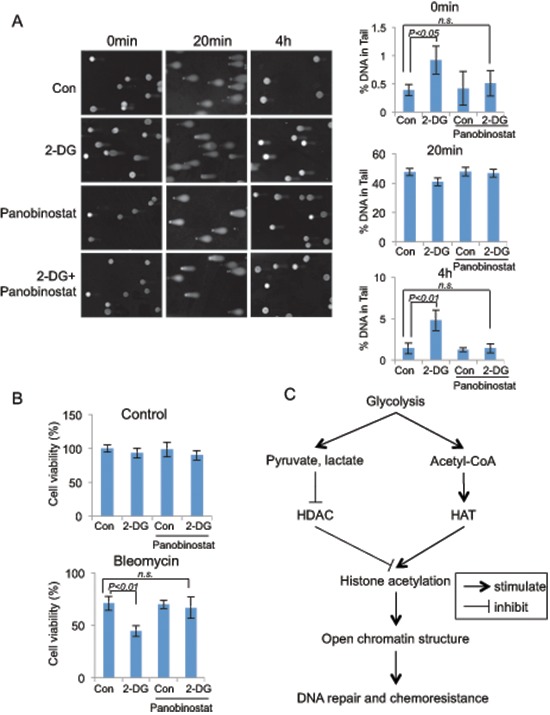
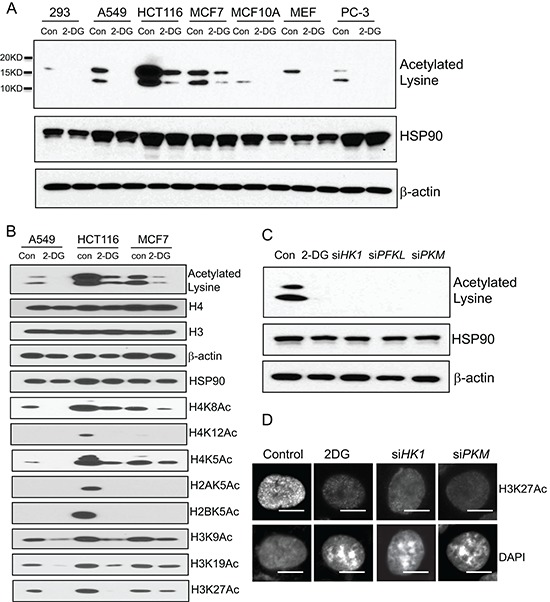
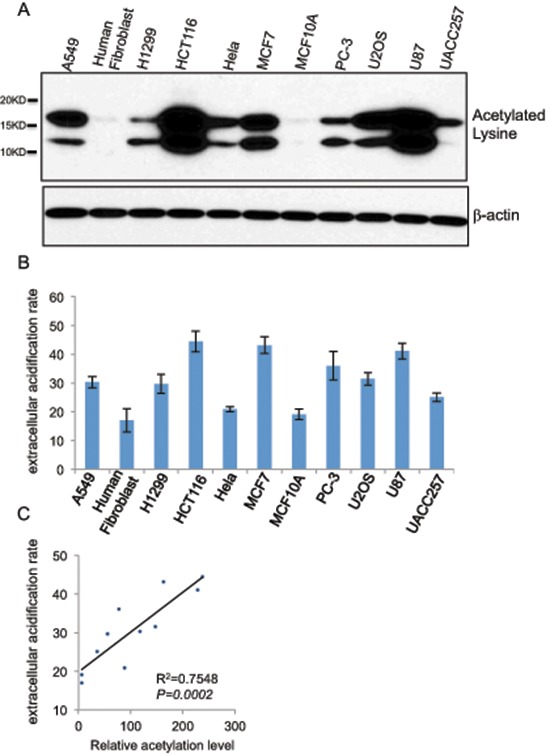
Metabolic rewiring, specifically elevated glycolytic metabolism is a hallmark of cancer. Global chromatin structure regulates gene expression, DNA repair, and also affects cancer progression. But the interrelationship between tumor metabolism and chromatin architecture remain unclear. Here we show that increased glycolysis in cancer cells promotes an open chromatin configuration. Using complementary methods including Micrococcal nuclease (MNase) digestion assay, electron microscope and immunofluorescence staining, we demonstrate that glycolysis inhibition by pharmacological and genetic approaches was associated with induction of compacted chromatin structure. This condensed chromatin status appeared to result chiefly from histone hypoacetylation as restoration of histone acetylation with an HDAC inhibitor reversed the compacted chromatin state. Interestingly, glycolysis inhibition-induced chromatin condensation impeded DNA repair efficiency leading to increased sensitivity of cancer cells to DNA damage drugs, which may represent a novel molecular mechanism that can be exploited for cancer therapy.
代谢重编程,特别是糖酵解代谢升高是癌症的一个标志。整体染色质结构调节基因表达、DNA修复,也影响癌症进展。但肿瘤代谢与染色质结构之间的相互关系仍不清楚。在此我们表明,癌细胞中糖酵解增加促进了开放的染色质构型。使用包括微球菌核酸酶(MNase)消化试验、电子显微镜和免疫荧光染色等互补方法,我们证明,通过药理学和遗传学方法抑制糖酵解与诱导紧密染色质结构相关。这种浓缩的染色质状态似乎主要是由组蛋白低乙酰化导致的,因为用组蛋白去乙酰化酶(HDAC)抑制剂恢复组蛋白乙酰化可逆转紧密染色质状态。有趣的是,糖酵解抑制诱导的染色质浓缩阻碍了DNA修复效率,导致癌细胞对DNA损伤药物的敏感性增加,这可能代表一种可用于癌症治疗的新分子机制。