Tareen Samar Hayat Khan, Ahmad Jamil
Department of Computational Sciences, Research Center for Modeling and Simulation (RCMS), National University of Sciences and Technology (NUST), Islamabad, Pakistan.
PLoS One. 2015 Mar 19;10(3):e0117519. doi: 10.1371/journal.pone.0117519. eCollection 2015.
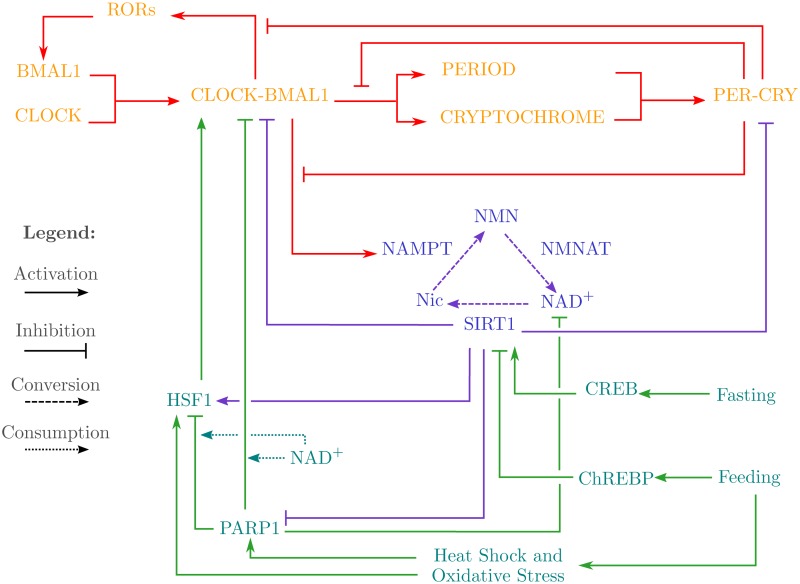
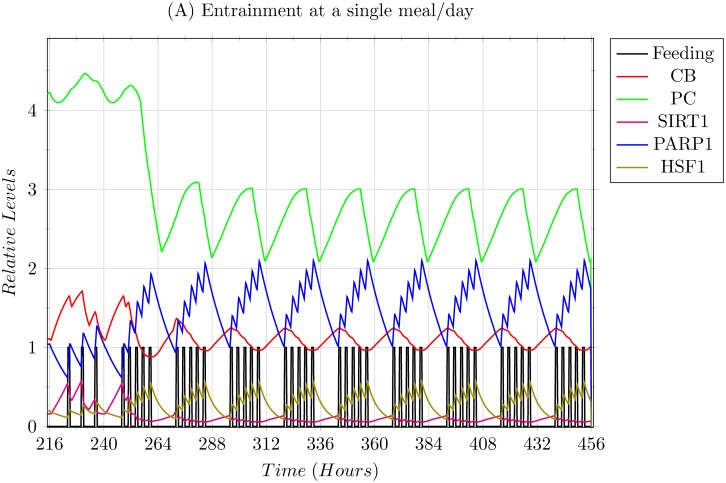
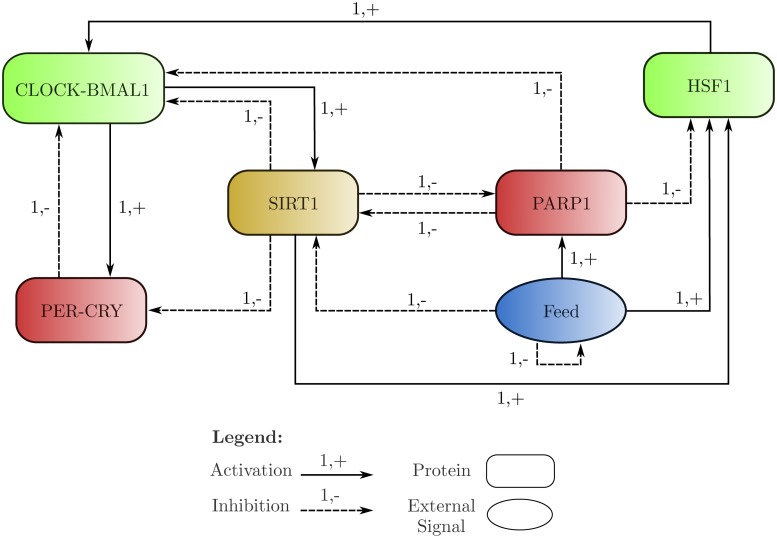
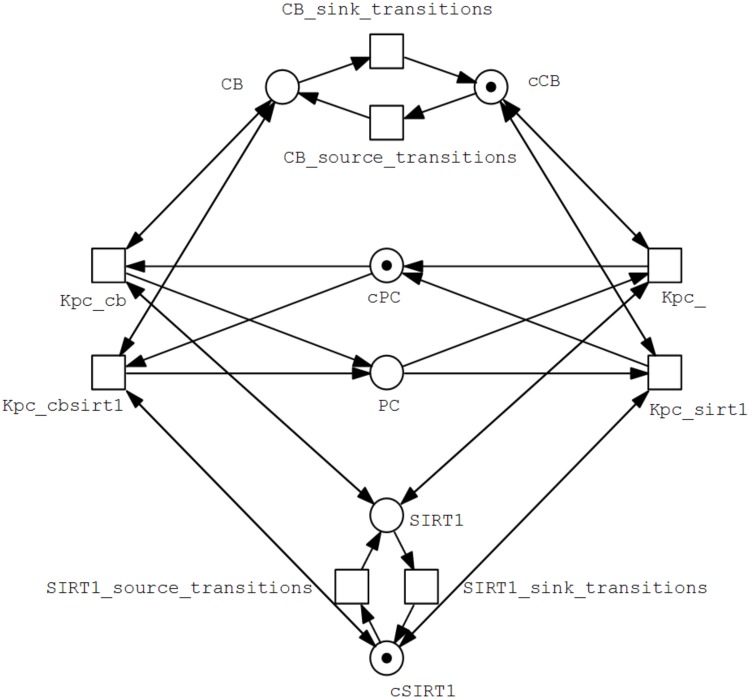
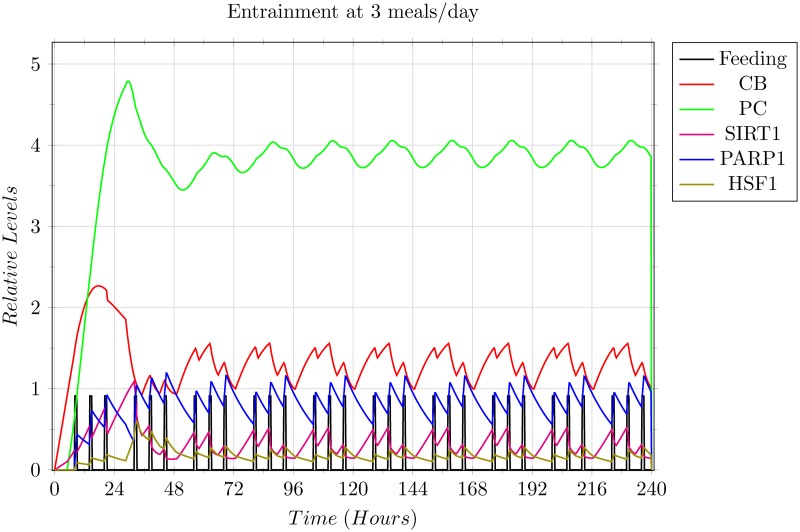
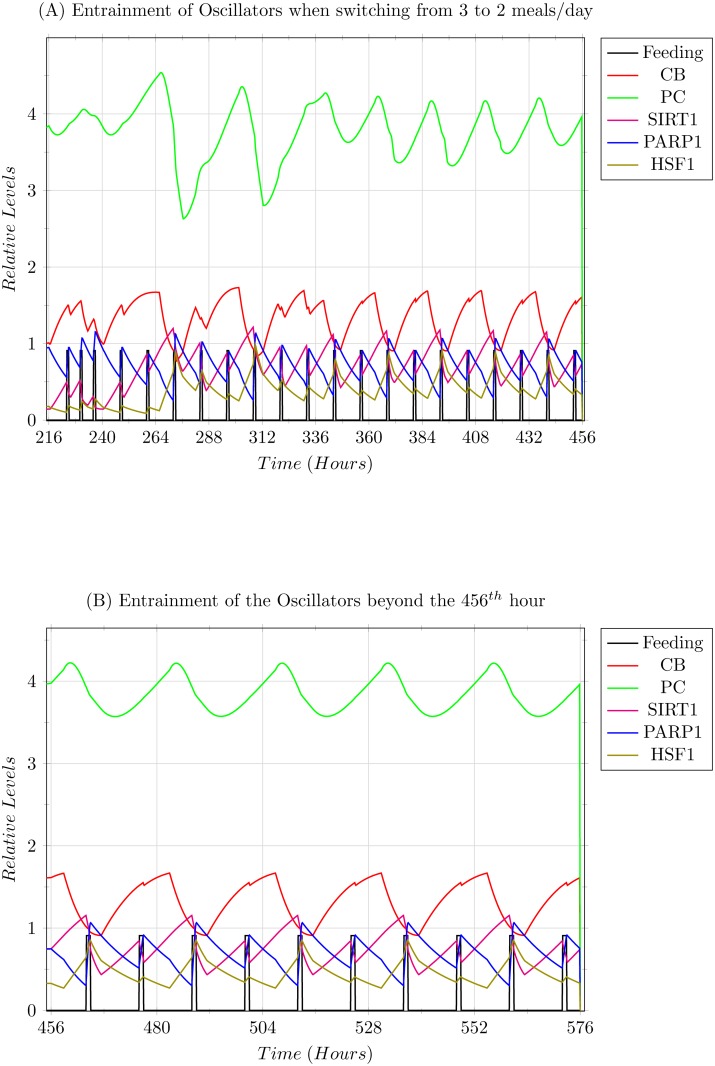
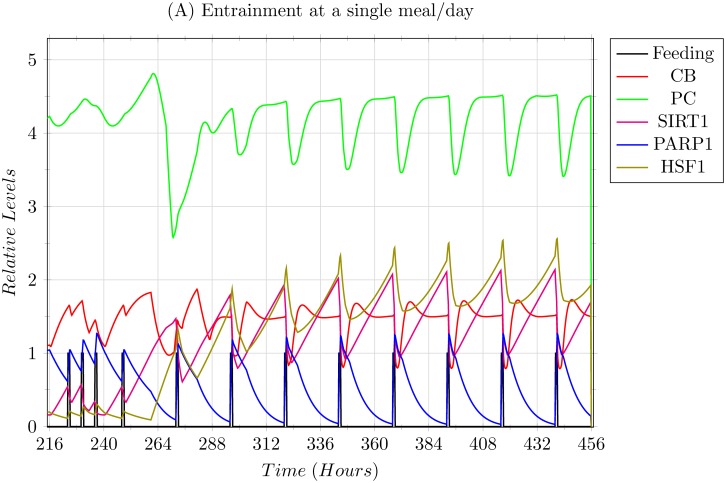
Circadian rhythms are certain periodic behaviours exhibited by living organism at different levels, including cellular and system-wide scales. Recent studies have found that the circadian rhythms of several peripheral organs in mammals, such as the liver, are able to entrain their clocks to received signals independent of other system level clocks, in particular when responding to signals generated during feeding. These studies have found SIRT1, PARP1, and HSF1 proteins to be the major influencers of the core CLOCKBMAL1:PER-CRY circadian clock. These entities, along with abstracted feeding induced signals were modelled collectively in this study using Petri Nets. The properties of the model show that the circadian system itself is strongly robust, and is able to continually evolve. The modelled feeding regimens suggest that the usual 3 meals/day and 2 meals/day feeding regimens are beneficial with any more or less meals/day negatively affecting the system.
昼夜节律是生物体在不同水平(包括细胞和全系统尺度)表现出的特定周期性行为。最近的研究发现,哺乳动物的几个外周器官(如肝脏)的昼夜节律能够使其生物钟与接收到的信号同步,而不受其他系统水平生物钟的影响,特别是在对进食期间产生的信号作出反应时。这些研究发现,SIRT1、PARP1和HSF1蛋白是核心生物钟CLOCKBMAL1:PER-CRY昼夜节律钟的主要影响因素。在本研究中,使用Petri网对这些实体以及抽象的进食诱导信号进行了集体建模。模型的特性表明,昼夜节律系统本身具有很强的稳健性,并且能够不断进化。建模的喂养方案表明,通常的一日三餐和一日两餐喂养方案是有益的,而一日多餐或少食都会对系统产生负面影响。