van der Made Sanne M, Plat Jogchum, Mensink Ronald P
Department of Human Biology, NUTRIM School for Nutrition, Toxicology and Metabolism, Maastricht University Medical Center, Maastricht,The Netherlands; Top Institute of Food and Nutrition (TIFN), Wageningen, The Netherlands.
Department of Human Biology, NUTRIM School for Nutrition, Toxicology and Metabolism, Maastricht University Medical Center, Maastricht,The Netherlands.
PLoS One. 2015 Mar 19;10(3):e0118393. doi: 10.1371/journal.pone.0118393. eCollection 2015.
In vitro and animal studies have shown positive effects of resveratrol on lipid and lipoprotein metabolism, but human studies specifically designed to examine these effects are lacking.
The primary outcome parameter of this study in overweight and slightly obese subjects was the effect of resveratrol on apoA-I concentrations. Secondary outcome parameters were effects on other markers of lipid and lipoprotein metabolism, glucose metabolism, and markers for inflammation and endothelial function.
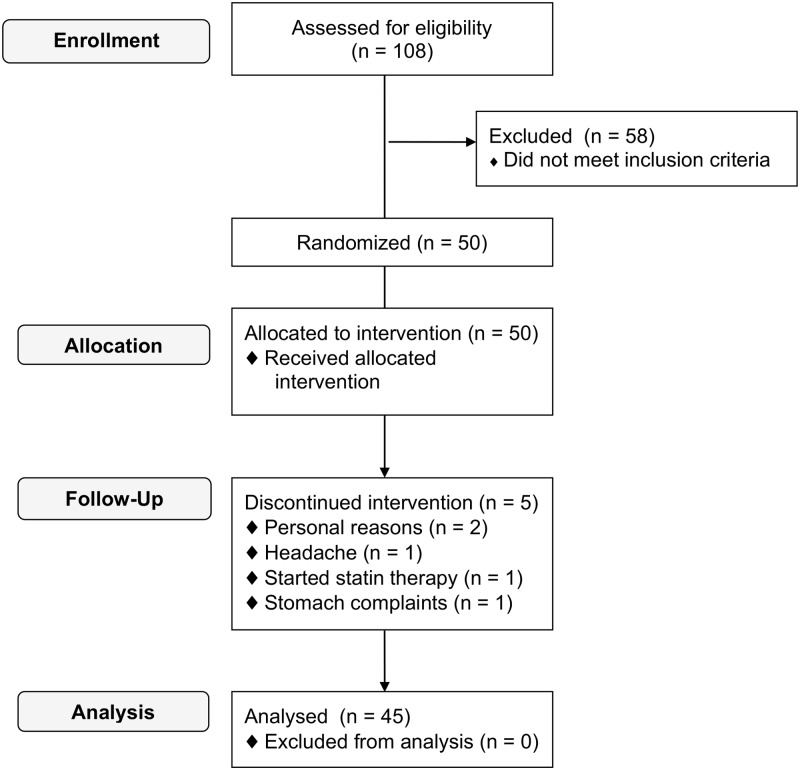
This randomized, placebo-controlled crossover study was conducted in 45 overweight and slightly obese men (n = 25) and women (n = 20) with a mean age of 61 ± 7 years. Subjects received in random order resveratrol (150 mg per day) or placebo capsules for 4 weeks, separated by a 4-week wash-out period. Fasting blood samples were collected at baseline and at the end of each intervention period.
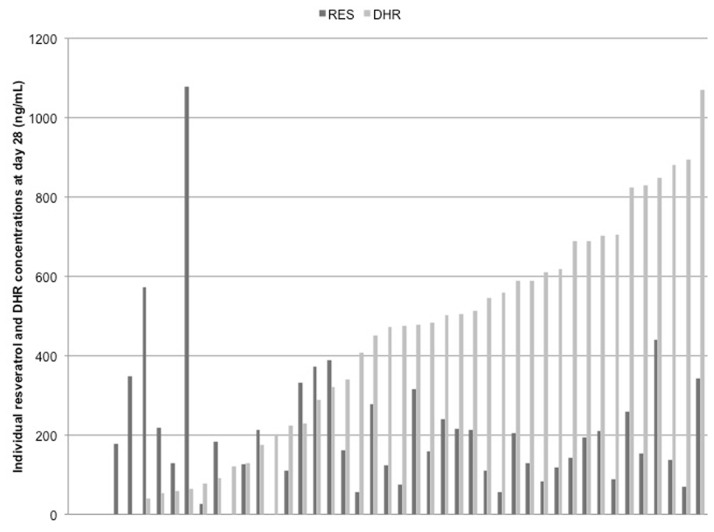
Compliance was excellent as indicated by capsule count and changes in resveratrol and dihydroresveratrol concentrations. No difference between resveratrol and placebo was found in any of the fasting serum or plasma metabolic risk markers (mean ± SD for differences between day 28 values of resveratrol vs. placebo: apoA-I; 0.00 ± 0.12 g/L (P = 0.791), apoB100; -0.01 ± 0.11 g/L (P = 0.545), HDL cholesterol; 0.00 ± 0.09 mmol/L (P = 0.721), LDL cholesterol -0.03 ± 0.57 mmol/L (P = 0.718), triacylglycerol; 0.10 ± 0.54 mmol/L (P = 0.687), glucose; -0.08 ± 0.28 mmol/L (P = 0.064), insulin; -0.3 ± 2.5 mU/L (P = 0.516)). Also, no effects on plasma markers for inflammation and endothelial function were observed. No adverse events related to resveratrol intake were observed.
150 mg of daily resveratrol intake for 4 weeks does not change metabolic risk markers related to cardiovascular health in overweight and slightly obese men and women. Effects on glucose metabolism warrant further study.
ClinicalTrials.gov NCT01364961.
体外和动物研究表明白藜芦醇对脂质和脂蛋白代谢有积极作用,但缺乏专门针对这些作用进行研究的人体试验。
本研究在超重和轻度肥胖受试者中的主要观察指标是白藜芦醇对载脂蛋白A-I浓度的影响。次要观察指标是对脂质和脂蛋白代谢、糖代谢以及炎症和内皮功能标志物的影响。
这项随机、安慰剂对照的交叉研究纳入了45名超重和轻度肥胖的男性(n = 25)和女性(n = 20),平均年龄为61±7岁。受试者随机顺序服用白藜芦醇(每日150毫克)或安慰剂胶囊,为期4周,中间有4周的洗脱期。在基线和每个干预期结束时采集空腹血样。
通过胶囊计数以及白藜芦醇和二氢白藜芦醇浓度变化表明依从性良好。在任何空腹血清或血浆代谢风险标志物方面,白藜芦醇与安慰剂之间均未发现差异(白藜芦醇与安慰剂第28天值之间差异的均值±标准差:载脂蛋白A-I;0.00±0.12克/升(P = 0.791),载脂蛋白B100;-0.01±0.11克/升(P = 0.545),高密度脂蛋白胆固醇;0.00±0.09毫摩尔/升(P = 0.721),低密度脂蛋白胆固醇-0.03±0.57毫摩尔/升(P = 0.718),三酰甘油;0.10±0.54毫摩尔/升(P = 0.687),葡萄糖;-0.08±0.28毫摩尔/升(P = 0.064),胰岛素;-0.3±2.5毫国际单位/升(P = 0.516))。此外,未观察到对炎症和内皮功能血浆标志物的影响。未观察到与白藜芦醇摄入相关的不良事件。
超重和轻度肥胖的男性和女性每日摄入150毫克白藜芦醇,持续4周,不会改变与心血管健康相关的代谢风险标志物。对糖代谢的影响值得进一步研究。
ClinicalTrials.gov NCT01364961。