Attri Pankaj, Kim Yong Hee, Park Dae Hoon, Park Ji Hoon, Hong Young J, Uhm Han Sup, Kim Kyoung-Nam, Fridman Alexander, Choi Eun Ha
Plasma Bioscience Research Center, Kwangwoon University, Seoul, Korea.
Yonsei University, Seoul, Korea.
Sci Rep. 2015 Mar 20;5:9332. doi: 10.1038/srep09332.
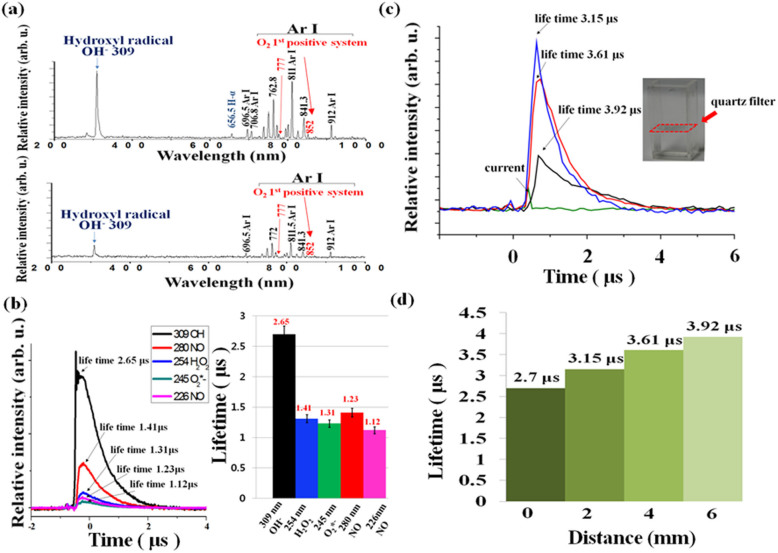
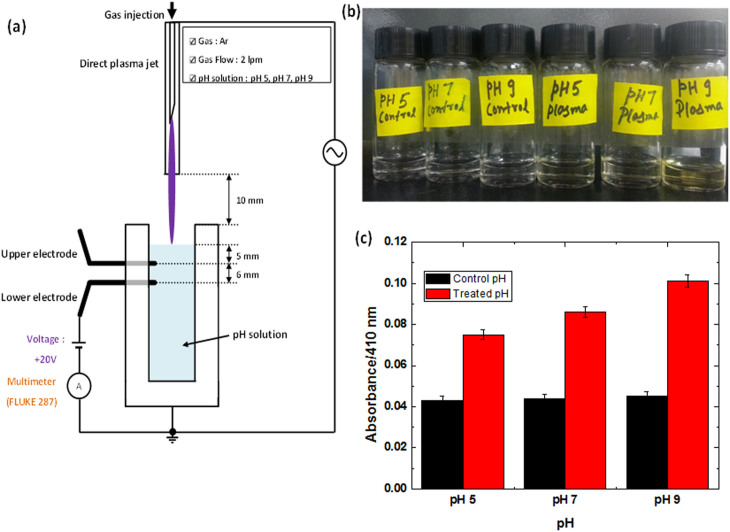
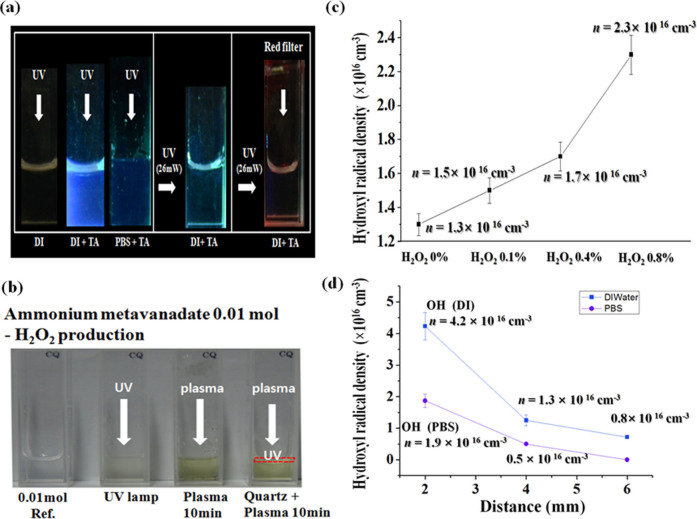
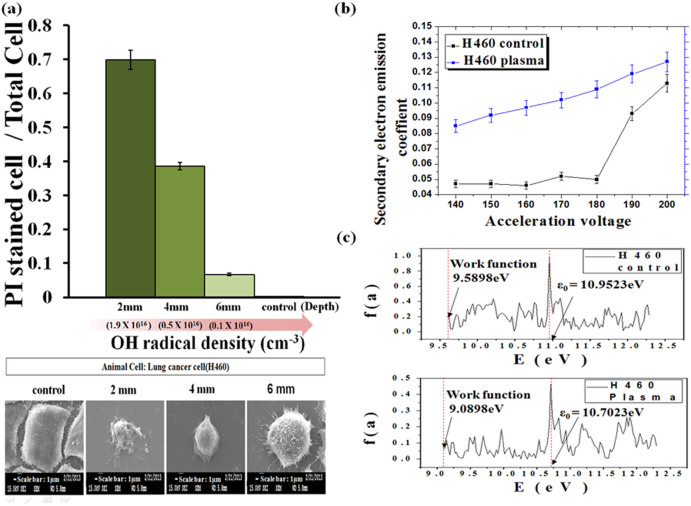
Through this work, we have elucidated the mechanism of hydroxyl radicals (OH(•)) generation and its life time measurements in biosolution. We observed that plasma-initiated ultraviolet (UV) photolysis were responsible for the continues generation of OH(•) species, that resulted in OH(•) to be major reactive species (RS) in the solution. The density and lifetime of OH(•) species acted inversely proportional to each other with increasing depth inside the solution. The cause of increased lifetime of OH(•) inside the solution is predicted using theoretical and semiempirical calculations. Further, to predict the mechanism of conversion of hydroxide ion (OH(-)) to OH(•) or H2O2 (hydrogen peroxide) and electron, we determined the current inside the solution of different pH. Additionally, we have investigated the critical criterion for OH(•) interaction on cancer cell inducing apoptosis under effective OH(•) exposure time. These studies are innovative in the field of plasma chemistry and medicine.
通过这项工作,我们阐明了生物溶液中羟基自由基(OH(•))的产生机制及其寿命测量。我们观察到,等离子体引发的紫外(UV)光解导致了OH(•)物种的持续产生,这使得OH(•)成为溶液中的主要活性物种(RS)。随着溶液深度增加,OH(•)物种的密度和寿命呈反比关系。利用理论和半经验计算预测了溶液中OH(•)寿命增加的原因。此外,为了预测氢氧根离子(OH(-))转化为OH(•)或过氧化氢(H2O2)以及电子的机制,我们测定了不同pH值溶液中的电流。此外,我们还研究了在有效OH(•)暴露时间下,OH(•)与癌细胞相互作用诱导细胞凋亡的关键标准。这些研究在等离子体化学和医学领域具有创新性。