The Alexander Graham Bell Centre for Digital Health, Moray College UHI, University of the Highlands and Islands, Elgin, United Kingdom.
JMIR Serious Games. 2015 Mar 18;3(1):e3. doi: 10.2196/games.3930.
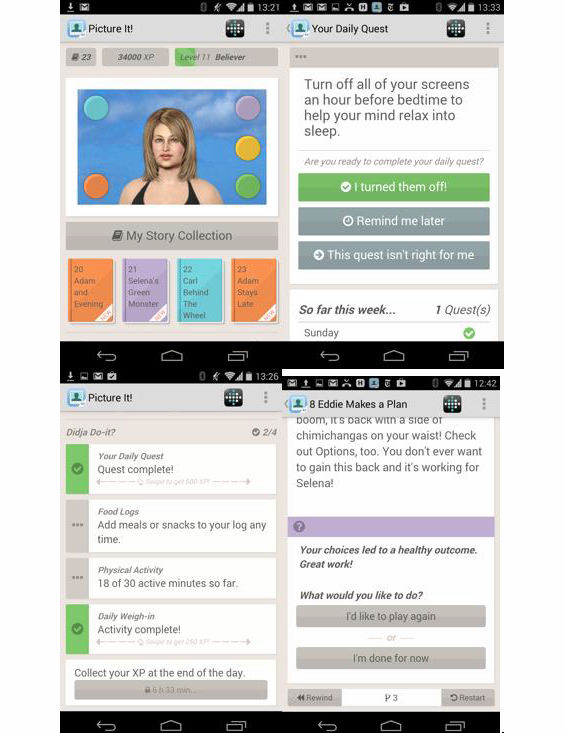
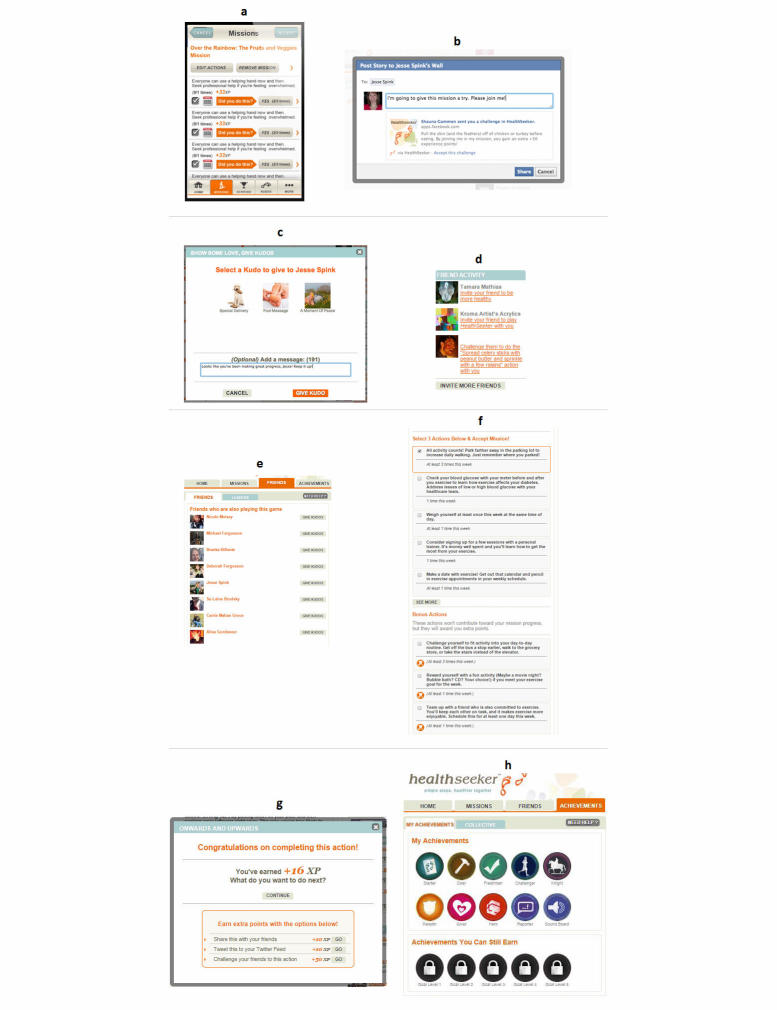
Digital games are an important class of eHealth interventions in diabetes, made possible by the Internet and a good range of affordable mobile devices (eg, mobile phones and tablets) available to consumers these days. Gamifying disease management can help children, adolescents, and adults with diabetes to better cope with their lifelong condition. Gamification and social in-game components are used to motivate players/patients and positively change their behavior and lifestyle. In this paper, we start by presenting the main challenges facing people with diabetes-children/adolescents and adults-from a clinical perspective, followed by three short illustrative examples of mobile and desktop game apps and platforms designed by Ayogo Health, Inc. (Vancouver, BC, Canada) for type 1 diabetes (one example) and type 2 diabetes (two examples). The games target different age groups with different needs-children with type 1 diabetes versus adults with type 2 diabetes. The paper is not meant to be an exhaustive review of all digital game offerings available for people with type 1 and type 2 diabetes, but rather to serve as a taster of a few of the game genres on offer today for both types of diabetes, with a brief discussion of (1) some of the underpinning psychological mechanisms of gamified digital interventions and platforms as self-management adherence tools, and more, in diabetes, and (2) some of the hypothesized potential benefits that might be gained from their routine use by people with diabetes. More research evidence from full-scale evaluation studies is needed and expected in the near future that will quantify, qualify, and establish the evidence base concerning this gamification potential, such as what works in each age group/patient type, what does not, and under which settings and criteria.
数字游戏是糖尿病电子健康干预的一个重要类别,这得益于互联网和当今消费者可获得的各种价格合理的移动设备(如手机和平板电脑)。将疾病管理游戏化可以帮助儿童、青少年和成年糖尿病患者更好地应对他们的终身疾病。游戏化和游戏中的社交组件用于激励玩家/患者,积极改变他们的行为和生活方式。在本文中,我们首先从临床角度介绍了糖尿病患者(儿童/青少年和成年人)面临的主要挑战,然后介绍了 Ayogo Health, Inc.(加拿大不列颠哥伦比亚省温哥华)为 1 型糖尿病(一个例子)和 2 型糖尿病(两个例子)设计的三个简短的移动和桌面游戏应用程序和平台的示例。这些游戏针对不同年龄段、不同需求的人群——1 型糖尿病儿童与 2 型糖尿病成年人。本文无意对所有面向 1 型和 2 型糖尿病患者的数字游戏产品进行详尽的回顾,而是旨在作为当今提供的几种游戏类型的试金石,介绍(1)一些作为自我管理依从工具的游戏化数字干预和平台的潜在心理机制,以及更多的内容,在糖尿病中,以及(2)人们从日常使用中可能获得的一些假设的潜在益处。在不久的将来,需要并预计会有更多来自全面评估研究的证据,对这种游戏化潜力进行量化、定性和建立证据基础,例如在每个年龄组/患者类型中哪些有效,哪些无效,以及在哪些设置和标准下有效。