Uen Yih-Huei, Fang Chia-Lang, Hseu You-Cheng, Shen Pei-Chun, Yang Hsin-Ling, Wen Kuo-Shan, Hung Shih-Ting, Wang Lu-Hai, Lin Kai-Yuan
1] Department of Medical Research, Chi Mei Medical Center, Tainan, Taiwan [2] The Superintendent's Office, Chi Mei Hospital Chiali, Tainan, Taiwan.
1] Department of Pathology, School of Medicine, College of Medicine, Taipei Medical University, Taipei, Taiwan [2] Department of Pathology, Wan Fang Hospital, Taipei Medical University, Taipei, Taiwan.
Sci Rep. 2015 Mar 20;5:9360. doi: 10.1038/srep09360.
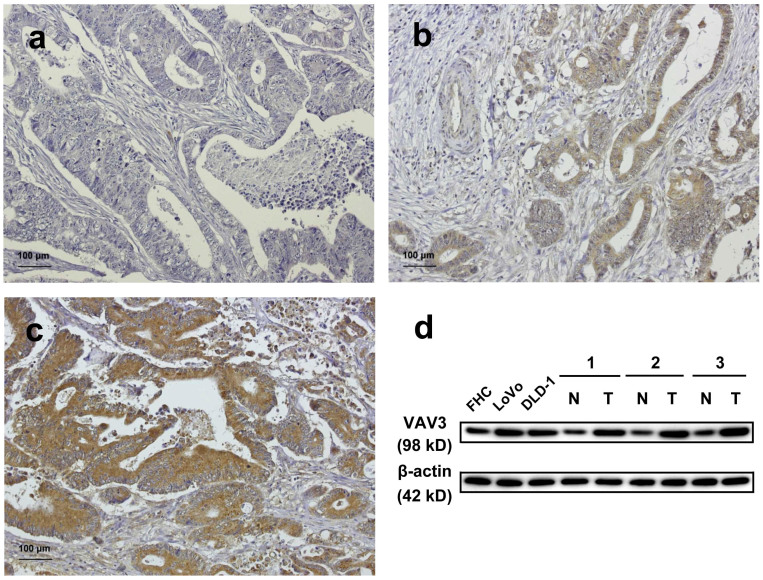
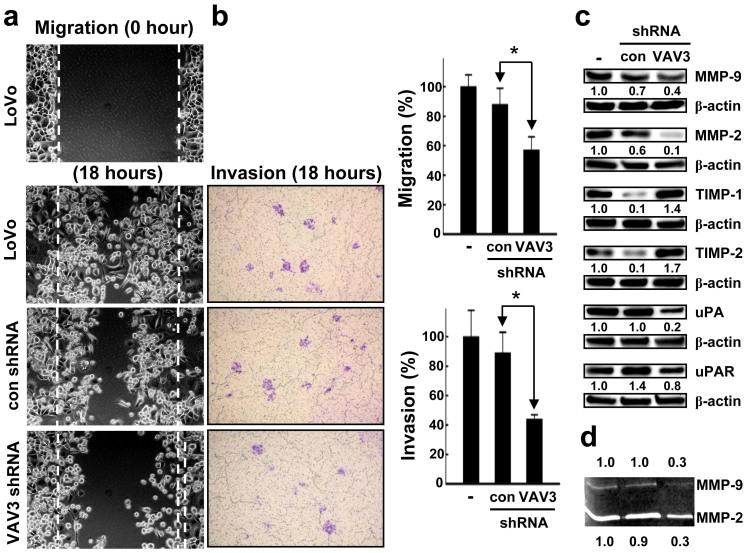
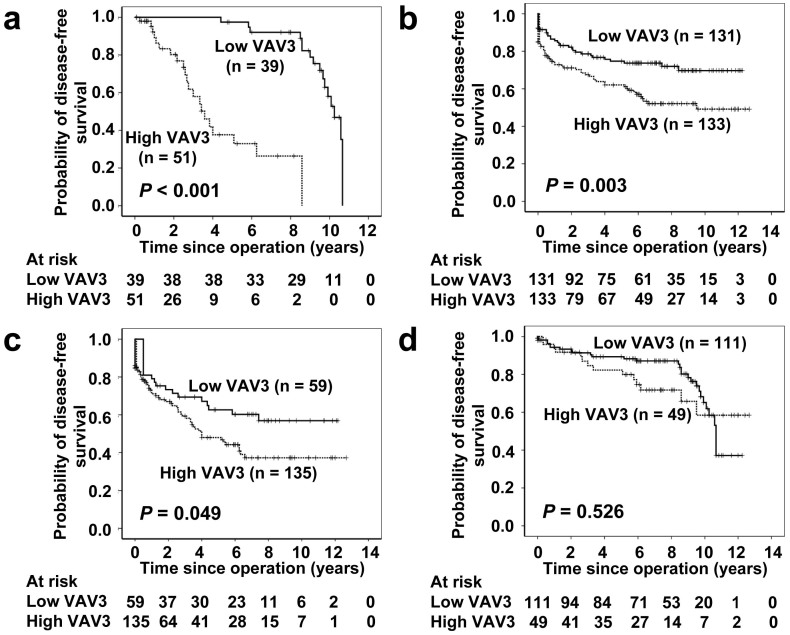
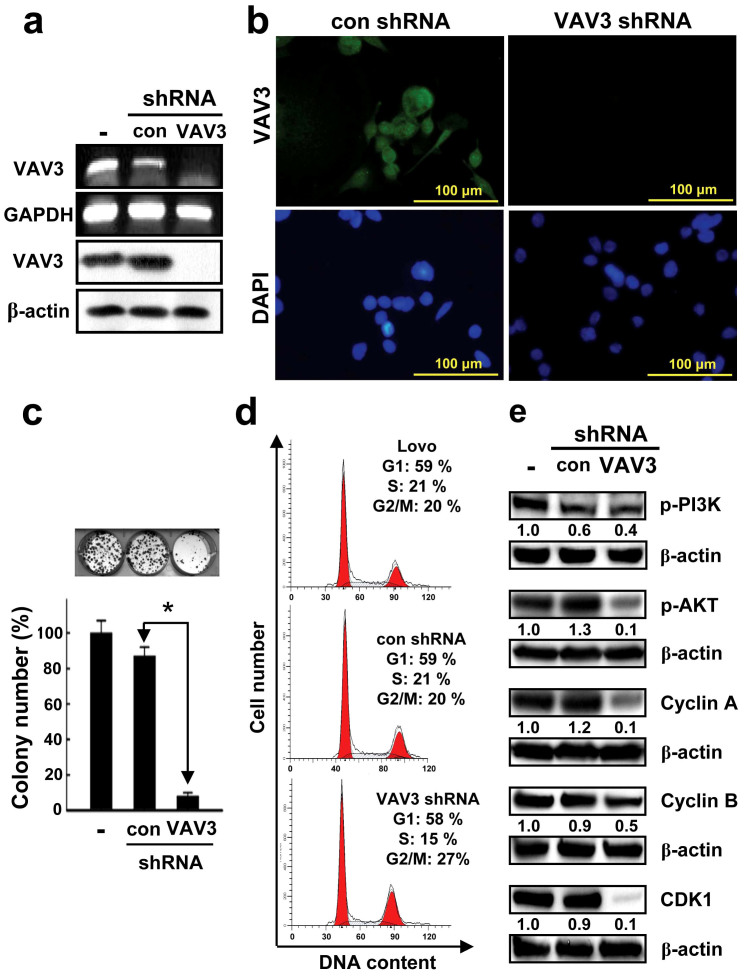
Although colorectal cancer (CRC) is one of the most common malignancies worldwide, the current therapeutic approaches for advanced CRC are ineffective. In this study, we investigated the involvement of the VAV3 oncogene in tumor progression and in the prognosis of human CRC. The two patient cohorts in this study comprised 354 CRC cases from 1998 to 2005 with documented pathologic and clinical factors and clinical outcomes. VAV3 protein levels were significantly correlated with the depth of invasion (P = 0.0259), the nodal status (P < 0.0001), distant metastasis (P = 0.0354), the stage (P < 0.0001), and poor disease-free survival (P = 0.003). Multivariate Cox regression analysis showed that VAV3 overexpression is an independent prognostic marker for CRC (P = 0.041). In vitro experiments indicated that VAV3 knockdown inhibited CRC cell growth, spread, and xenograft proliferation. Mechanistic studies further revealed that VAV3 overexpression could dysregulate the expression of cell cycle control- and metastasis-related molecules by activating the PI3K-AKT signaling pathway in both CRC cells and xenografts. This study suggests that VAV3 overexpression could be a useful marker for predicting the outcomes of CRC patients and that VAV3 targeting represents a potential modality for treating CRC.
尽管结直肠癌(CRC)是全球最常见的恶性肿瘤之一,但目前针对晚期CRC的治疗方法效果不佳。在本研究中,我们调查了VAV3癌基因在人类CRC肿瘤进展和预后中的作用。本研究中的两个患者队列包括1998年至2005年的354例CRC病例,记录了病理和临床因素以及临床结局。VAV3蛋白水平与浸润深度(P = 0.0259)、淋巴结状态(P < 0.0001)、远处转移(P = 0.0354)、分期(P < 0.0001)以及无病生存期差(P = 0.003)显著相关。多变量Cox回归分析表明,VAV3过表达是CRC的独立预后标志物(P = 0.041)。体外实验表明,VAV3基因敲低抑制了CRC细胞的生长、扩散和异种移植增殖。机制研究进一步揭示,VAV3过表达可通过激活CRC细胞和异种移植中的PI3K-AKT信号通路,使细胞周期调控和转移相关分子的表达失调。本研究表明,VAV3过表达可能是预测CRC患者预后的有用标志物,靶向VAV3代表了一种治疗CRC的潜在方式。