Department of Medicine, Center for East-West Medicine, University of California, Los Angeles, CA 90024, USA.
Evid Based Complement Alternat Med. 2015;2015:458765. doi: 10.1155/2015/458765. Epub 2015 Feb 22.
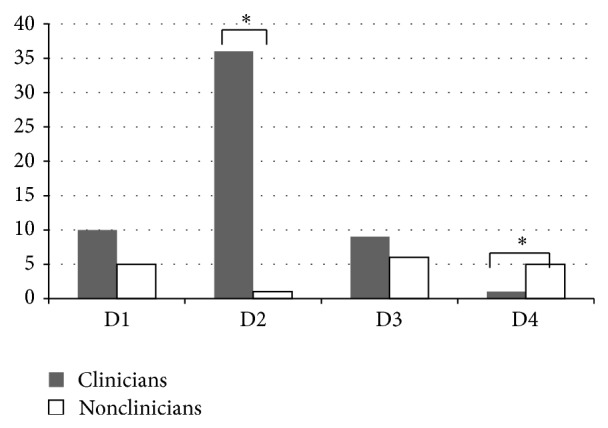
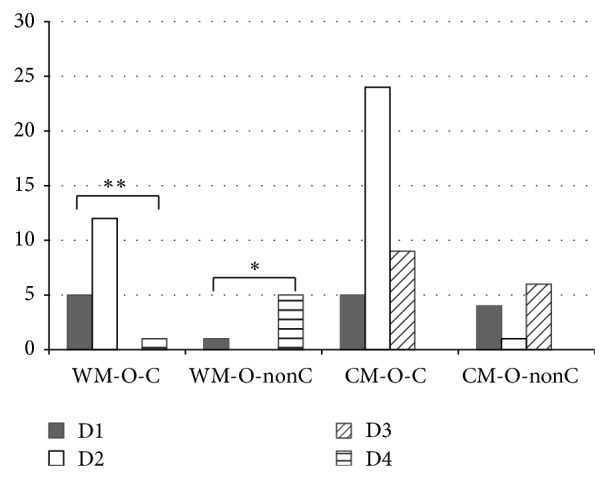
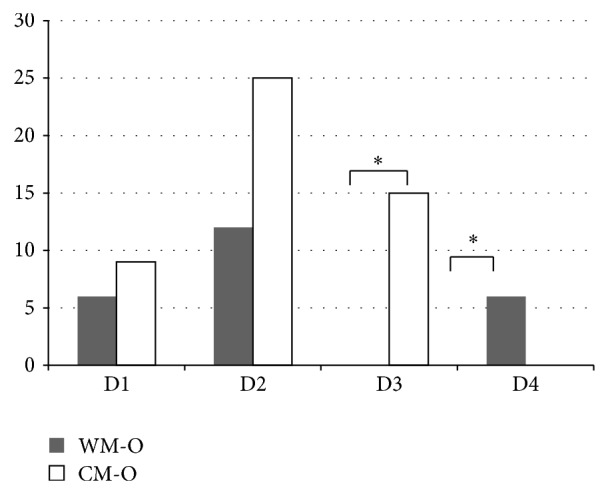
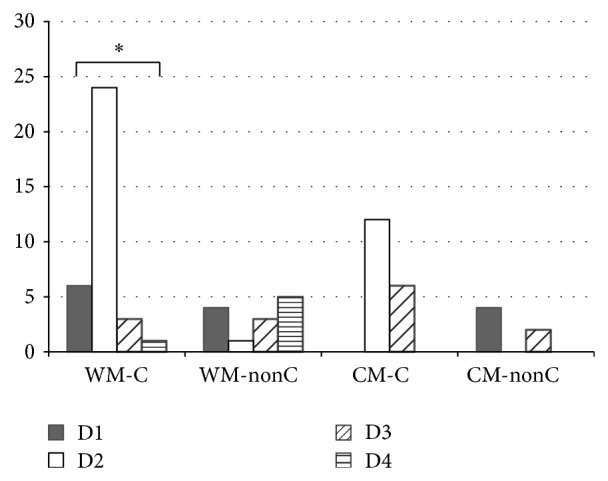
Aim. This study identifies existing definitions and approaches among China's integrative medicine (IM) experts and examines relationships with key characteristics distinguishing individual experts. Methods. Snowball sampling was used to select 73 IM experts for semistructured interviews. In this mixed methods study, we first identified definitions and approaches through analyzing core statements. Four key factors, including age, education, practice type, and working environment, were then chosen to evaluate the associations with the definitions. Results. Four unique definitions were identified, including IM as a "new medicine" (D1), as a combination of western medicine (WM) and Chinese medicine (CM) (D2), as a modernization of CM (D3), and as a westernization of CM (D4). D4 was mostly supported by those working in WM organizations, while D3 was more prominent from individuals working in CM organizations (P = 0.00004). More than 64% clinicians had D2 while only 1 (5.9%) nonclinician had D2. Only 1 clinician (1.8%) had D4 while almost 30% nonclinicians had D4 (P = 0.0001). Among nonclinicians working in WM organizations, 83.3% of them had D4 (P = 0.001). Conclusion. Findings indicate that institutional structure and practice type are factors affecting IM approaches. These results carry implications for the ways in which western countries move forward with the definition and implementation of IM.
目的。本研究旨在确定中国整合医学(IM)专家现有的定义和方法,并探讨这些定义与区分个体专家的关键特征之间的关系。
方法。采用雪球抽样法选择 73 名 IM 专家进行半结构式访谈。在这项混合方法研究中,我们首先通过分析核心陈述来确定定义和方法。然后选择四个关键因素,包括年龄、教育、实践类型和工作环境,来评估它们与定义的关联。
结果。确定了四个独特的定义,包括 IM 是一种“新医学”(D1)、西医和中医的结合(D2)、中医现代化(D3)和中医西医化(D4)。D4 主要得到在西医机构工作的人的支持,而 D3 则更多地来自在中医机构工作的人(P=0.00004)。超过 64%的临床医生持有 D2,而只有 1 名非临床医生持有 D2。只有 1 名临床医生(1.8%)持有 D4,而近 30%的非临床医生持有 D4(P=0.0001)。在西医机构工作的非临床医生中,83.3%的人持有 D4(P=0.001)。
结论。研究结果表明,机构结构和实践类型是影响 IM 方法的因素。这些结果对西方国家定义和实施 IM 的方式具有启示意义。