Ahmed Md Mahiuddin, Dhanasekaran A Ranjitha, Block Aaron, Tong Suhong, Costa Alberto C S, Stasko Melissa, Gardiner Katheleen J
Linda Crnic Institute for Down Syndrome, Department of Pediatrics, University of Colorado Denver, Mail Stop 8608, 12700 E 19th Avenue, Aurora, Colorado 80045, United States of America.
Colorado School of Public Health, University of Colorado Denver, Mail Stop A036-B065 TCH, 12700 E 19th Avenue, Aurora, Colorado 80045, United States of America.
PLoS One. 2015 Mar 20;10(3):e0119491. doi: 10.1371/journal.pone.0119491. eCollection 2015.
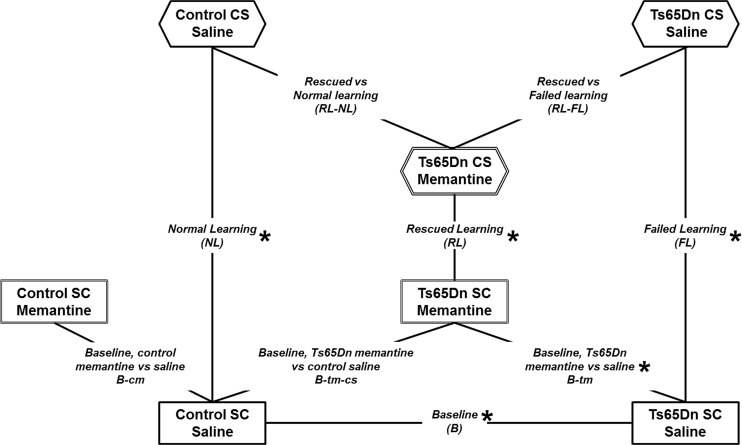
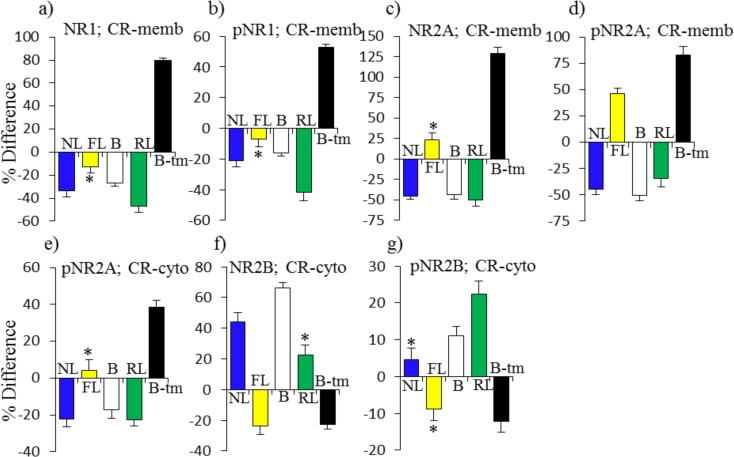
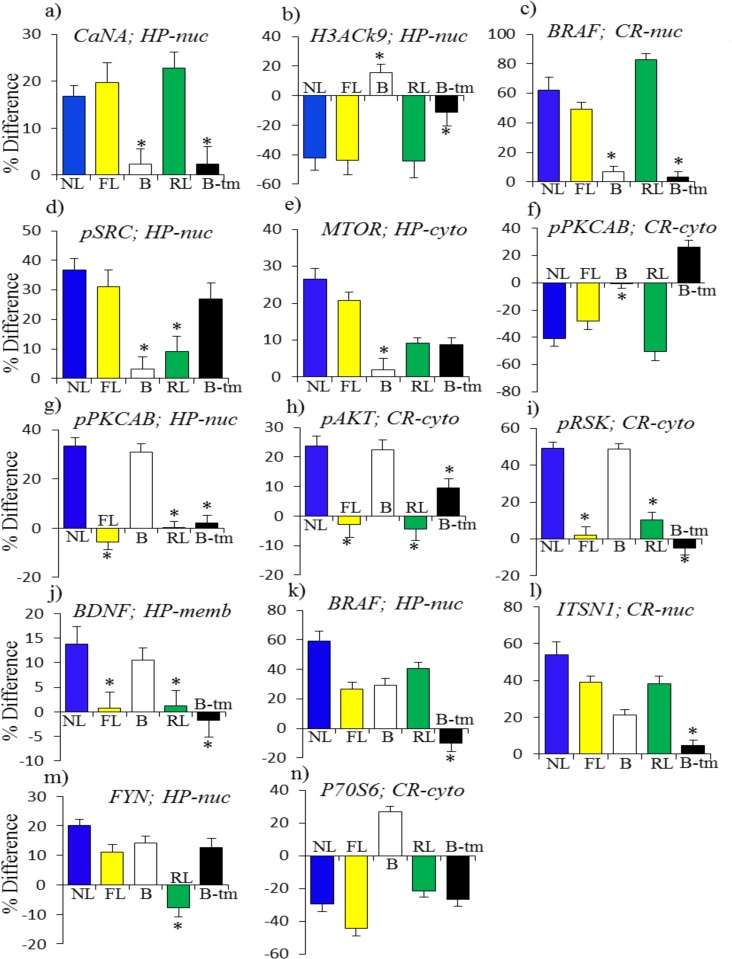
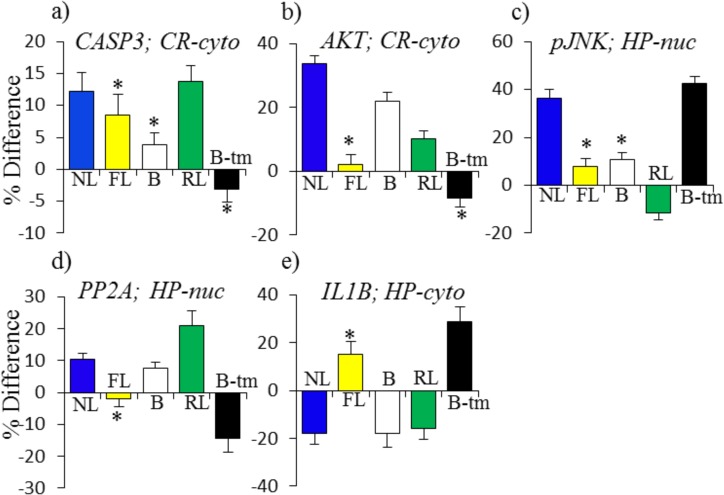
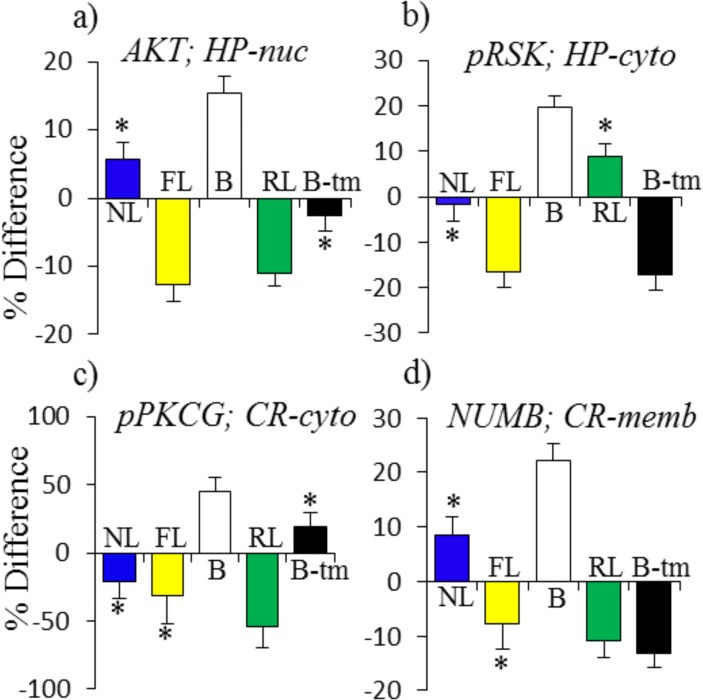
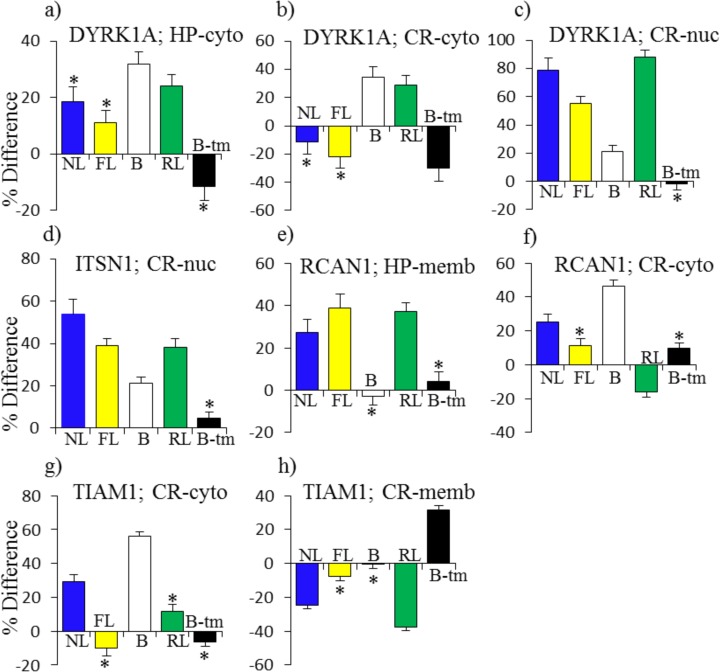
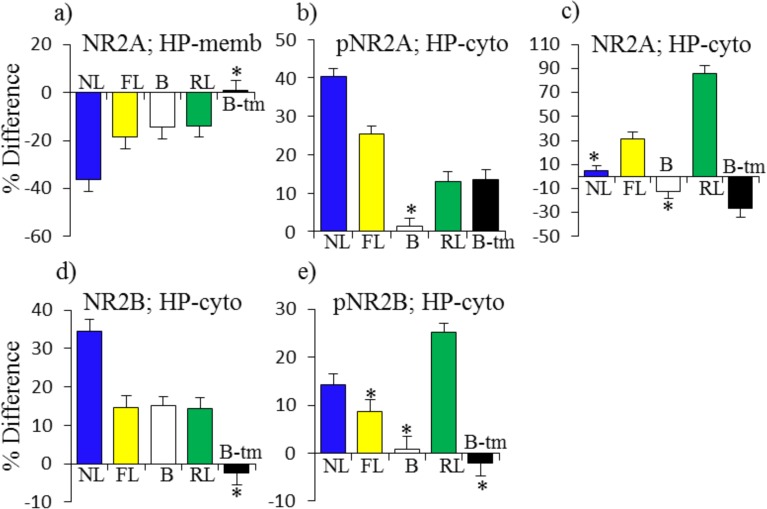
Down syndrome (DS) is caused by an extra copy of human chromosome 21 (Hsa21). Although it is the most common genetic cause of intellectual disability (ID), there are, as yet, no effective pharmacotherapies. The Ts65Dn mouse model of DS is trisomic for orthologs of ∼55% of Hsa21 classical protein coding genes. These mice display many features relevant to those seen in DS, including deficits in learning and memory (L/M) tasks requiring a functional hippocampus. Recently, the N-methyl-D-aspartate (NMDA) receptor antagonist, memantine, was shown to rescue performance of the Ts65Dn in several L/M tasks. These studies, however, have not been accompanied by molecular analyses. In previous work, we described changes in protein expression induced in hippocampus and cortex in control mice after exposure to context fear conditioning (CFC), with and without memantine treatment. Here, we extend this analysis to Ts65Dn mice, measuring levels of 85 proteins/protein modifications, including components of MAP kinase and MTOR pathways, and subunits of NMDA receptors, in cortex and hippocampus of Ts65Dn mice after failed learning in CFC and after learning was rescued by memantine. We show that, compared with wild type littermate controls, (i) of the dynamic responses seen in control mice in normal learning, >40% also occur in Ts65Dn in failed learning or are compensated by baseline abnormalities, and thus are considered necessary but not sufficient for successful learning, and (ii) treatment with memantine does not in general normalize the initial protein levels but instead induces direct and indirect responses in approximately half the proteins measured and results in normalization of the endpoint protein levels. Together, these datasets provide a first view of the complexities associated with pharmacological rescue of learning in the Ts65Dn. Extending such studies to additional drugs and mouse models of DS will aid in identifying pharmacotherapies for effective clinical trials.
唐氏综合征(DS)由人类21号染色体(Hsa21)多一条拷贝所致。尽管它是智力残疾(ID)最常见的遗传病因,但目前尚无有效的药物治疗方法。DS的Ts65Dn小鼠模型对于约55%的Hsa21经典蛋白质编码基因的直系同源基因而言是三体的。这些小鼠表现出许多与DS患者所见相关的特征,包括在需要功能性海马体的学习和记忆(L/M)任务中存在缺陷。最近,N-甲基-D-天冬氨酸(NMDA)受体拮抗剂美金刚被证明可挽救Ts65Dn小鼠在多项L/M任务中的表现。然而,这些研究并未伴随分子分析。在之前的工作中,我们描述了对照小鼠在经历情境恐惧条件反射(CFC)时,无论有无美金刚治疗,海马体和皮质中诱导的蛋白质表达变化。在此,我们将这种分析扩展到Ts65Dn小鼠,测量在CFC学习失败后以及美金刚挽救学习后,Ts65Dn小鼠皮质和海马体中85种蛋白质/蛋白质修饰的水平,包括丝裂原活化蛋白激酶和雷帕霉素靶蛋白(MTOR)途径的成分以及NMDA受体的亚基。我们发现,与野生型同窝对照相比,(i)在正常学习的对照小鼠中所见的动态反应中,超过40%在Ts65Dn小鼠学习失败时也会出现,或由基线异常所补偿,因此被认为是成功学习所必需但不充分的条件,(ii)美金刚治疗一般不会使初始蛋白质水平正常化,而是在大约一半被测蛋白质中诱导直接和间接反应,并导致终点蛋白质水平正常化。总之,这些数据集首次展示了Ts65Dn小鼠学习药理学挽救相关的复杂性。将此类研究扩展到其他药物和DS小鼠模型将有助于确定用于有效临床试验的药物治疗方法。