Luo Zhaofan, Li Yanan, Wang Huamin, Fleming Jason, Li Min, Kang Yaan, Zhang Ran, Li Donghui
Department of Gastrointestinal Medical Oncology, The University of Texas MD Anderson Cancer Center, Houston, Texas, United States of America.
Department of Pathology, The University of Texas MD Anderson Cancer Center, Houston, Texas, United States of America.
PLoS One. 2015 Mar 20;10(3):e0121082. doi: 10.1371/journal.pone.0121082. eCollection 2015.
HNF1A (Hepatocyte nuclear factor 1 alpha) is a transcription factor that is known to regulate pancreatic differentiation and maintain homeostasis of endocrine pancreas. Recently, genome-wide association studies have implicated HNF1A as a susceptibility gene for pancreatic cancer. However, the functional significance and molecular mechanism of HNF1A in pancreatic carcinogenesis remains unclear.
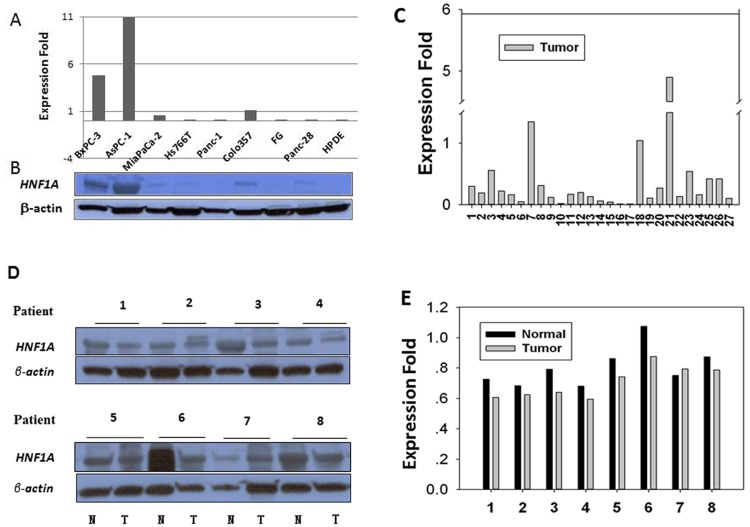
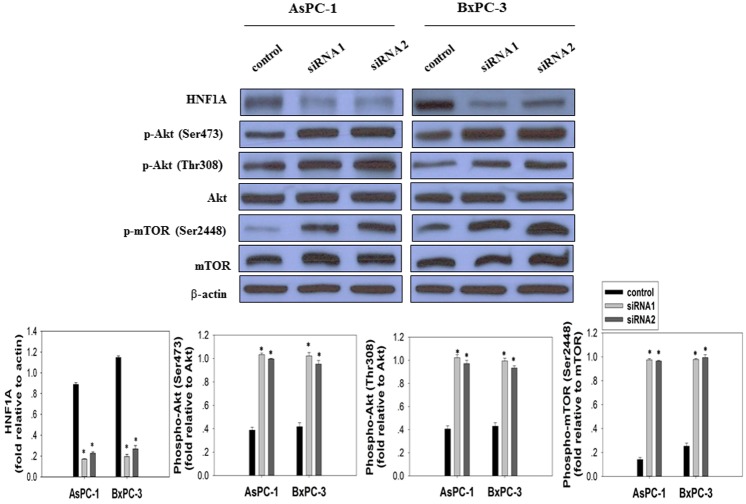
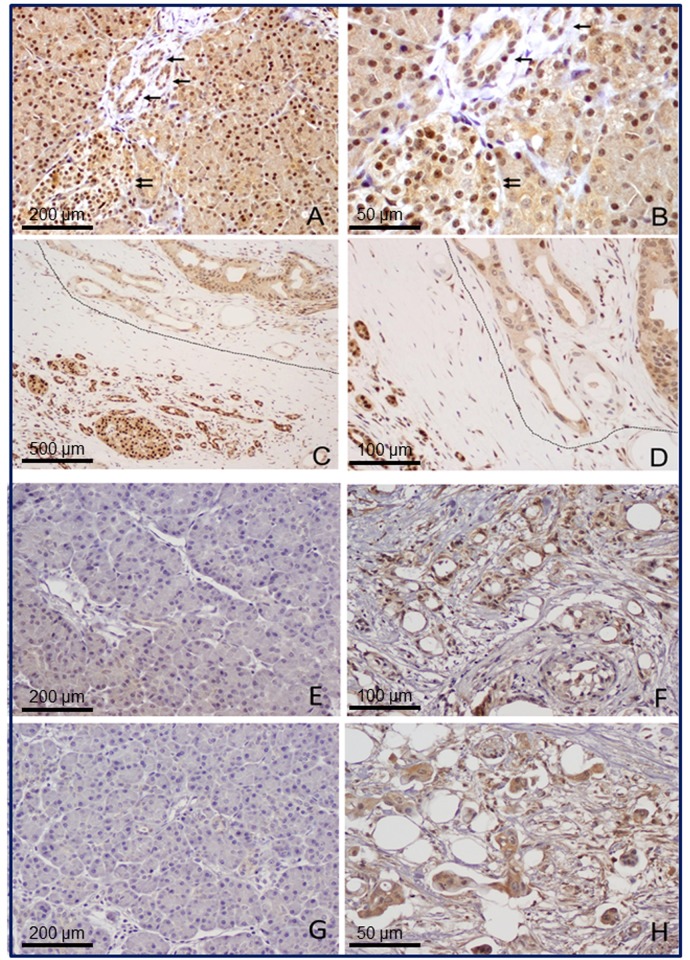
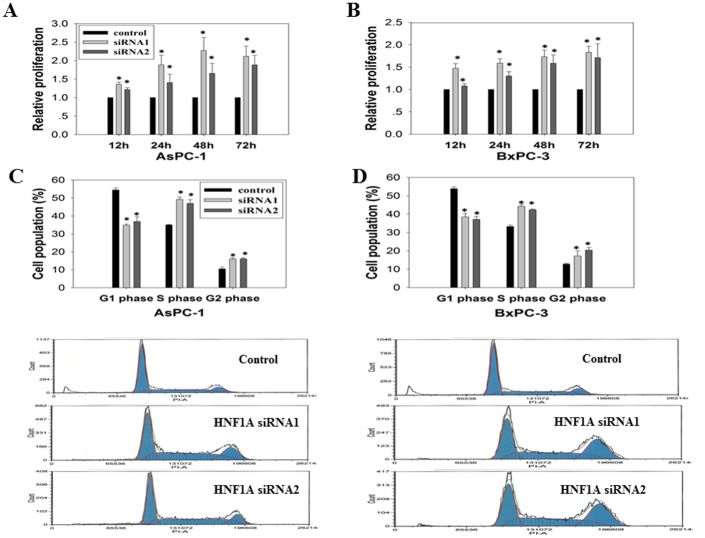
Using RT-PCR, Western blot and immunohistochemistry methods, we examined HNF1A gene expression in eight pancreatic carcinoma cell lines and in paired tumor and normal tissue samples from patients with resected pancreatic ductal adenocarcinoma. We knocked down the HNF1A gene expression in two cancer cell lines using three siRNA sequences. The impacts on cell proliferation, apoptosis, and cell cycle as well as the phosphorylation of Akt signaling transduction proteins were examined using ATP assay, flow cytometry and Western blot.
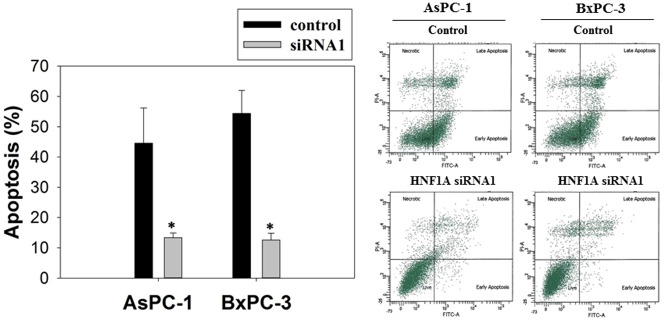
HNF1A was expressed in three out of eight pancreatic adenocarcinoma cell lines and the level of HNF1A mRNA and protein expression was significantly lower in tumors than in normal adjacent tissues by both RT-PCR and Western Blot analyses. Immunohistochemistry revealed that the level of HNF1A expression was significantly lower in tumor tissues than in non-tumor tissues. Selective blocking of HNF1A by specific siRNA conferred a 2-fold higher rate of cell proliferation, 20% increased S phase and G2 phase cells, and 30-40% reduced apoptosis in pancreatic cancer cell lines. We further demonstrated that HNF1A knockdown activated Akt and its downstream target, the mammalian target of rapamycin (mTOR) in pancreatic cancer cells.
These observations provide experimental evidence supporting a possible tumor suppressor role of HNF1A in pancreatic cancer.
肝细胞核因子1α(HNF1A)是一种转录因子,已知其可调节胰腺分化并维持内分泌胰腺的稳态。最近,全基因组关联研究表明HNF1A是胰腺癌的一个易感基因。然而,HNF1A在胰腺癌发生中的功能意义和分子机制仍不清楚。
我们使用逆转录聚合酶链反应(RT-PCR)、蛋白质免疫印迹法和免疫组织化学方法,检测了8种胰腺癌细胞系以及来自接受胰腺导管腺癌切除术患者的配对肿瘤和正常组织样本中HNF1A基因的表达。我们使用3种小干扰RNA(siRNA)序列在两种癌细胞系中敲低HNF1A基因的表达。使用ATP检测、流式细胞术和蛋白质免疫印迹法检测对细胞增殖、凋亡、细胞周期以及Akt信号转导蛋白磷酸化的影响。
8种胰腺腺癌细胞系中有3种表达HNF1A,通过RT-PCR和蛋白质免疫印迹分析,肿瘤组织中HNF1A mRNA和蛋白质表达水平均显著低于相邻正常组织。免疫组织化学显示,肿瘤组织中HNF1A表达水平显著低于非肿瘤组织。通过特异性siRNA选择性阻断HNF1A可使胰腺癌细胞系中的细胞增殖率提高2倍,S期和G2期细胞增加20%,凋亡减少30 - 40%。我们进一步证明,敲低HNF1A可激活胰腺癌细胞中的Akt及其下游靶点雷帕霉素哺乳动物靶点(mTOR)。
这些观察结果提供了实验证据,支持HNF1A在胰腺癌中可能具有肿瘤抑制作用。