Qin Wei-dong, Mi Shao-hua, Li Chen, Wang Gui-xia, Zhang Jian-ning, Wang Hao, Zhang Fan, Ma Yang, Wu Da-wei, Zhang Mingxiang
The Department of Critical Care Unit, Qilu Hospital of Shandong University, Jinan, Shandong, China.
The Department of Cardiology, Yu Huang Ding Hospital, Yantai, Shandong, China.
PLoS One. 2015 Mar 20;10(3):e0120586. doi: 10.1371/journal.pone.0120586. eCollection 2015.
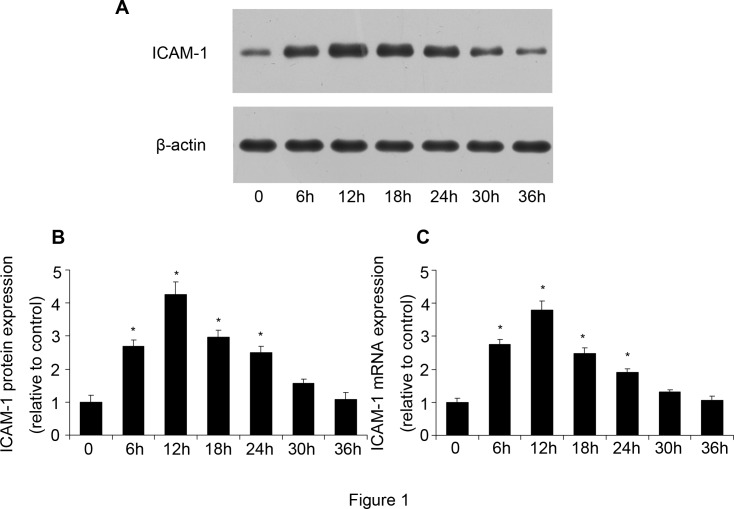
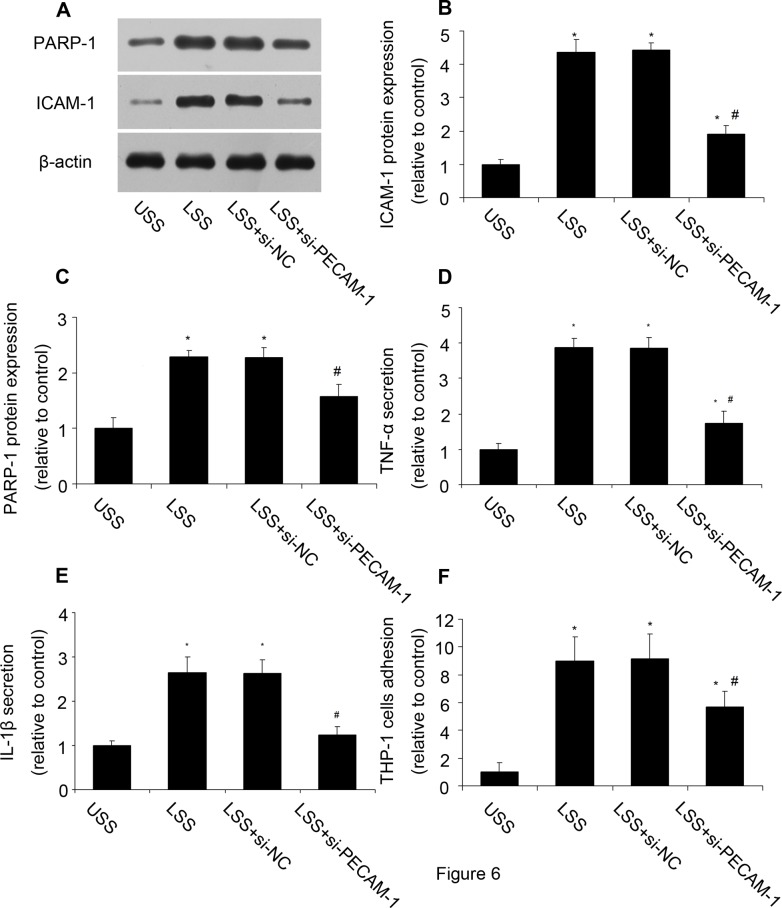
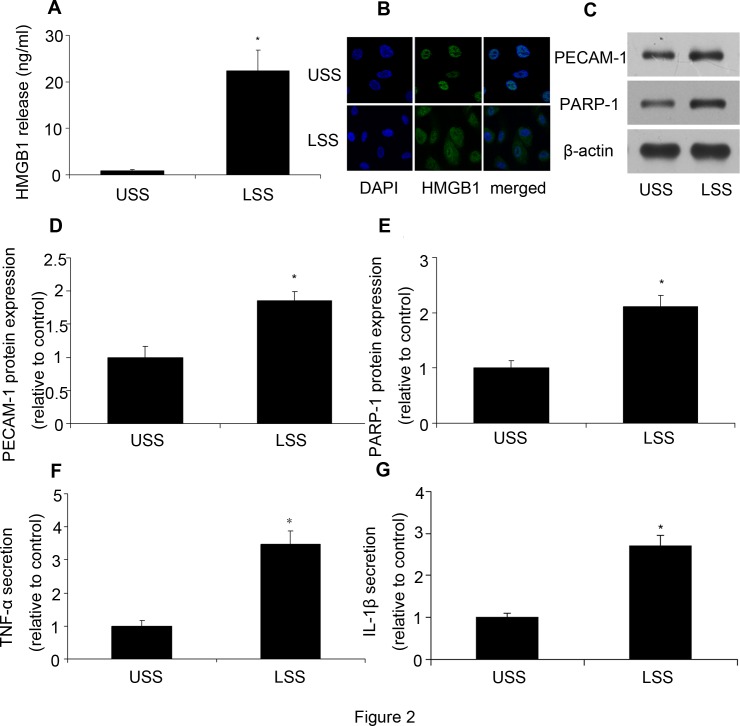
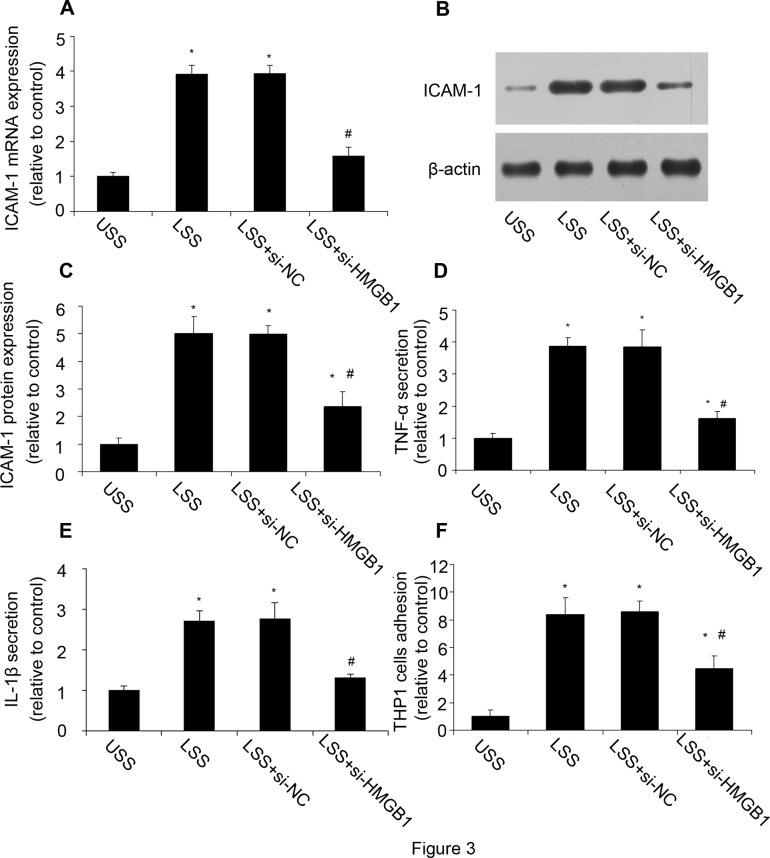
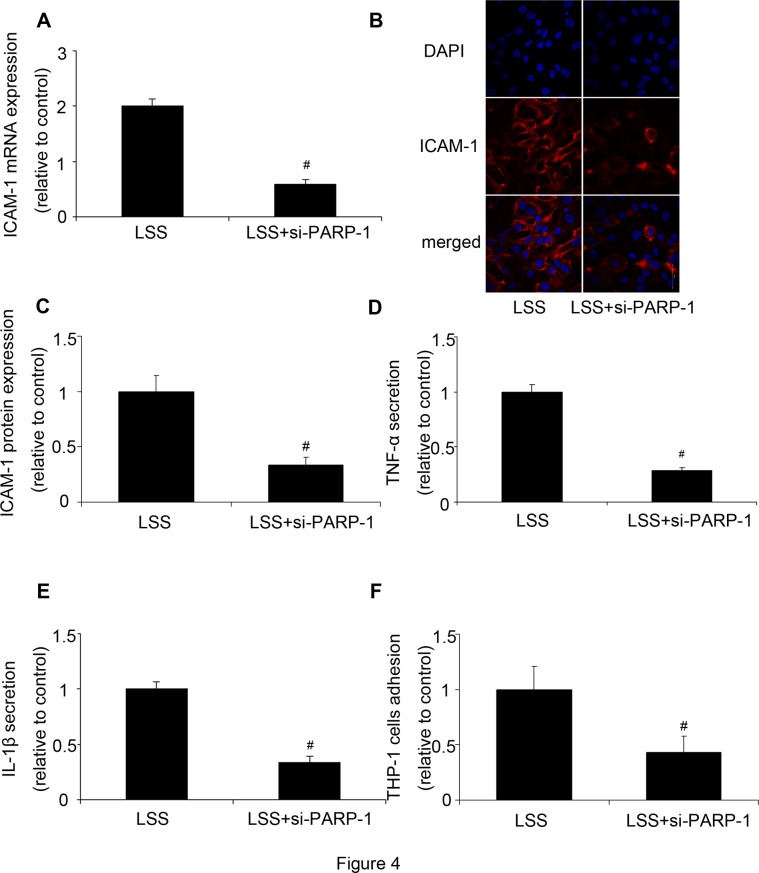
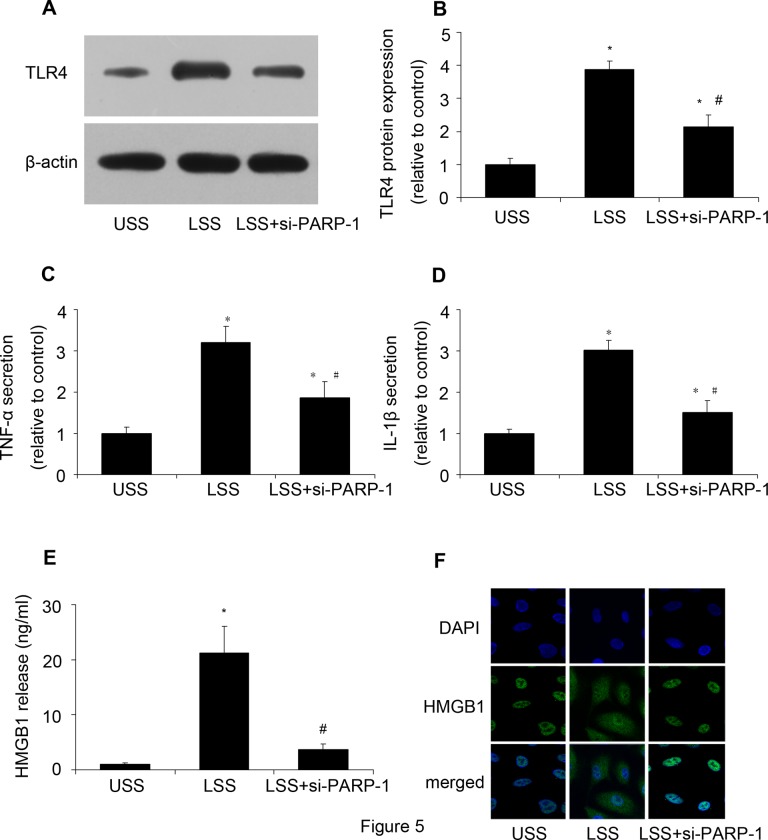
Low shear stress (LSS) plays a critical role in the site predilection of atherosclerosis through activation of cellular mechanosensors, such as platelet endothelial cell adhesion molecule 1 (PECAM-1). Poly(ADP-ribose) polymerase 1 (PARP-1) is a nuclear enzyme that regulates the expression of various inflammatory cytokines. The nuclear enzyme high mobility group box 1 (HMGB1) can induce inflammation response by binding to toll-like receptor 4 (TLR4). In the present study, we aimed to investigate the role and mechanism of HMGB1 in LSS induced inflammation in human umbilical vein endothelial cells (HUVECs). HUVECs were stimulated by undisturbed shear stress (USS, 1 Pa) and LSS (0.4 Pa) in our experiments. Gene expression was inhibited by small interfering RNA (siRNA). ICAM-1 expression was regulated by LSS in a time dependent manner. LSS can induce HMGB1 translocation from nucleus to cytoplasm and release. Compared with the USS, LSS could increase the protein expression of PECAM-1 and PARP-1 as well as the secretion of TNF-α and IL-1β. LSS induced the translocation of HMGB1 from nucleus to cytoplasm. Inhibition of HGMB1 reduced LSS-induced inflammatory response. Inhibition of PARP-1 suppressed inflammatory response through inhibiting TLR4 expression and HMGB1 translocation. PECAM-1 inhibition reduced LSS-induced ICAM-1 expression, TNF-α and IL-1β secretion, and monocytes adhesion. LSS can induce inflammatory response via PECAM-1/PARP-1/HMGB1 pathway. PARP-1 plays a fundamental role in HMGB1 translocation and TLR4 expression. Inhibition of PARP-1 may shed light on the treatment of HMGB1 involved inflammation during atherosclerosis.
低剪切应力(LSS)通过激活细胞机械传感器,如血小板内皮细胞黏附分子1(PECAM-1),在动脉粥样硬化的部位偏好中起关键作用。聚(ADP-核糖)聚合酶1(PARP-1)是一种核酶,可调节多种炎症细胞因子的表达。核酶高迁移率族蛋白B1(HMGB1)可通过与Toll样受体4(TLR4)结合诱导炎症反应。在本研究中,我们旨在探讨HMGB1在LSS诱导的人脐静脉内皮细胞(HUVECs)炎症中的作用及机制。在我们的实验中,HUVECs受到静态剪切应力(USS,1 Pa)和LSS(0.4 Pa)的刺激。基因表达通过小干扰RNA(siRNA)抑制。ICAM-1的表达受LSS的时间依赖性调节。LSS可诱导HMGB1从细胞核向细胞质转位并释放。与USS相比,LSS可增加PECAM-1和PARP-1的蛋白表达以及TNF-α和IL-1β的分泌。LSS诱导HMGB1从细胞核向细胞质转位。抑制HMGB1可降低LSS诱导的炎症反应。抑制PARP-1通过抑制TLR4表达和HMGB1转位来抑制炎症反应。抑制PECAM-1可降低LSS诱导的ICAM-1表达、TNF-α和IL-1β分泌以及单核细胞黏附。LSS可通过PECAM-1/PARP-1/HMGB1途径诱导炎症反应。PARP-1在HMGB1转位和TLR4表达中起重要作用。抑制PARP-1可能为动脉粥样硬化期间HMGB1相关炎症的治疗提供思路。