Magnusson Martin, Wang Thomas J, Clish Clary, Engström Gunnar, Nilsson Peter, Gerszten Robert E, Melander Olle
Department of Heart Failure and Valvular Disease, Skåne University Hospital, Malmö, Sweden Department of Clinical Sciences, Lund University, Malmö, Sweden
Division of Cardiovascular Medicine, Vanderbilt Heart and Vascular Institute, Nashville, TN.
Diabetes. 2015 Aug;64(8):3010-6. doi: 10.2337/db14-1863. Epub 2015 Mar 20.
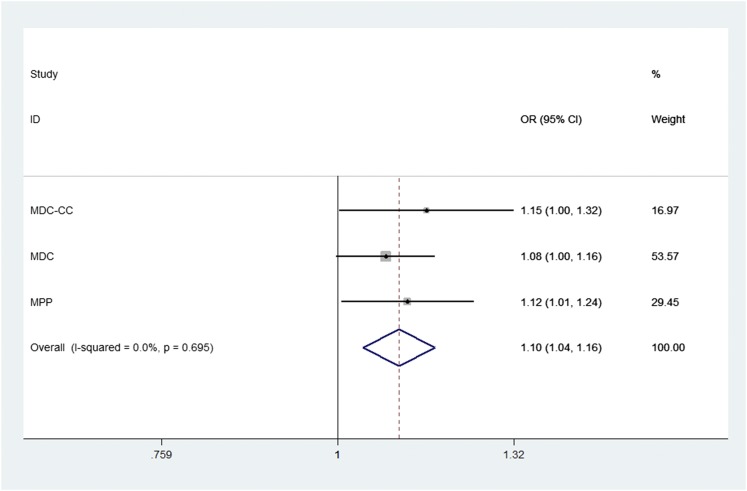
Experimental studies have suggested possible protective effects of dimethylglycine (DMG) on glucose metabolism. DMG is degraded to glycine through a DMG-dehydrogenase (DMGDH)-catalyzed reaction, and this is the only known pathway for the breakdown of DMG in mammals. In this study, we aimed to identify the strongest genetic determinant of circulating DMG concentration and to investigate its associations with metabolic traits and incident diabetes. In the cohort with full metabolomics data (n = 709), low plasma levels of DMG were significantly associated with higher blood glucose levels (P = 3.9E(-4)). In the genome-wide association study (GWAS) of the discovery cohort (n = 5,205), the strongest genetic signal of plasma DMG was conferred by rs2431332 at the DMGDH locus, where the major allele was associated with lower DMG levels (P = 2.5E(-15)). The same genetic variant (major allele of rs2431332) was also significantly associated with higher plasma insulin (P = 0.019), increased HOMA insulin resistance (P = 0.019), and an increased risk of incident diabetes (P = 0.001) in the pooled analysis of the discovery cohort together with the two replication cohorts (n = 20,698 and n = 7,995). These data are consistent with a possible causal role of DMG deficiency in diabetes development and encourage future studies examining if inhibition of DMGDH, or alternatively, supplementation of DMG, might prove useful for the treatment/prevention of diabetes.
实验研究表明,二甲基甘氨酸(DMG)对葡萄糖代谢可能具有保护作用。DMG通过二甲基甘氨酸脱氢酶(DMGDH)催化的反应降解为甘氨酸,这是哺乳动物中已知的DMG分解的唯一途径。在本研究中,我们旨在确定循环DMG浓度的最强遗传决定因素,并研究其与代谢特征和糖尿病发病的关联。在具有完整代谢组学数据的队列(n = 709)中,低血浆DMG水平与较高的血糖水平显著相关(P = 3.9E(-4))。在发现队列(n = 5,205)的全基因组关联研究(GWAS)中,血浆DMG的最强遗传信号由DMGDH基因座上的rs2431332赋予,其中主要等位基因与较低的DMG水平相关(P = 2.5E(-15))。在发现队列与两个复制队列(n = 20,698和n = 7,995)的汇总分析中,相同的遗传变异(rs2431332的主要等位基因)也与较高的血浆胰岛素(P = 0.019)、较高的HOMA胰岛素抵抗(P = 0.019)以及糖尿病发病风险增加(P = 0.001)显著相关。这些数据与DMG缺乏在糖尿病发展中可能的因果作用一致,并鼓励未来研究探讨抑制DMGDH或补充DMG是否可能对糖尿病的治疗/预防有用。