Escuela Superior de Medicina, Instituto Politécnico Nacional, Sección de Estudios de Posgrado e Investigación, Ciudad de Mexico 11340, Mexico.
Departamento de Inmunología, Instituto Nacional de Cardiología "Ignacio Chávez", Ciudad de Mexico 14080, Mexico.
Int J Mol Sci. 2023 Jul 8;24(14):11236. doi: 10.3390/ijms241411236.
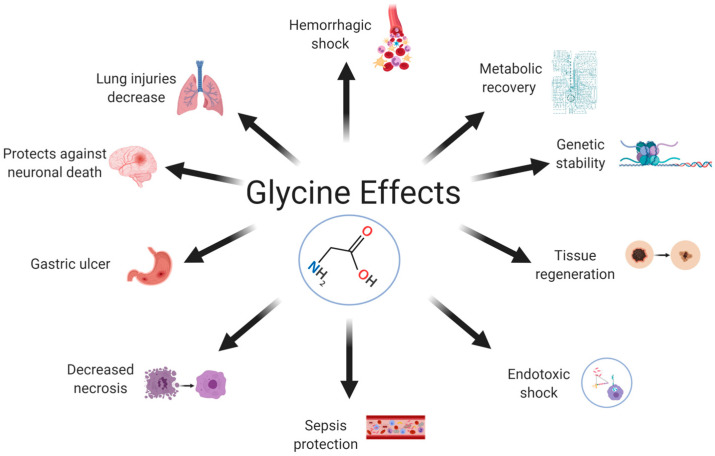
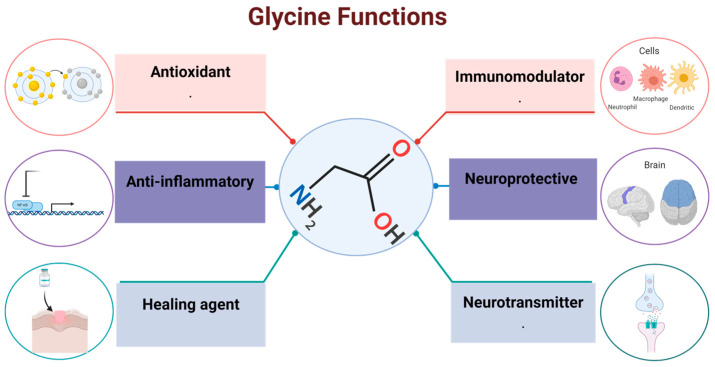
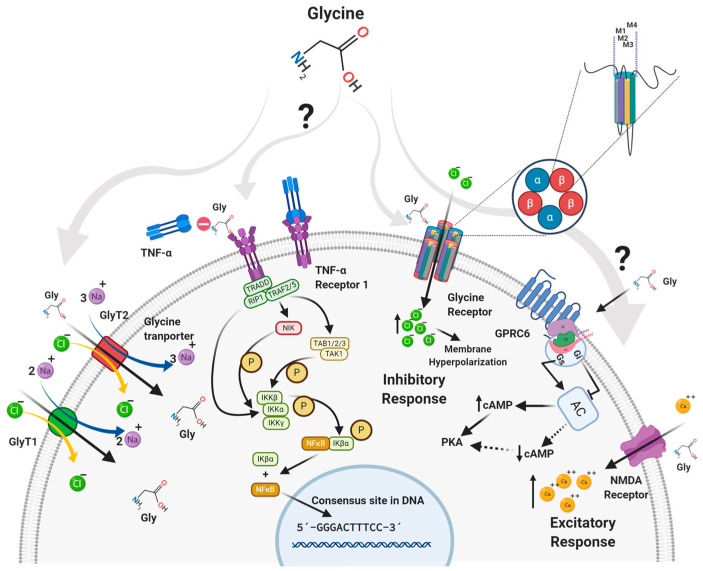
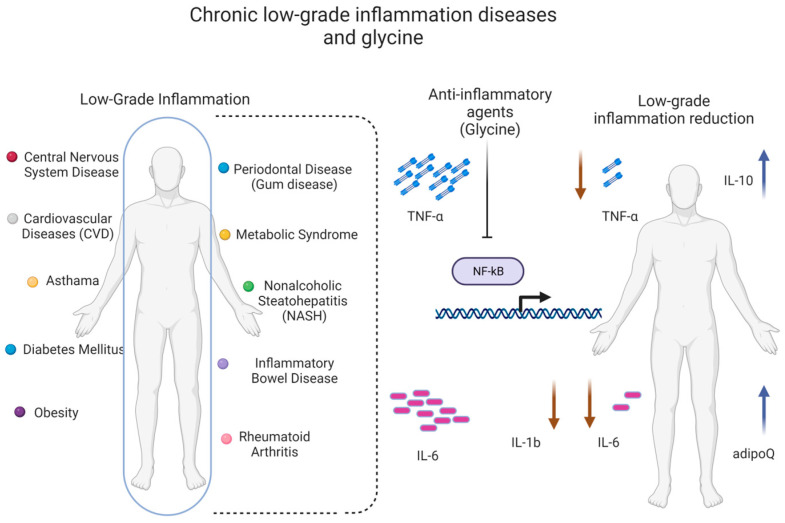
Glycine is a non-essential amino acid with many functions and effects. Glycine can bind to specific receptors and transporters that are expressed in many types of cells throughout an organism to exert its effects. There have been many studies focused on the anti-inflammatory effects of glycine, including its abilities to decrease pro-inflammatory cytokines and the concentration of free fatty acids, to improve the insulin response, and to mediate other changes. However, the mechanism through which glycine acts is not clear. In this review, we emphasize that glycine exerts its anti-inflammatory effects throughout the modulation of the expression of nuclear factor kappa B (NF-κB) in many cells. Although glycine is a non-essential amino acid, we highlight how dietary glycine supplementation is important in avoiding the development of chronic inflammation.
甘氨酸是一种非必需氨基酸,具有多种功能和作用。甘氨酸可以与特定的受体和转运体结合,这些受体和转运体在生物体的许多类型的细胞中表达,从而发挥其作用。已经有许多研究集中在甘氨酸的抗炎作用上,包括其降低促炎细胞因子和游离脂肪酸浓度、改善胰岛素反应以及介导其他变化的能力。然而,甘氨酸作用的机制尚不清楚。在这篇综述中,我们强调甘氨酸通过调节许多细胞中核因子 kappa B(NF-κB)的表达来发挥其抗炎作用。尽管甘氨酸是一种非必需氨基酸,但我们强调了饮食中补充甘氨酸对于避免慢性炎症的发展是多么重要。