Lin Chun-Yu, Lee Tsai-Ling, Chiu Yi-Yuan, Lin Yi-Wei, Lo Yu-Shu, Lin Chih-Ta, Yang Jinn-Moon
Institute of Bioinformatics and Systems Biology, National Chiao Tung University, Hsinchu, Taiwan.
1] Institute of Bioinformatics and Systems Biology, National Chiao Tung University, Hsinchu, Taiwan [2] Department of Biological Science and Technology, National Chiao Tung University, Hsinchu, Taiwan.
Sci Rep. 2015 Mar 23;5:9386. doi: 10.1038/srep09386.
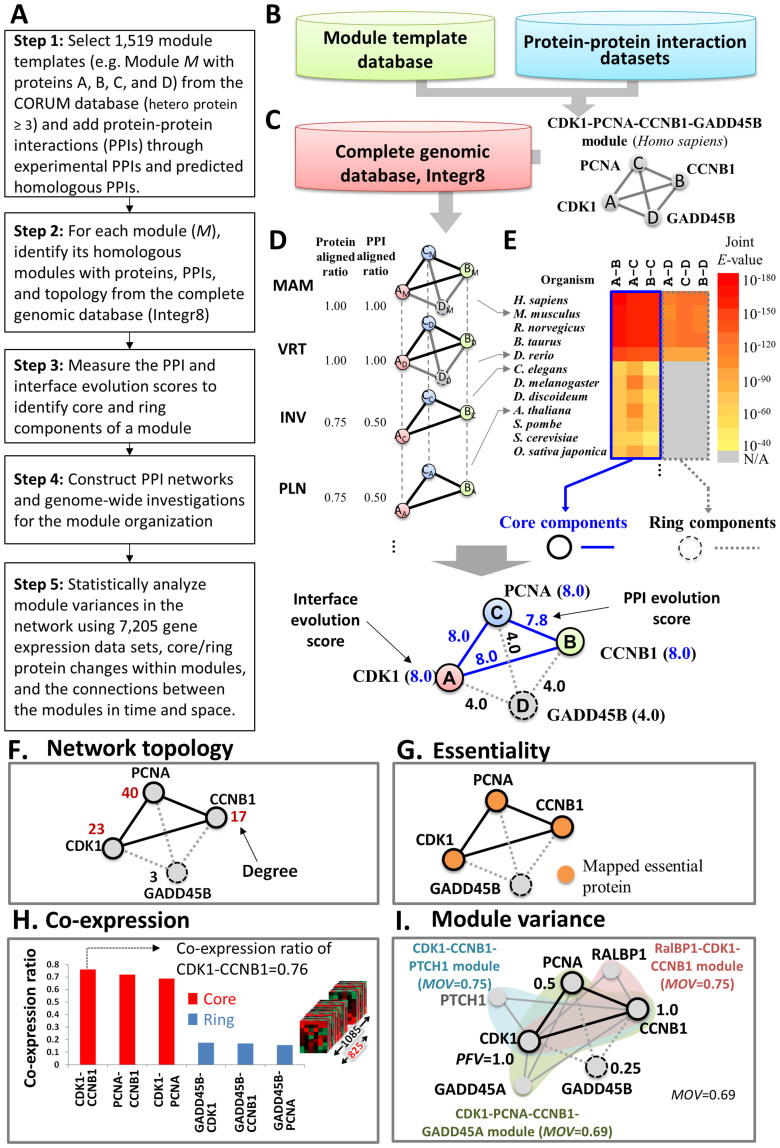
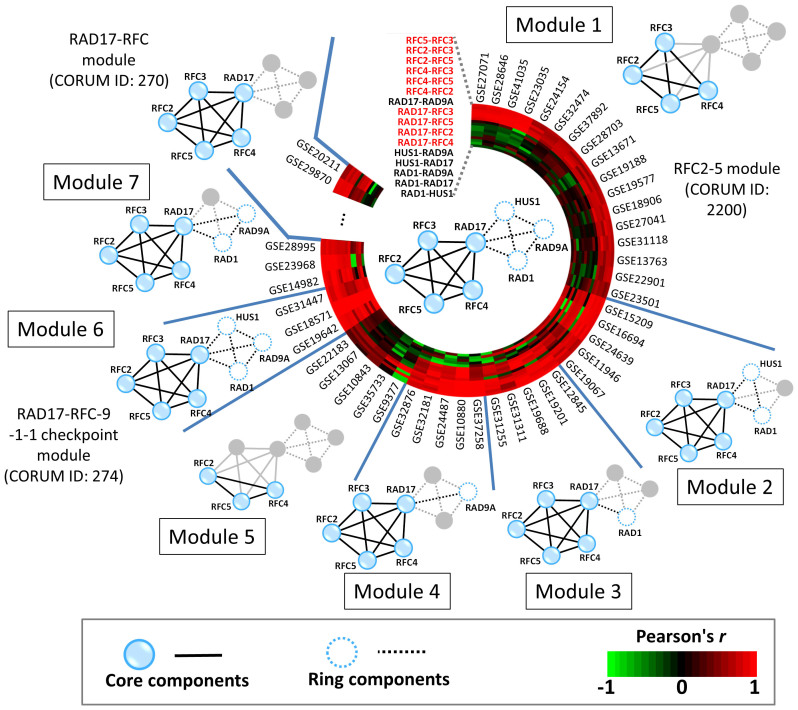
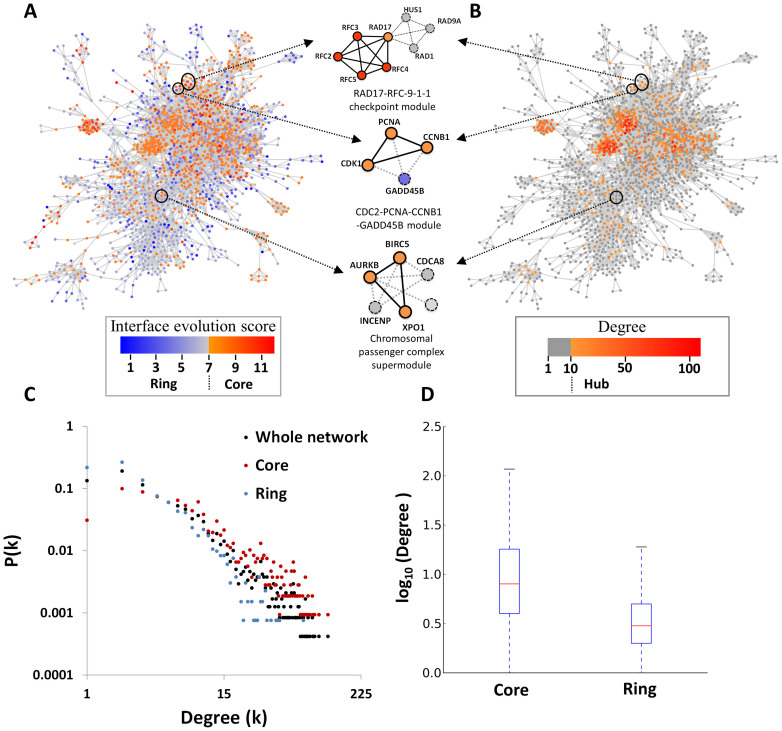
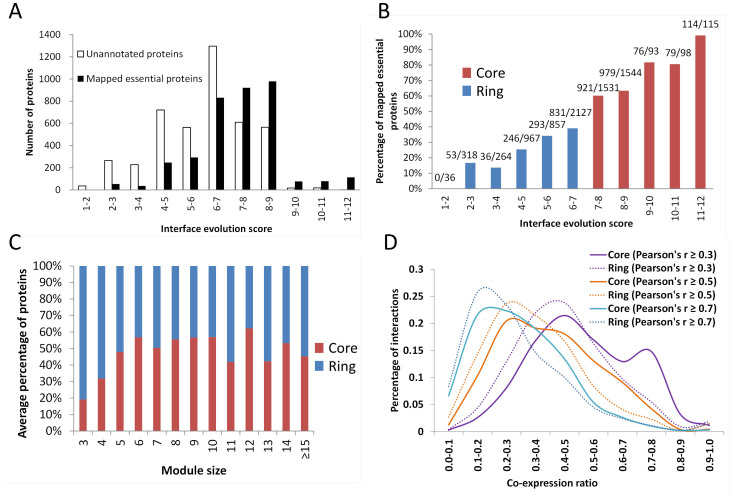
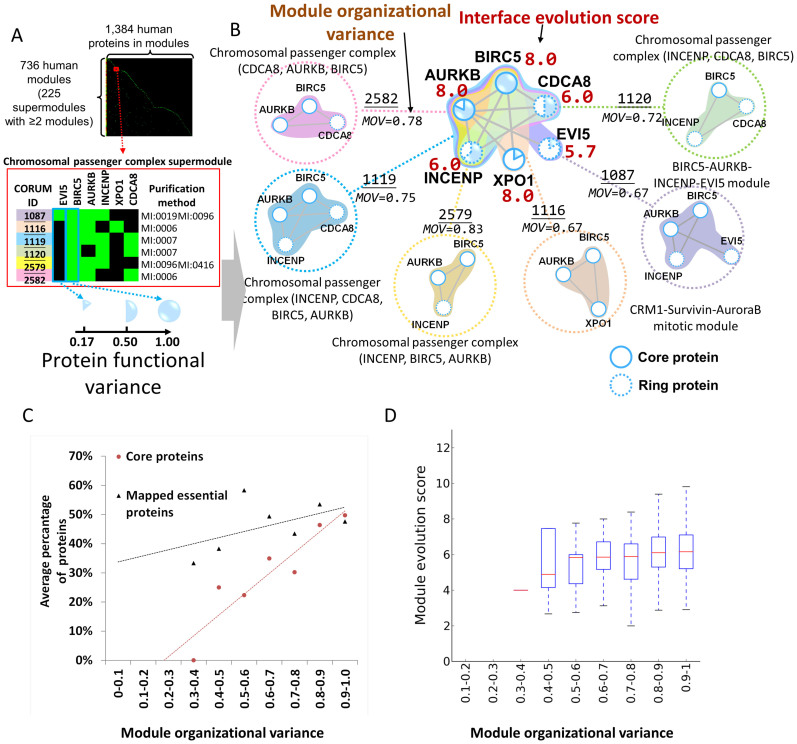
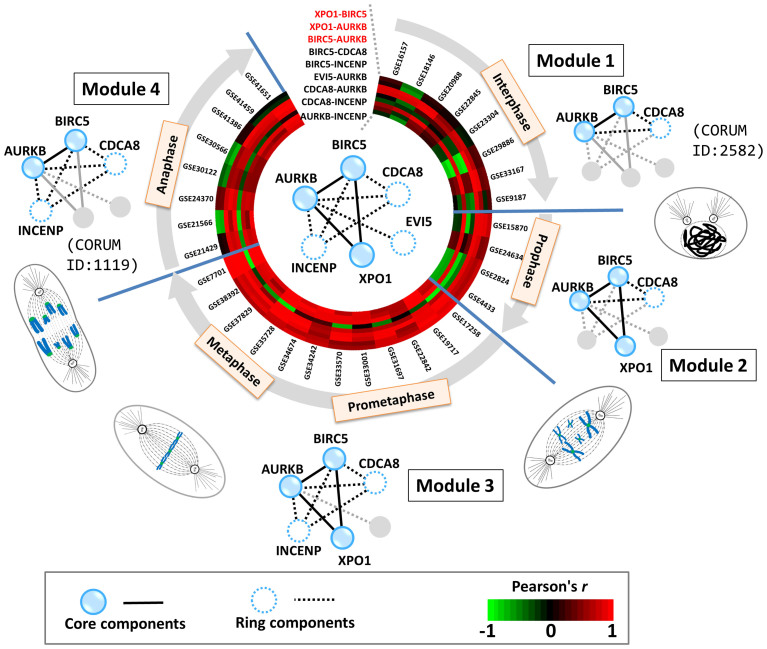
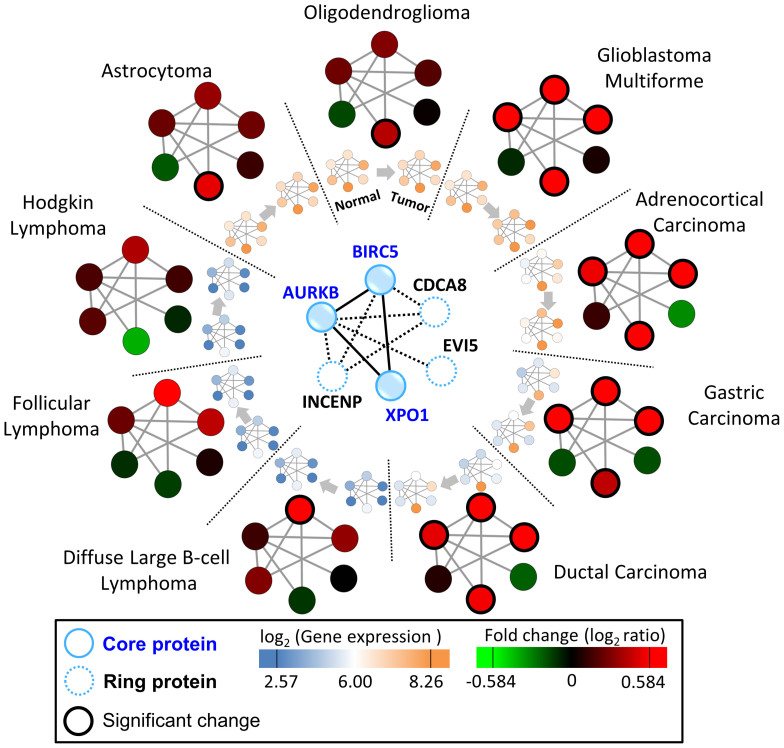
A module is a group of closely related proteins that act in concert to perform specific biological functions through protein-protein interactions (PPIs) that occur in time and space. However, the underlying module organization and variance remain unclear. In this study, we collected module templates to infer respective module families, including 58,041 homologous modules in 1,678 species, and PPI families using searches of complete genomic database. We then derived PPI evolution scores and interface evolution scores to describe the module elements, including core and ring components. Functions of core components were highly correlated with those of essential genes. In comparison with ring components, core proteins/PPIs were conserved across multiple species. Subsequently, protein/module variance of PPI networks confirmed that core components form dynamic network hubs and play key roles in various biological functions. Based on the analyses of gene essentiality, module variance, and gene co-expression, we summarize the observations of module organization and variance as follows: 1) a module consists of core and ring components; 2) core components perform major biological functions and collaborate with ring components to execute certain functions in some cases; 3) core components are more conserved and essential during organizational changes in different biological states or conditions.
一个模块是一组紧密相关的蛋白质,它们通过在时间和空间上发生的蛋白质-蛋白质相互作用(PPI)协同作用,以执行特定的生物学功能。然而,潜在的模块组织和变异仍不清楚。在本研究中,我们收集了模块模板以推断各自的模块家族,包括1678个物种中的58041个同源模块,并通过搜索完整的基因组数据库来确定PPI家族。然后,我们得出PPI进化分数和界面进化分数来描述模块元件,包括核心和环状组件。核心组件的功能与必需基因的功能高度相关。与环状组件相比,核心蛋白/PPI在多个物种中是保守的。随后,PPI网络的蛋白质/模块变异证实,核心组件形成动态网络枢纽,并在各种生物学功能中发挥关键作用。基于对基因必需性、模块变异和基因共表达的分析,我们将模块组织和变异的观察结果总结如下:1)一个模块由核心和环状组件组成;2)核心组件执行主要生物学功能,并在某些情况下与环状组件协作以执行特定功能;3)在不同生物学状态或条件下的组织变化过程中,核心组件更保守且必不可少。