1. School of Biological Sciences, Nanyang Technological University, Singapore;
2. Genome Institute of Singapore, Singapore;
Int J Biol Sci. 2015 Feb 27;11(4):434-47. doi: 10.7150/ijbs.9311. eCollection 2015.
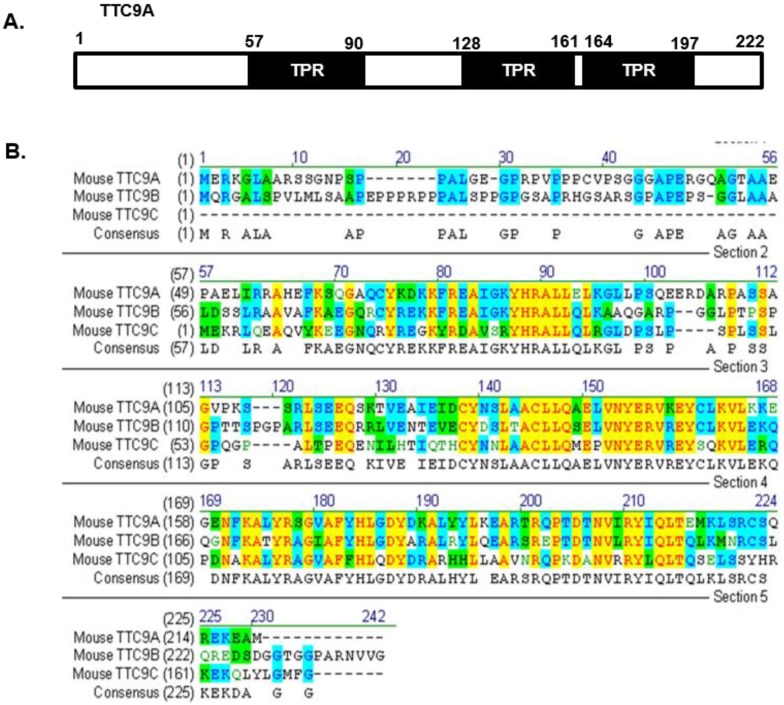
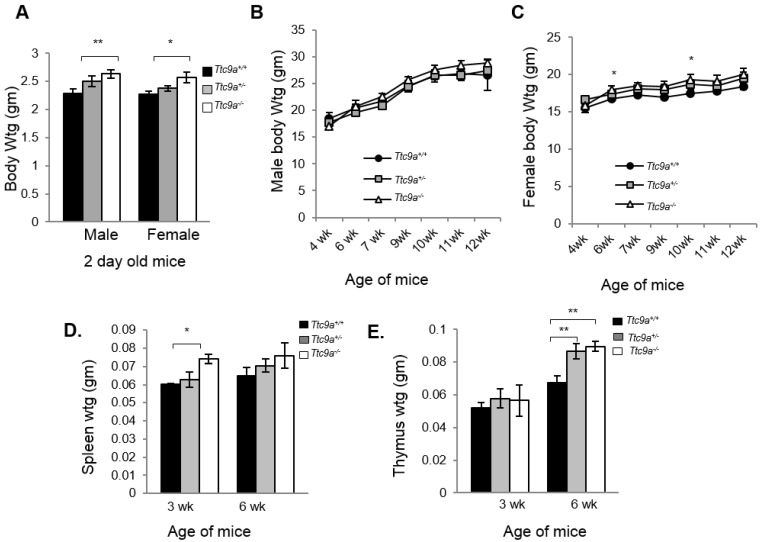
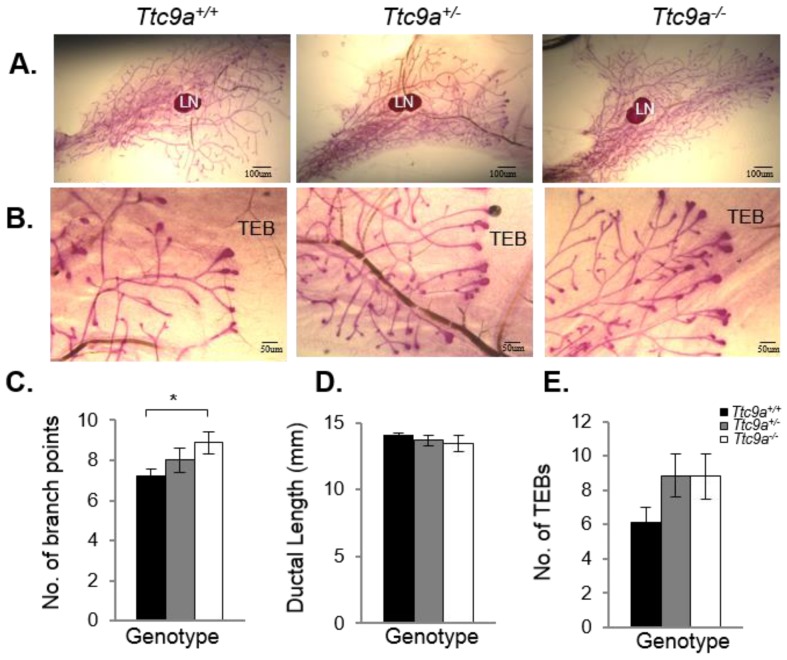
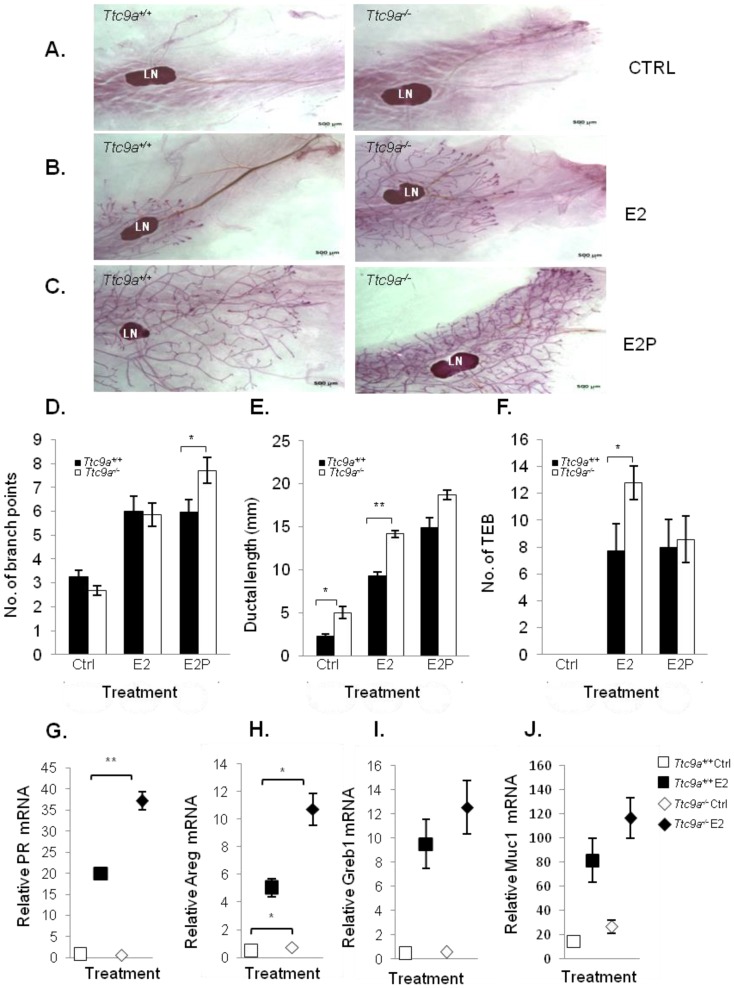
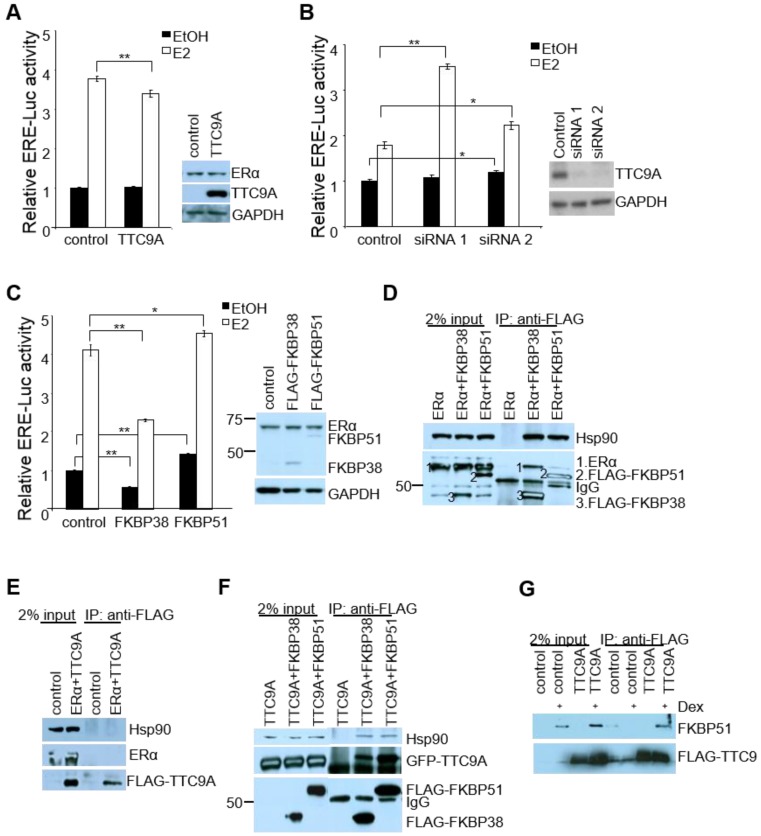
Tetratricopeptide repeat domain 9A (TTC9A) is a target gene of estrogen and progesterone. It is over-expressed in breast cancer. However, little is known about the physiological function of TTC9A. The objectives of this study were to establish a Ttc9a knockout mouse model and to study the consequence of Ttc9a gene inactivation. The Ttc9a targeting vector was generated by replacing the Ttc9a exon 1 with a neomycin cassette. The mice homozygous for Ttc9a exon 1 deletion appear to grow normally and are fertile. However, further characterization of the female mice revealed that Ttc9a deficiency is associated with greater body weight, bigger thymus and better mammary development in post-pubertal mice. Furthermore, Ttc9a deficient mammary gland was more responsive to estrogen treatment with greater mammary ductal lengthening, ductal branching and estrogen target gene induction. Since Ttc9a is induced by estrogen in estrogen target tissues, these results suggest that Ttc9a is a negative regulator of estrogen function through a negative feedback mechanism. This is supported by in vitro evidence that TTC9A over-expression attenuated ERα activity in MCF-7 cells. Although TTC9A does not bind to ERα or its chaperone protein Hsp90 directly, TTC9A strongly interacts with FKBP38 and FKBP51, both of which interact with ERα and Hsp90 and modulate ERα activity. It is plausible therefore that TTC9A negatively regulates ERα activity through interacting with co-chaperone proteins such as FKBP38 and FKBP51.
四肽重复结构域 9A(TTC9A)是雌激素和孕激素的靶基因。它在乳腺癌中过度表达。然而,关于 TTC9A 的生理功能知之甚少。本研究的目的是建立 Ttc9a 基因敲除小鼠模型,并研究 Ttc9a 基因失活的后果。通过用新霉素盒替换 Ttc9a 外显子 1 来生成 Ttc9a 靶向载体。Ttc9a 外显子 1 缺失的纯合子小鼠似乎生长正常且具有繁殖能力。然而,对雌性小鼠的进一步特征分析表明,Ttc9a 缺乏与更大的体重、更大的胸腺和青春期后小鼠更好的乳腺发育有关。此外,Ttc9a 缺乏的乳腺对雌激素处理更敏感,乳腺导管伸长、分支和雌激素靶基因诱导增加。由于 Ttc9a 在雌激素靶组织中被雌激素诱导,这些结果表明 Ttc9a 通过负反馈机制成为雌激素功能的负调节剂。这一观点得到了体外证据的支持,即 TTC9A 在 MCF-7 细胞中过表达减弱了 ERα 的活性。尽管 TTC9A 不能直接与 ERα 或其伴侣蛋白 Hsp90 结合,但 TTC9A 与 FKBP38 和 FKBP51 强烈相互作用,两者都与 ERα 和 Hsp90 相互作用并调节 ERα 的活性。因此,TTC9A 通过与 FKBP38 和 FKBP51 等共伴侣蛋白相互作用来负调控 ERα 的活性是合理的。