Fisher Chris
NanoVir, 4717 Campus, Kalamazoo, MI 49008, USA;
J Clin Med. 2015;4(2):204-30. doi: 10.3390/jcm4020204.
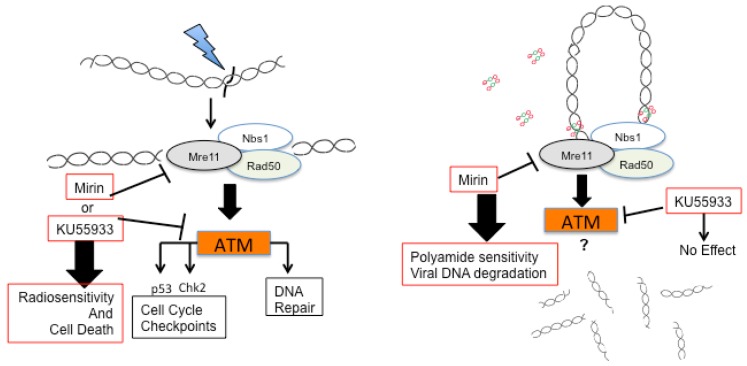
Most human papillomavirus (HPV) antiviral strategies have focused upon inhibiting viral DNA replication, but it is increasingly apparent that viral DNA levels can be chemically controlled by approaches that promote its instability. HPVs and other DNA viruses have a tenuous relationship with their hosts. They must replicate and hide from the DNA damage response (DDR) and innate immune systems, which serve to protect cells from foreign or "non-self" DNA, and yet they draft these same systems to support their life cycles. DNA binding antiviral agents promoting massive viral DNA instability and elimination are reviewed. Mechanistic studies of these agents have identified genetic antiviral enhancers and repressors, antiviral sensitizers, and host cell elements that protect and stabilize HPV genomes. Viral DNA degradation appears to be an important means of controlling HPV DNA levels in some cases, but the underlying mechanisms remain poorly understood. These findings may prove useful not only for understanding viral DNA persistence but also in devising future antiviral strategies.
大多数人乳头瘤病毒(HPV)抗病毒策略都集中在抑制病毒DNA复制上,但越来越明显的是,病毒DNA水平可以通过促进其不稳定性的方法进行化学控制。HPV和其他DNA病毒与其宿主的关系很脆弱。它们必须进行复制并躲避DNA损伤反应(DDR)和先天免疫系统,这些系统旨在保护细胞免受外来或“非自身”DNA的侵害,但它们却利用这些相同的系统来支持其生命周期。本文综述了促进大量病毒DNA不稳定性和消除的DNA结合抗病毒药物。对这些药物的机制研究已经确定了基因抗病毒增强子和抑制子、抗病毒敏化剂以及保护和稳定HPV基因组的宿主细胞元件。在某些情况下,病毒DNA降解似乎是控制HPV DNA水平的重要手段,但其潜在机制仍知之甚少。这些发现不仅可能有助于理解病毒DNA的持续性,也有助于设计未来的抗病毒策略。