Sakai Fuminori, Chochua Sopio, Satzke Catherine, Dunne Eileen M, Mulholland Kim, Klugman Keith P, Vidal Jorge E
Hubert Department of Global Health, Rollins School of Public Health, Emory University, Atlanta, Georgia, United States of America.
Pneumococcal Research, Murdoch Childrens Research Institute, The University of Melbourne Department of Paediatrics at the Royal Children's Hospital, Parkville, Victoria, Australia; Department of Microbiology and Immunology at the Peter Doherty Institute for Infection and Immunity, The University of Melbourne, Victoria, Australia.
PLoS One. 2015 Mar 23;10(3):e0121064. doi: 10.1371/journal.pone.0121064. eCollection 2015.
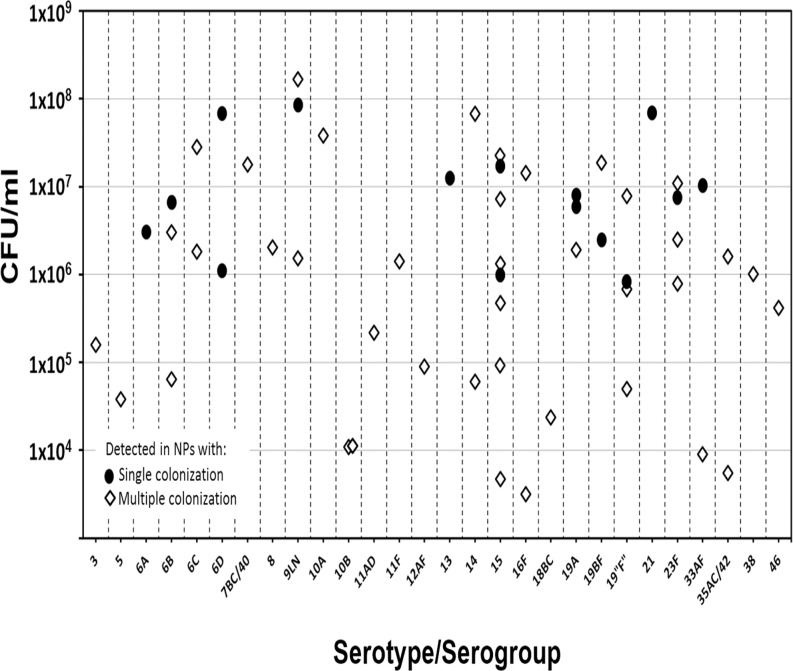
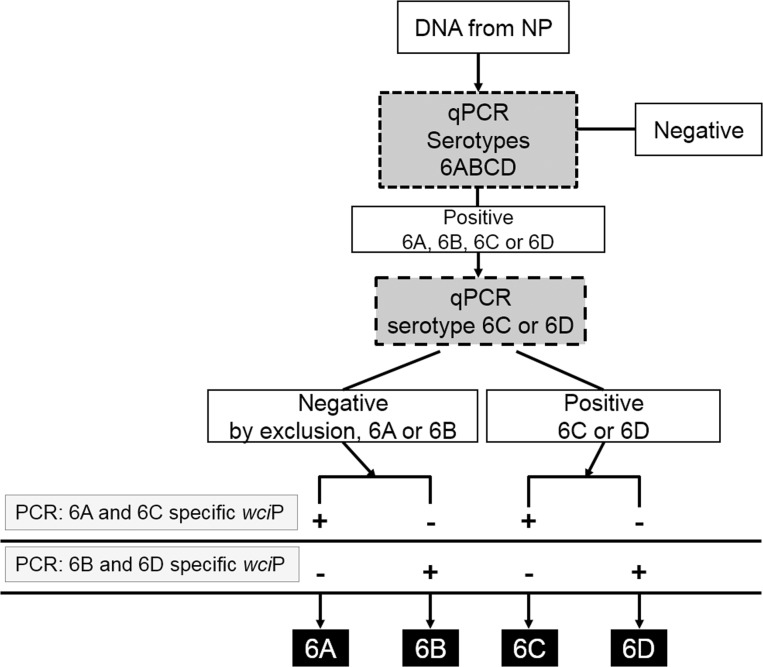
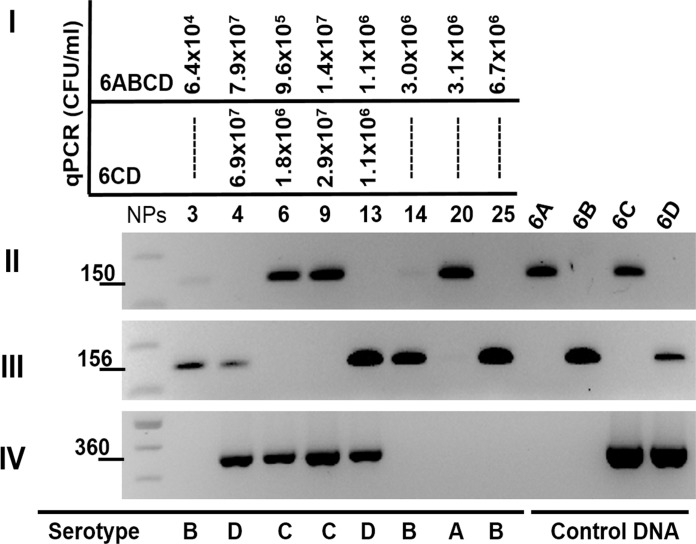
Streptococcus pneumoniae globally kills more children than any other infectious disease every year. A prerequisite for pneumococcal disease and transmission is colonization of the nasopharynx. While the introduction of pneumococcal conjugate vaccines has reduced the burden of pneumococcal disease, understanding the impact of vaccination on nasopharyngeal colonization has been hampered by the lack of sensitive quantitative methods for the detection of >90 known S. pneumoniae serotypes. In this work, we developed 27 new quantitative (q)PCR reactions and optimized 26 for a total of 53 qPCR reactions targeting pneumococcal serotypes or serogroups, including all vaccine types. Reactions proved to be target-specific with a limit of detection of 2 genome equivalents per reaction. Given the number of probes required for these assays and their unknown shelf-life, the stability of cryopreserved reagents was evaluated. Our studies demonstrate that two-year cryopreserved probes had similar limit of detection as freshly-diluted probes. Moreover, efficiency and limit of detection of 1-month cryopreserved, ready-to-use, qPCR reaction mixtures were similar to those of freshly prepared mixtures. Using these reactions, our proof-of-concept studies utilizing nasopharyngeal samples (N=30) collected from young children detected samples containing ≥2 serotypes/serogroups. Samples colonized by multiple serotypes/serogroups always had a serotype that contributes at least 50% of the pneumococcal load. In addition, a molecular approach called S6-q(PCR)2 was developed and proven to individually detect and quantify epidemiologically-important serogroup 6 strains including 6A, 6B, 6C and 6D. This technology will be useful for epidemiological studies, diagnostic platforms and to study the pneumobiome.
全球范围内,肺炎链球菌每年导致死亡的儿童数量超过任何其他传染病。肺炎球菌疾病及传播的一个先决条件是鼻咽部定植。虽然肺炎球菌结合疫苗的引入减轻了肺炎球菌疾病的负担,但由于缺乏用于检测90多种已知肺炎链球菌血清型的灵敏定量方法,疫苗接种对鼻咽部定植的影响一直难以明确。在本研究中,我们开发了27种新的定量(q)PCR反应,并优化了26种,总共53种qPCR反应,用于靶向肺炎球菌血清型或血清群,包括所有疫苗类型。这些反应具有靶标特异性,每个反应的检测限为2个基因组当量。鉴于这些检测所需的探针数量及其未知的保质期,我们评估了冻存试剂的稳定性。我们的研究表明,冻存两年的探针与新鲜稀释的探针具有相似的检测限。此外,冻存1个月、即用型的qPCR反应混合物的效率和检测限与新鲜制备的混合物相似。利用这些反应,我们对30名幼儿采集的鼻咽部样本进行的概念验证研究检测到含有≥2种血清型/血清群的样本。被多种血清型/血清群定植的样本中总有一种血清型占肺炎球菌载量的至少50%。此外,我们还开发并验证了一种名为S6-q(PCR)2的分子方法,可单独检测和定量具有重要流行病学意义的血清群6菌株,包括6A、6B、6C和6D。这项技术将有助于流行病学研究、诊断平台以及对肺炎生物群落的研究。