Zhang Mei, Gao Yunxiang, Caja Kevin, Zhao Bocheng, Kim Julian A
Department of Biomedical Engineering, Case Western Reserve University, Cleveland, Ohio, United States of America; Case Comprehensive Cancer Center, Case Western Reserve University, Cleveland, Ohio, United States of America.
Department of Macromolecular Science and Engineering, School of Engineering, Case Western Reserve University, Cleveland, Ohio, United States of America.
PLoS One. 2015 Mar 23;10(3):e0118472. doi: 10.1371/journal.pone.0118472. eCollection 2015.
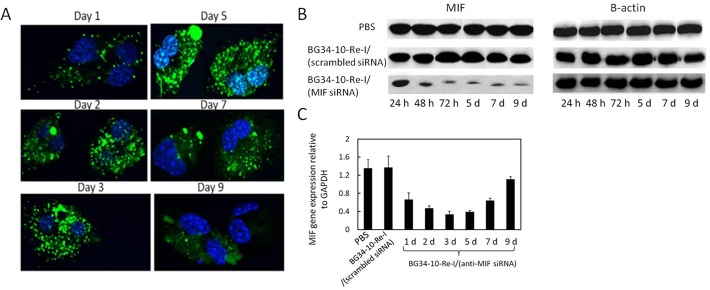
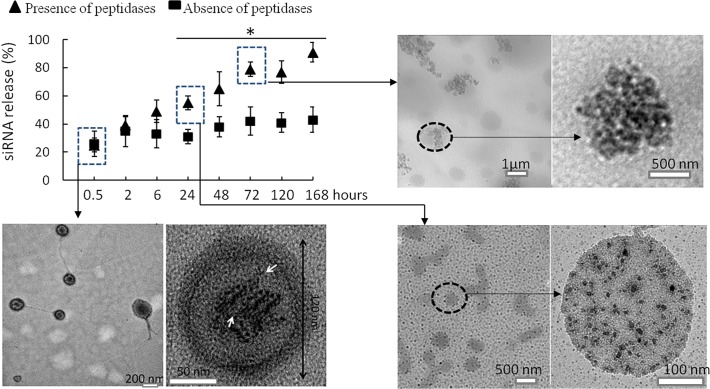
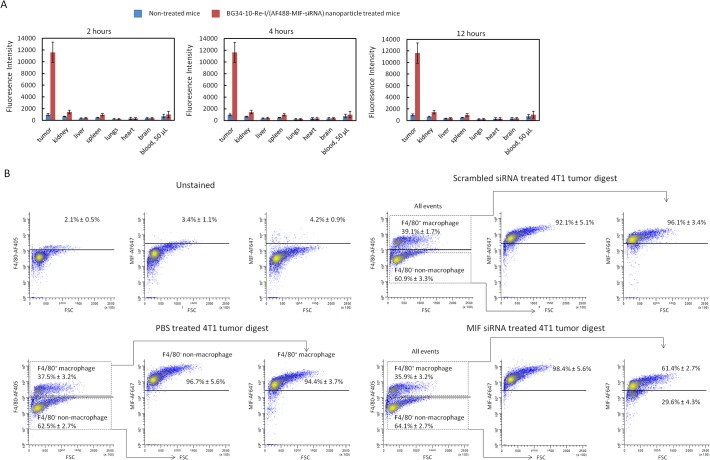
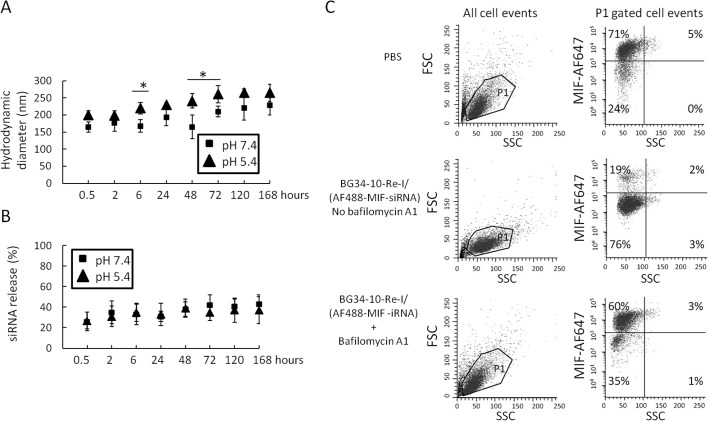
Macrophages are increasingly being viewed as therapeutic target for various cancers and many inflammatory diseases. Sequence specific gene reduction by siRNA represents an attractive approach to modulate macrophage function. However, delivery of the therapeutic siRNA into macrophages by non-viral nanoparticles has been a major technical challenge. In this study, we developed a glucan-based siRNA carrier system (BG34-10-Re-I) and demonstrated that the BG34-10-Re-I can effectively assemble siRNA into uniformly distributed nanoparticles of the novel core-shell structure. The BG34-10-Re-I/siRNA nanoparticles effectively reduced gene expression of macrophage migration inhibitory factor (MIF) in primary macrophages at both protein and mRNA level. The nanoparticles also mediated a sustained reduction of MIF within primary macrophages. Moreover, systemic injection of the nanoparticles into the Balb/c mice bearing 4T1 mammary tumors resulted in the MIF reduction in tumor-associated macrophages. Mechanistic studies demonstrated that the glucan-shell and the siRNA-core structure contribute to the effective delivery of MIF siRNA to macrophages both in vitro and in vivo. This study represents the first development of the primary macrophage MIF gene targeted non-viral nanoparticle system for both in vitro and in vivo applications.
巨噬细胞越来越被视为各种癌症和许多炎症性疾病的治疗靶点。通过小干扰RNA(siRNA)进行序列特异性基因敲减是一种调节巨噬细胞功能的有吸引力的方法。然而,通过非病毒纳米颗粒将治疗性siRNA递送至巨噬细胞一直是一项重大技术挑战。在本研究中,我们开发了一种基于葡聚糖的siRNA载体系统(BG34-10-Re-I),并证明BG34-10-Re-I能够有效地将siRNA组装成具有新型核壳结构的均匀分布的纳米颗粒。BG34-10-Re-I/siRNA纳米颗粒在蛋白质和mRNA水平上均有效降低了原代巨噬细胞中巨噬细胞迁移抑制因子(MIF)的基因表达。这些纳米颗粒还介导了原代巨噬细胞内MIF的持续降低。此外,将纳米颗粒全身注射到携带4T1乳腺肿瘤的Balb/c小鼠体内,导致肿瘤相关巨噬细胞中的MIF降低。机制研究表明,葡聚糖壳和siRNA核结构有助于在体外和体内将MIF siRNA有效递送至巨噬细胞。本研究代表了首个针对原代巨噬细胞MIF基因的非病毒纳米颗粒系统的开发,可用于体外和体内应用。