Gong Ke, Tjong Harianto, Zhou Xianghong Jasmine, Alber Frank
Molecular and Computational Biology, Department of Biological Sciences, University of Southern California, 1050 Childs Way, Los Angeles, CA 90089, United States of America.
PLoS One. 2015 Mar 23;10(3):e0119672. doi: 10.1371/journal.pone.0119672. eCollection 2015.
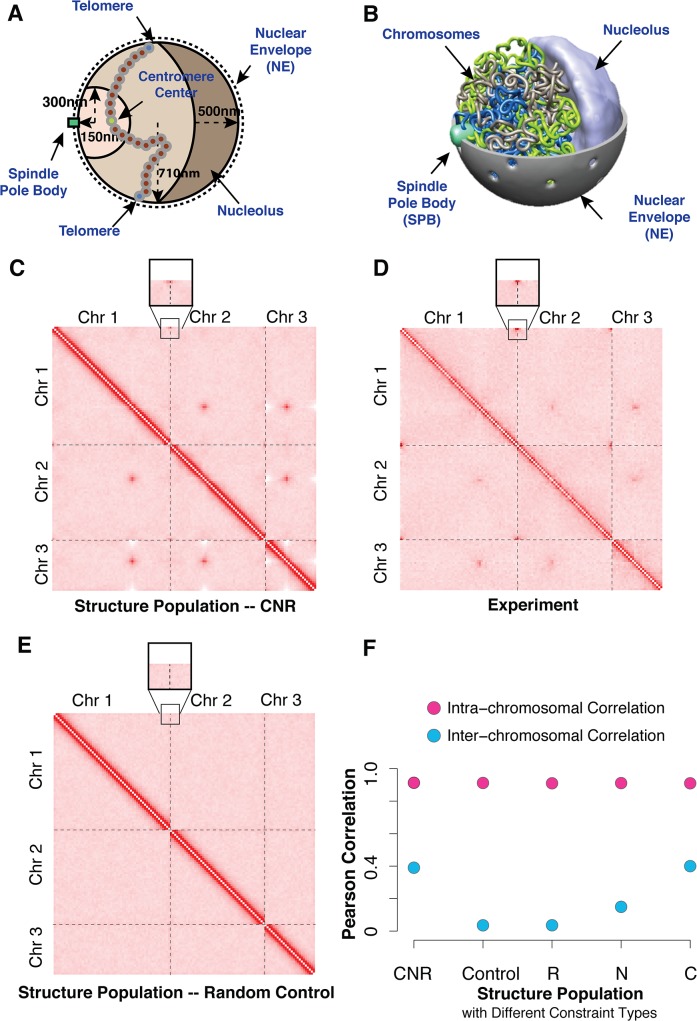
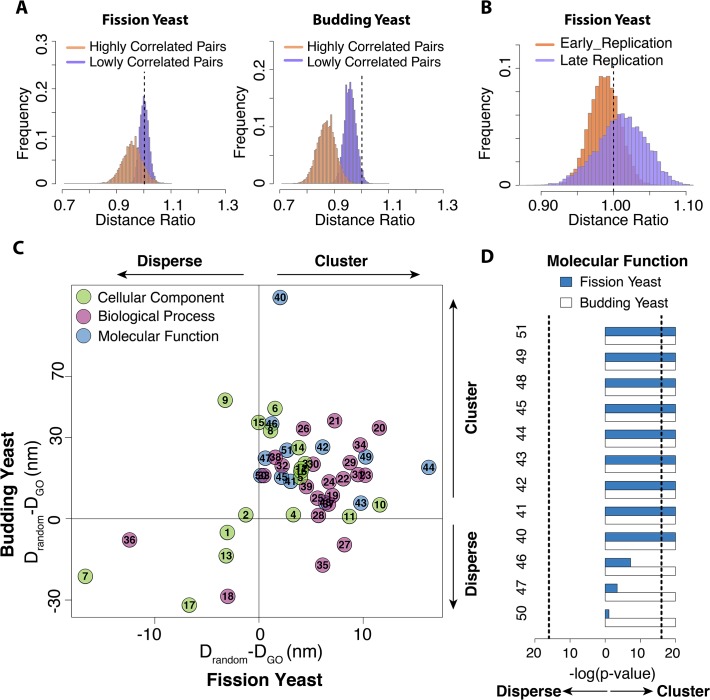
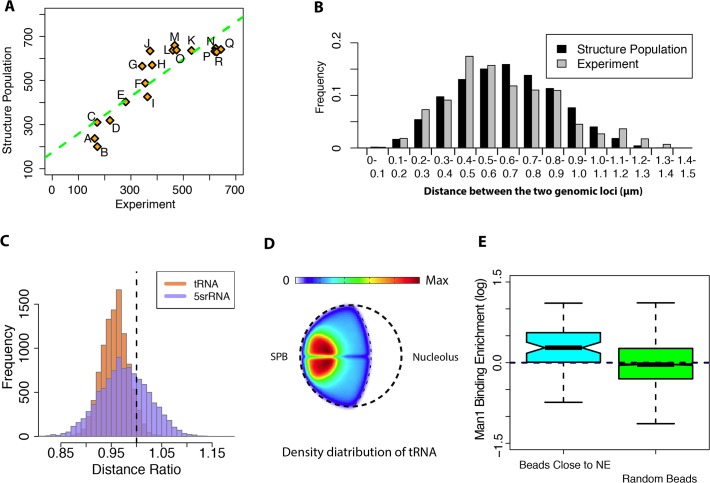
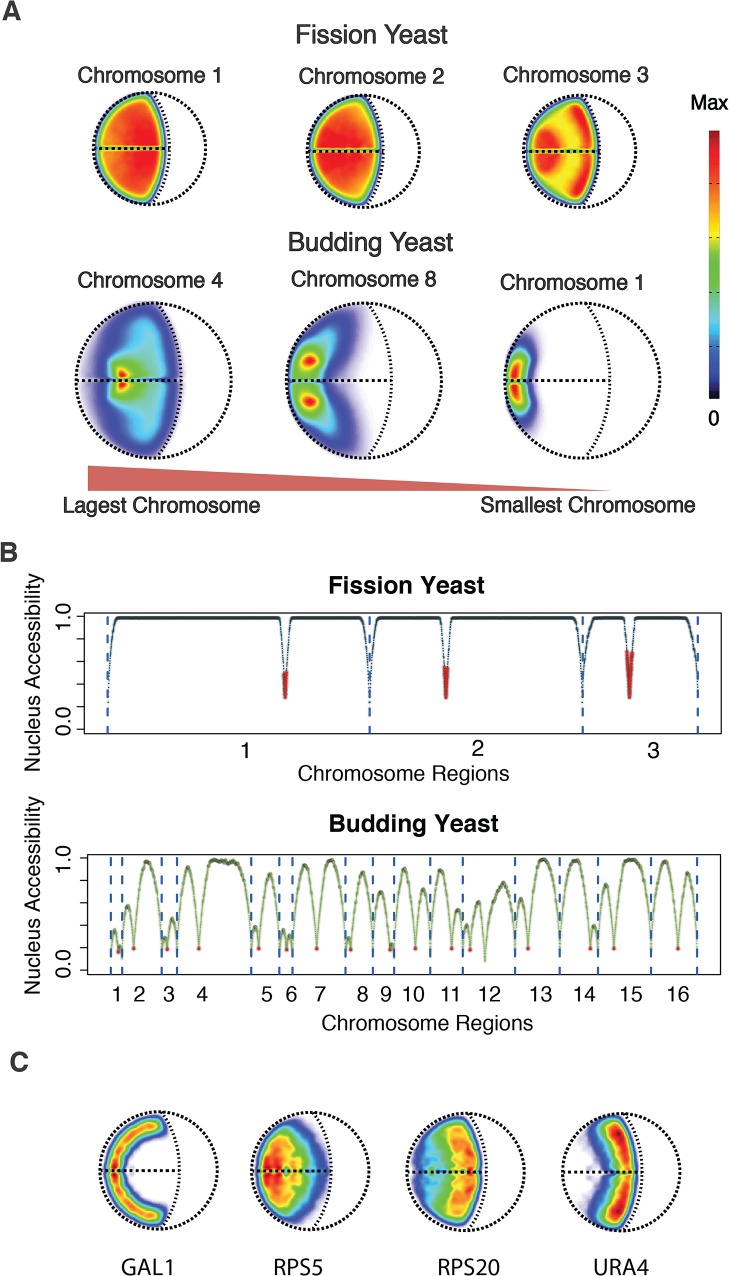
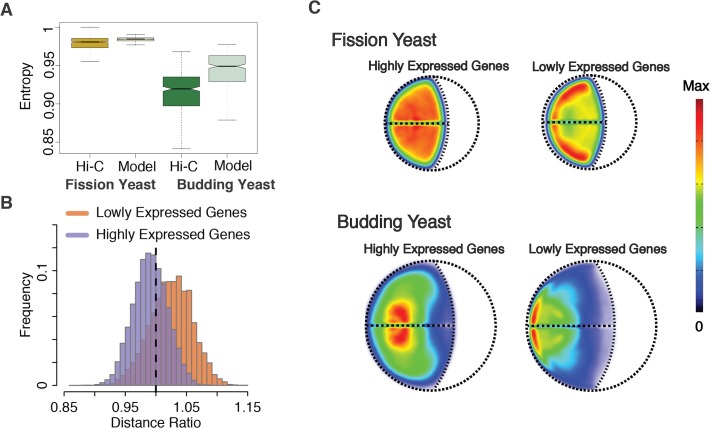
We studied the 3D structural organization of the fission yeast genome, which emerges from the tethering of heterochromatic regions in otherwise randomly configured chromosomes represented as flexible polymer chains in an nuclear environment. This model is sufficient to explain in a statistical manner many experimentally determined distinctive features of the fission yeast genome, including chromatin interaction patterns from Hi-C experiments and the co-locations of functionally related and co-expressed genes, such as genes expressed by Pol-III. Our findings demonstrate that some previously described structure-function correlations can be explained as a consequence of random chromatin collisions driven by a few geometric constraints (mainly due to centromere-SPB and telomere-NE tethering) combined with the specific gene locations in the chromosome sequence. We also performed a comparative analysis between the fission and budding yeast genome structures, for which we previously detected a similar organizing principle. However, due to the different chromosome sizes and numbers, substantial differences are observed in the 3D structural genome organization between the two species, most notably in the nuclear locations of orthologous genes, and the extent of nuclear territories for genes and chromosomes. However, despite those differences, remarkably, functional similarities are maintained, which is evident when comparing spatial clustering of functionally related genes in both yeasts. Functionally related genes show a similar spatial clustering behavior in both yeasts, even though their nuclear locations are largely different between the yeast species.
我们研究了裂殖酵母基因组的三维结构组织,它源自异染色质区域在以核环境中柔性聚合物链表示的随机配置染色体中的系留。该模型足以以统计方式解释裂殖酵母基因组许多实验确定的独特特征,包括来自Hi-C实验的染色质相互作用模式以及功能相关和共表达基因(如由Pol-III表达的基因)的共定位。我们的研究结果表明,一些先前描述的结构-功能相关性可以解释为由一些几何约束(主要由于着丝粒-纺锤体极体和端粒-核膜系留)驱动的随机染色质碰撞与染色体序列中特定基因位置相结合的结果。我们还对裂殖酵母和芽殖酵母的基因组结构进行了比较分析,之前我们检测到它们有相似的组织原则。然而,由于染色体大小和数量不同,在这两个物种的三维结构基因组组织中观察到了实质性差异,最明显的是直系同源基因的核位置以及基因和染色体的核区域范围。然而,尽管存在这些差异,但值得注意的是,功能相似性得以保持,这在比较两种酵母中功能相关基因的空间聚类时很明显。功能相关基因在两种酵母中表现出相似的空间聚类行为,尽管它们在酵母物种之间的核位置有很大差异。