Dang Kyvan, Myers Kenneth A
Department of Biological Sciences, University of the Sciences, 600 S. 43rd Str., Philadelphia, PA 19104, USA.
Int J Mol Sci. 2015 Mar 19;16(3):6353-72. doi: 10.3390/ijms16036353.
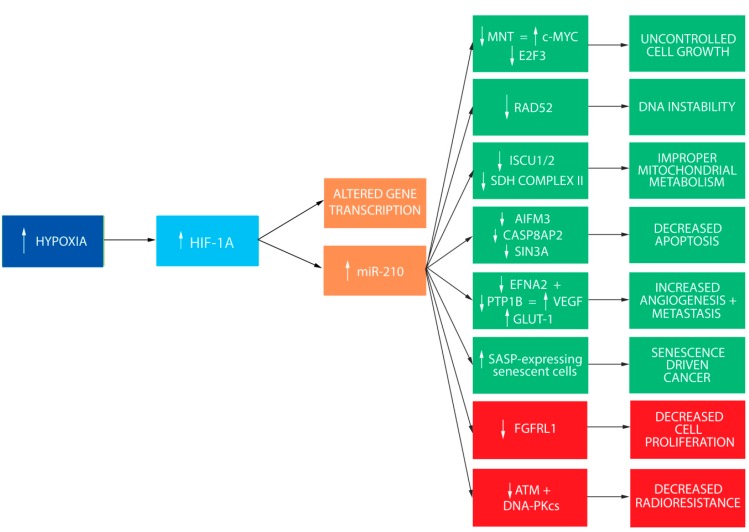
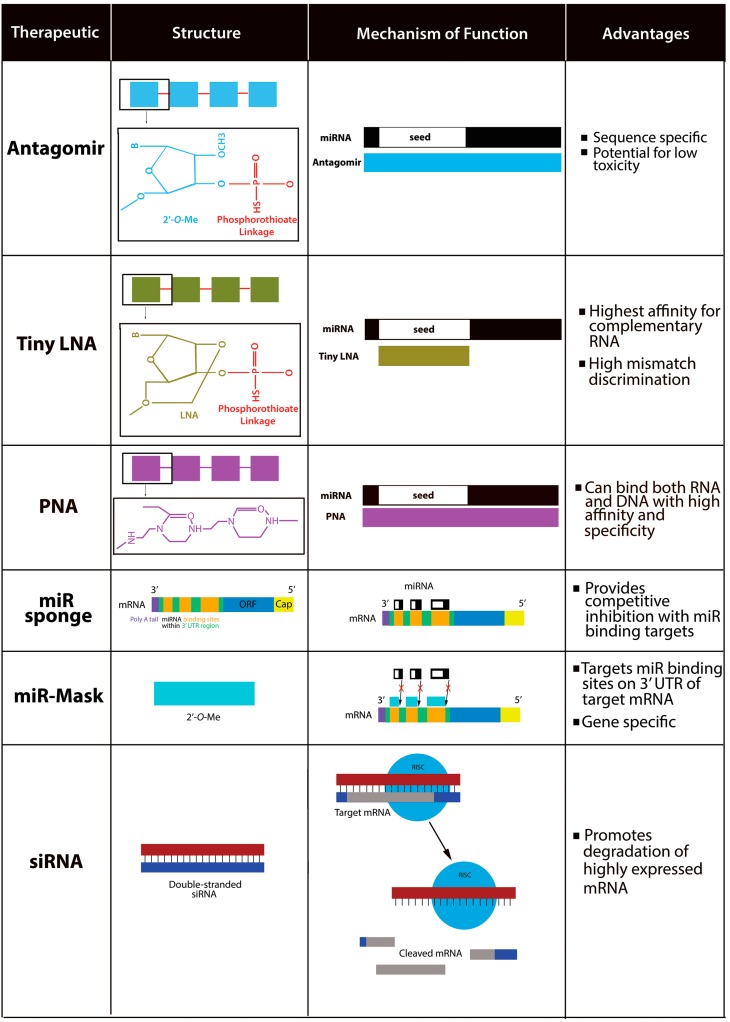
Prolonged hypoxia, the event of insufficient oxygen, is known to upregulate tumor development and growth by promoting the formation of a neoplastic environment. The recent discovery that a subset of cellular microRNAs (miRs) are upregulated during hypoxia, where they function to promote tumor development, highlights the importance of hypoxia-induced miRs as targets for continued investigation. miRs are short, non-coding transcripts involved in gene expression and regulation. Under hypoxic conditions, miR-210 becomes highly upregulated in response to hypoxia inducing factors (HIFs). HIF-1α drives miR-210's overexpression and the resultant alteration of cellular processes, including cell cycle regulation, mitochondria function, apoptosis, angiogenesis and metastasis. Here we discuss hypoxia-induced dysregulation of miR-210 and the resultant changes in miR-210 protein targets that regulate cancer progression. Potential methods of targeting miR-210 as a therapeutic tool are also explored.
长期缺氧,即氧气不足的情况,已知会通过促进肿瘤环境的形成来上调肿瘤的发展和生长。最近发现,一部分细胞微小RNA(miR)在缺氧期间上调,它们在其中发挥促进肿瘤发展的作用,这凸显了缺氧诱导的miR作为持续研究靶点的重要性。miR是参与基因表达和调控的短链非编码转录本。在缺氧条件下,miR-210会因缺氧诱导因子(HIF)而高度上调。HIF-1α驱动miR-210的过表达以及细胞过程的相应改变,包括细胞周期调控、线粒体功能、细胞凋亡、血管生成和转移。在这里,我们讨论缺氧诱导的miR-210失调以及miR-210蛋白靶点的相应变化,这些靶点调节癌症进展。还探索了将miR-210作为治疗工具的潜在方法。