Department of Microbiology, Immunology, and Parasitology, Louisiana State University Health Science Center, 1901 Perdido St., New Orleans, Louisiana USA.
Department of Pediatrics, Children's Hospital, 200 Henry Clay Ave., New Orleans, Louisiana USA.
Microbiome. 2015 Mar 23;3:11. doi: 10.1186/s40168-015-0075-8. eCollection 2015.
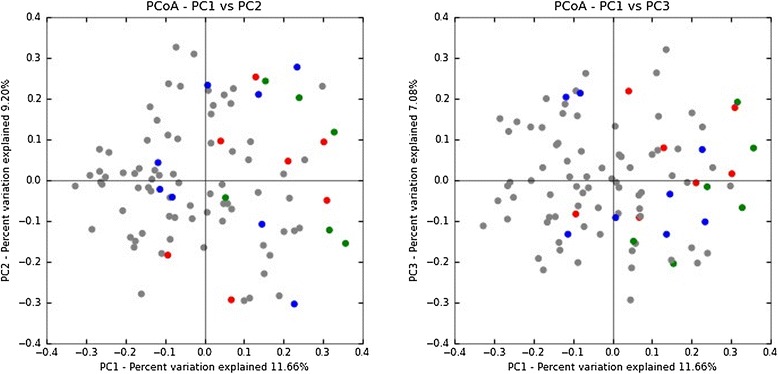
Necrotizing enterocolitis (NEC) is a devastating neonatal gastrointestinal disease that primarily affects premature infants. It is characterized by bowel inflammation and necrosis. In spite of extensive research, there has been little progress in decreasing the incidence or mortality of NEC over the past three decades. The exact etiology of NEC has not been identified. However, it is believed to result from an inappropriate immune response to gut microbiota. Using 454-pyrosequencing analyses of 16S rRNA genes that were PCR-amplified from stool DNA specimens, we compared the gut microbiota of infants with NEC to matched controls without NEC. The infants with NEC were then categorized into three subgroups based on severity: mild, severe, and lethal. We compared the microbiota among these subgroups and between each severity group and appropriate controls.
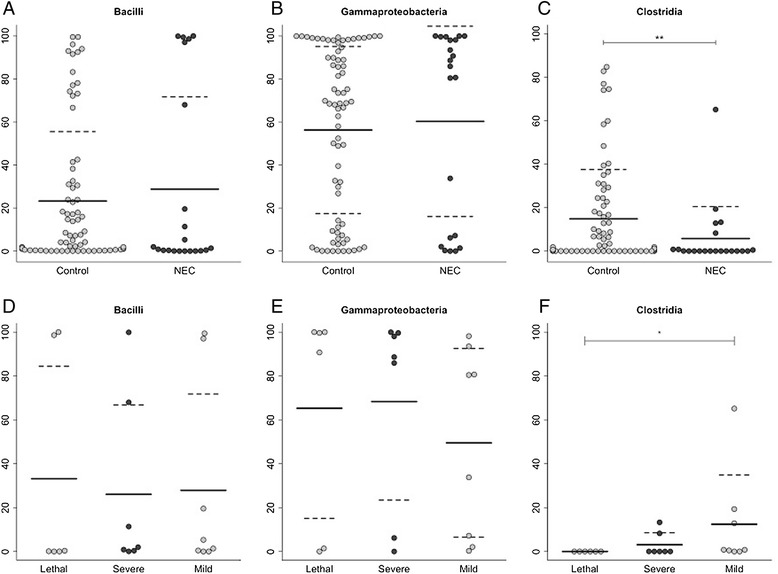
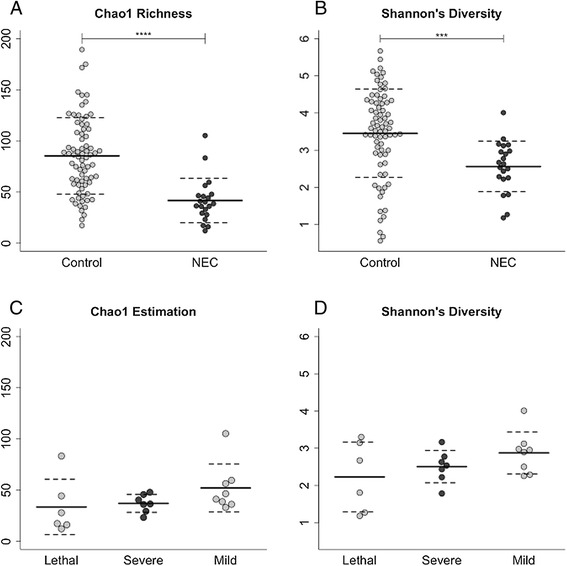
Bacterial diversity and the relative abundance of Actinobacteria and Clostridia were significantly lower in NEC specimens compared to controls. The absence of Clostridia was significantly associated with NEC. Microbial diversity and Clostridia abundance and prevalence decreased with increasing severity of NEC.
Low bacterial diversity in stool specimens may be indicative of NEC and the severity of NEC. The low bacterial diversity, and the lack of Clostridia in lethal specimens, could indicate that the presence of a diverse bacterial population in the gut as well as the presence of taxa such as Clostridia may play a role in attenuating inflammation leading to NEC.
坏死性小肠结肠炎(NEC)是一种破坏性的新生儿胃肠道疾病,主要影响早产儿。它的特征是肠道炎症和坏死。尽管进行了广泛的研究,但在过去三十年中,NEC 的发病率或死亡率几乎没有下降。NEC 的确切病因尚未确定。然而,据信它是由对肠道微生物群的不当免疫反应引起的。我们使用从粪便 DNA 标本中 PCR 扩增的 16S rRNA 基因的 454 焦磷酸测序分析,比较了 NEC 婴儿和无 NEC 匹配对照的肠道微生物群。然后,根据严重程度将 NEC 婴儿分为三组:轻度、重度和致死性。我们比较了这些亚组之间以及每个严重程度组与适当对照组之间的微生物群。
与对照组相比,NEC 标本中的细菌多样性和放线菌和梭状芽孢杆菌的相对丰度明显较低。梭状芽孢杆菌的缺失与 NEC 显著相关。微生物多样性和梭状芽孢杆菌的丰度和流行率随着 NEC 的严重程度的增加而降低。
粪便标本中细菌多样性低可能提示 NEC 和 NEC 的严重程度。在致死性标本中,细菌多样性低且缺乏梭状芽孢杆菌,这表明肠道中存在多样化的细菌种群以及梭状芽孢杆菌等类群可能在减轻导致 NEC 的炎症方面发挥作用。