Life Sciences Division, Lawrence Berkeley National Laboratory Berkeley, CA, USA.
Arizona Cancer Center, The University of Arizona Tucson, AZ, USA ; College of Pharmacy, Department of Pharmacology and Toxicology, The University of Arizona Tucson, AZ, USA.
Front Cell Dev Biol. 2015 Mar 11;3:13. doi: 10.3389/fcell.2015.00013. eCollection 2015.
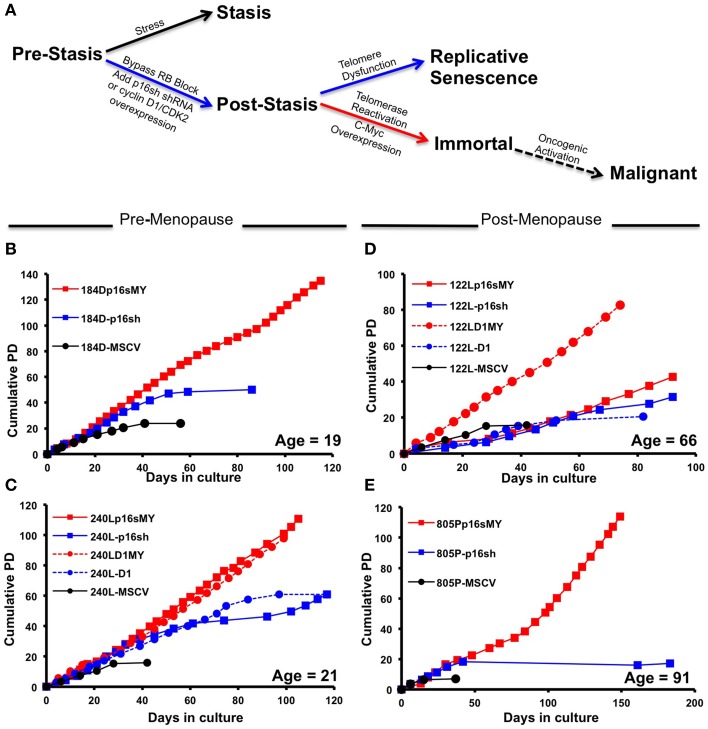
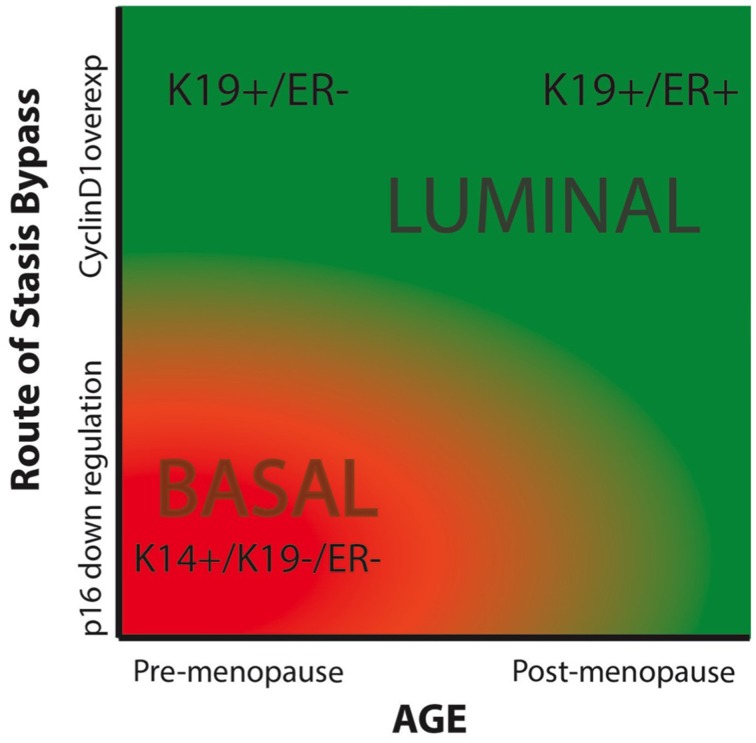
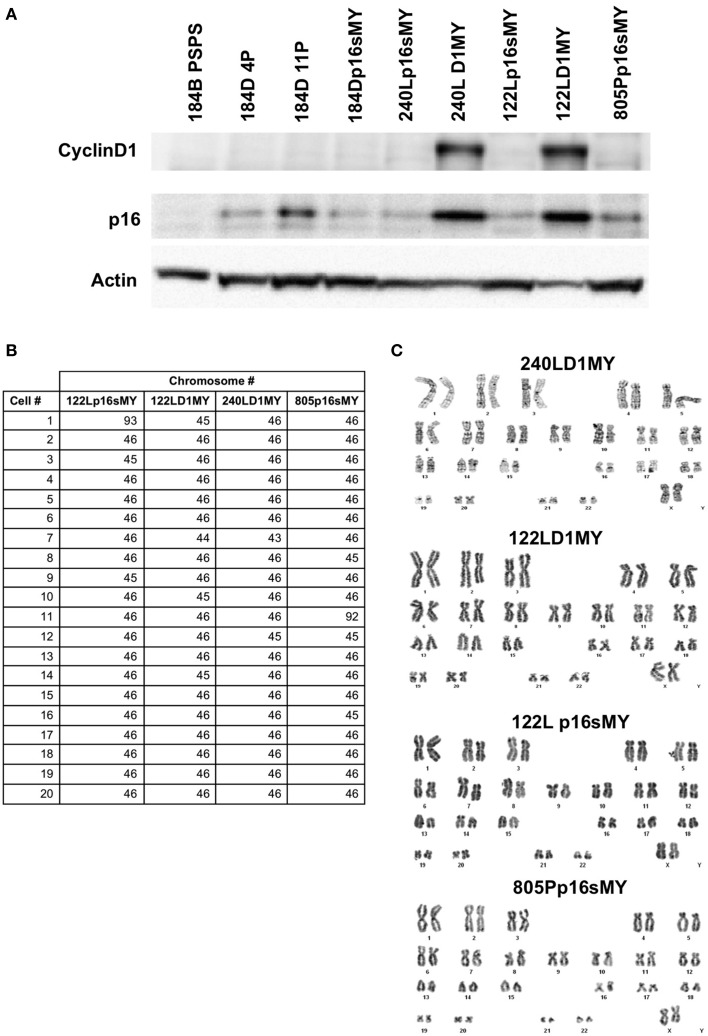
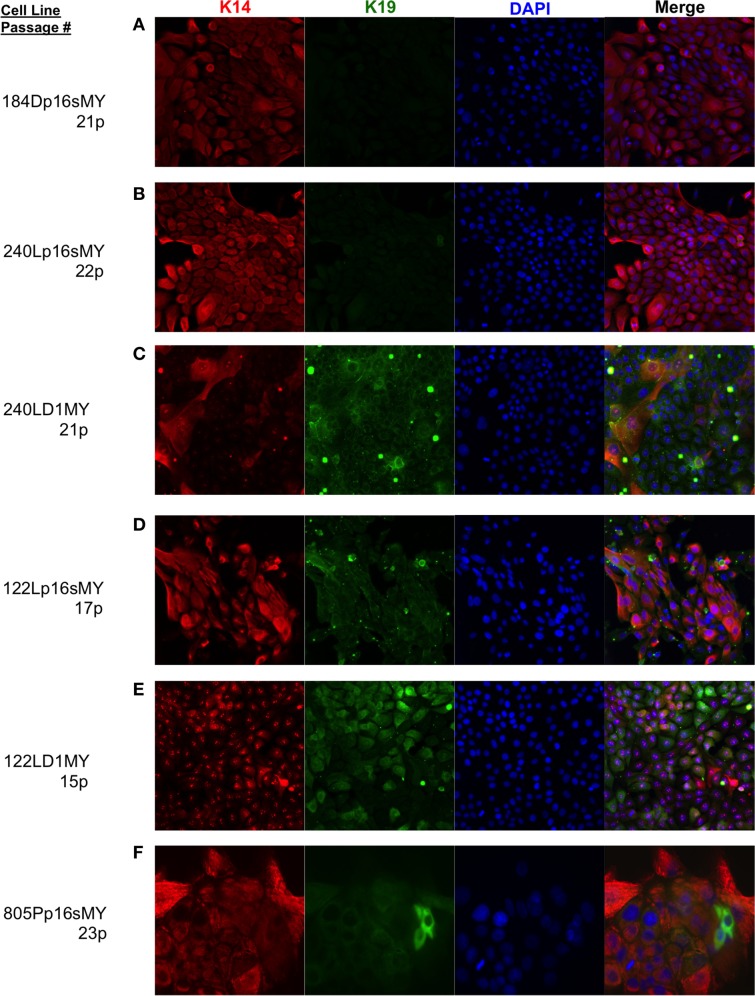
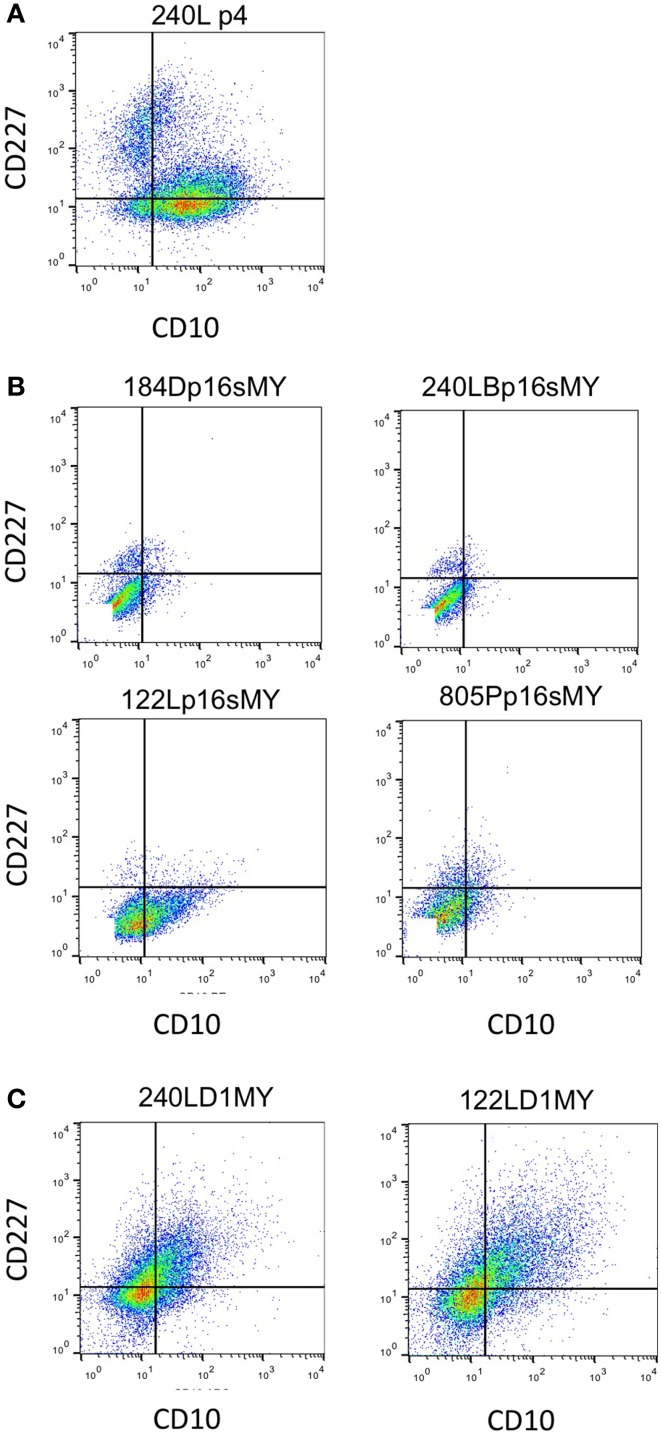
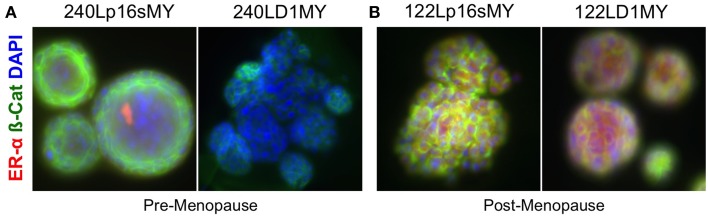
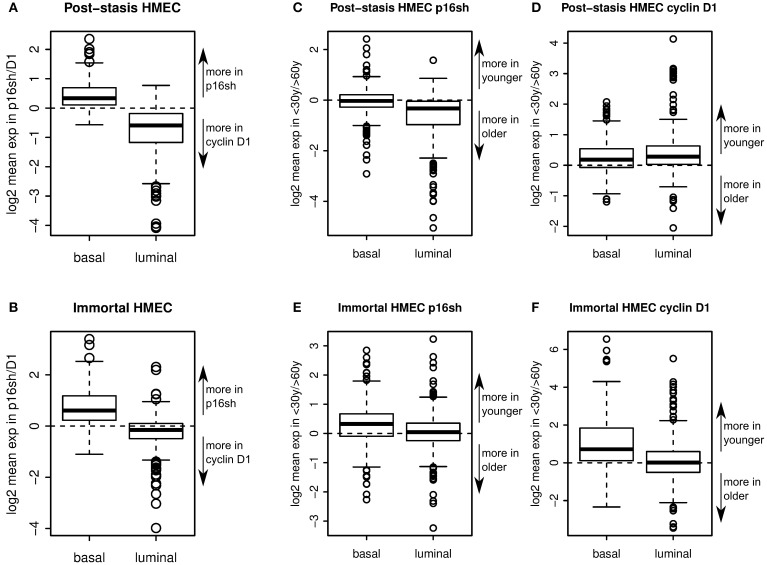
Based on molecular features, breast cancers are grouped into intrinsic subtypes that have different prognoses and therapeutic response profiles. With increasing age, breast cancer incidence increases, with hormone receptor-positive and other luminal-like subtype tumors comprising a majority of cases. It is not known at what stage of tumor progression subtype specification occurs, nor how the process of aging affects the intrinsic subtype. We examined subtype markers in immortalized human mammary epithelial cell lines established following exposure of primary cultured cell strains to a two-step immortalization protocol that targets the two main barriers to immortality: stasis (stress-associated senescence) and replicative senescence. Cell lines derived from epithelial cells obtained from non-tumorous pre- and post-menopausal breast surgery tissues were compared. Additionally, comparisons were made between lines generated using two different genetic interventions to bypass stasis: transduction of either an shRNA that down-regulated p16(INK4A), or overexpressed constitutive active cyclin D1/CDK2. In all cases, the replicative senescence barrier was bypassed by transduction of c-Myc. Cells from all resulting immortal lines exhibited normal karyotypes. Immunofluorescence, flow cytometry, and gene expression analyses of lineage-specific markers were used to categorize the intrinsic subtypes of the immortalized lines. Bypassing stasis with p16 shRNA in young strains generated cell lines that were invariably basal-like, but the lines examined from older strains exhibited some luminal features such as keratin 19 and estrogen receptor expression. Overexpression of cyclin D1/CDK2 resulted in keratin 19 positive, luminal-like cell lines from both young and old strains, and the lines examined from older strains exhibited estrogen receptor expression. Thus age and the method of bypassing stasis independently influence the subtype of immortalized human mammary epithelial cells.
基于分子特征,乳腺癌被分为具有不同预后和治疗反应特征的固有亚型。随着年龄的增长,乳腺癌的发病率增加,激素受体阳性和其他腔型类似亚型肿瘤占大多数病例。目前尚不清楚肿瘤进展的哪个阶段发生了亚型特异性,也不知道衰老过程如何影响内在亚型。我们在原代培养细胞株暴露于两步永生化方案后建立的永生化人乳腺上皮细胞系中检查了亚型标志物,该方案针对永生的两个主要障碍:停滞(与应激相关的衰老)和复制性衰老。比较了源自非肿瘤性绝经前和绝经后乳房手术组织的上皮细胞衍生的细胞系。此外,还比较了使用两种不同遗传干预绕过停滞来生成的细胞系:转导下调 p16(INK4A)的 shRNA,或过表达组成型激活的 cyclin D1/CDK2。在所有情况下,通过转导 c-Myc 绕过了复制性衰老障碍。所有产生的永生化系的细胞均表现出正常的核型。使用谱系特异性标志物的免疫荧光、流式细胞术和基因表达分析来对永生化系进行内在亚型分类。在年轻的细胞株中用 p16 shRNA 绕过停滞会产生始终为基底样的细胞系,但从较老的细胞株中检查的细胞系表现出一些腔型特征,如角蛋白 19 和雌激素受体表达。cyclin D1/CDK2 的过表达导致来自年轻和年老细胞株的角蛋白 19 阳性、腔型类似的细胞系,并且从较老的细胞株中检查的细胞系表现出雌激素受体表达。因此,年龄和绕过停滞的方法独立地影响永生化人乳腺上皮细胞的亚型。