Wong Melissa M L, Gujaria-Verma Neha, Ramsay Larissa, Yuan Hai Ying, Caron Carolyn, Diapari Marwan, Vandenberg Albert, Bett Kirstin E
Department of Plant Sciences, University of Saskatchewan, 51 Campus Drive, Saskatoon, SK, S7N 5A8, Canada.
PLoS One. 2015 Mar 27;10(3):e0122025. doi: 10.1371/journal.pone.0122025. eCollection 2015.
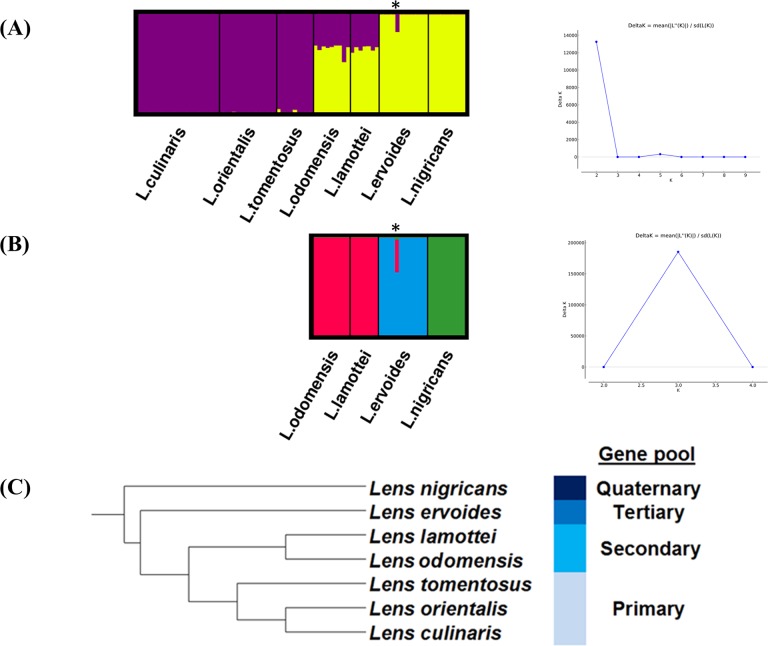
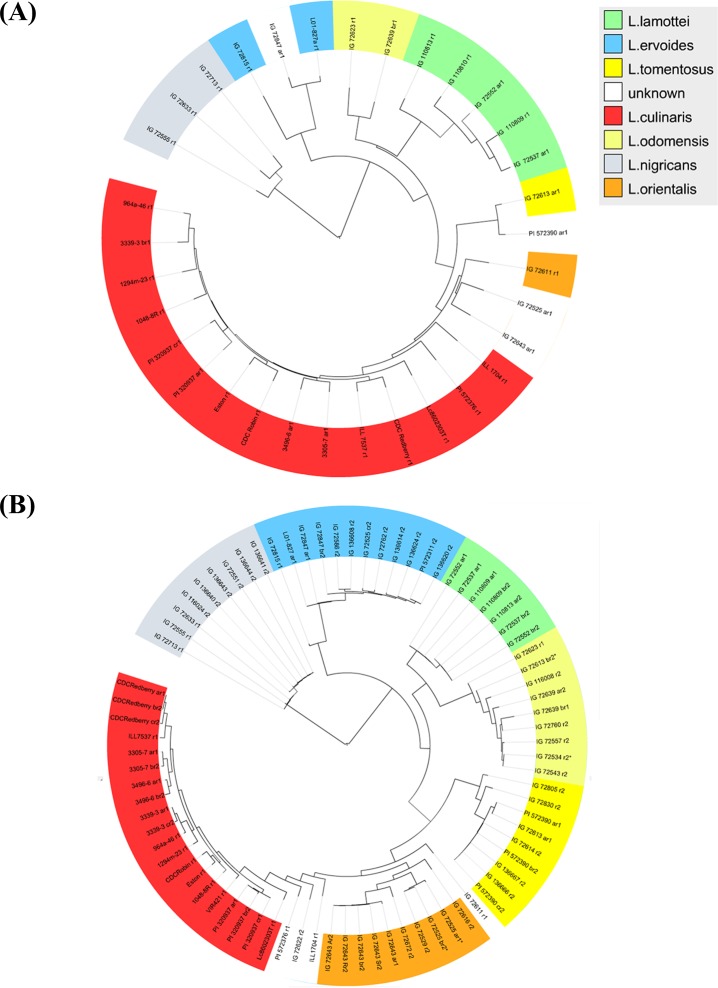
Lentil (Lens culinaris ssp. culinaris) is a nutritious and affordable pulse with an ancient crop domestication history. The genus Lens consists of seven taxa, however, there are many discrepancies in the taxon and gene pool classification of lentil and its wild relatives. Due to the narrow genetic basis of cultivated lentil, there is a need towards better understanding of the relationships amongst wild germplasm to assist introgression of favourable genes into lentil breeding programs. Genotyping-by-sequencing (GBS) is an easy and affordable method that allows multiplexing of up to 384 samples or more per library to generate genome-wide single nucleotide Polymorphism (SNP) markers. In this study, we aimed to characterize our lentil germplasm collection using a two-enzyme GBS approach. We constructed two 96-plex GBS libraries with a total of 60 accessions where some accessions had several samples and each sample was sequenced in two technical replicates. We developed an automated GBS pipeline and detected a total of 266,356 genome-wide SNPs. After filtering low quality and redundant SNPs based on haplotype information, we constructed a maximum-likelihood tree using 5,389 SNPs. The phylogenetic tree grouped the germplasm collection into their respective taxa with strong support. Based on phylogenetic tree and STRUCTURE analysis, we identified four gene pools, namely L. culinaris/L. orientalis/L. tomentosus, L. lamottei/L. odemensis, L. ervoides and L. nigricans which form primary, secondary, tertiary and quaternary gene pools, respectively. We discovered sequencing bias problems likely due to DNA quality and observed severe run-to-run variation in the wild lentils. We examined the authenticity of the germplasm collection and identified 17% misclassified samples. Our study demonstrated that GBS is a promising and affordable tool for screening by plant breeders interested in crop wild relatives.
小扁豆(Lens culinaris ssp. culinaris)是一种营养丰富且价格实惠的豆类,有着悠久的作物驯化历史。兵豆属由七个分类单元组成,然而,小扁豆及其野生近缘种在分类单元和基因库分类方面存在许多差异。由于栽培小扁豆的遗传基础狭窄,有必要更好地了解野生种质之间的关系,以帮助将有利基因导入小扁豆育种计划。简化基因组测序(GBS)是一种简便且经济的方法,每个文库最多可对384个或更多样本进行多重分析,以生成全基因组单核苷酸多态性(SNP)标记。在本研究中,我们旨在使用双酶GBS方法对我们的小扁豆种质资源进行表征。我们构建了两个96重GBS文库,共有60份种质,其中一些种质有多个样本,每个样本进行了两次技术重复测序。我们开发了一个自动化的GBS流程,共检测到266,356个全基因组SNP。基于单倍型信息过滤低质量和冗余SNP后,我们使用5,389个SNP构建了一棵最大似然树。系统发育树将种质资源有力地支持地分组到各自的分类单元中。基于系统发育树和结构分析,我们确定了四个基因库,即L. culinaris/L. orientalis/L. tomentosus、L. lamottei/L. odemensis、L. ervoides和L. nigricans,它们分别形成了初级、次级、三级和四级基因库。我们发现了可能由于DNA质量导致的测序偏差问题,并在野生小扁豆中观察到严重的批次间差异。我们检查了种质资源的真实性,发现了17%分类错误的样本。我们的研究表明,GBS对于对作物野生近缘种感兴趣的植物育种者来说是一种有前景且经济的筛选工具。