López-Alvarez J, Elliott J, Pfeiffer D, Chang Y-M, Mattin M, Moonarmart W, Hezzell M J, Boswood A
Department of Clinical Sciences and Services, Royal Veterinary College, London, UK.
J Vet Intern Med. 2015 Mar-Apr;29(2):575-81. doi: 10.1111/jvim.12544.
Several risk factors already have been determined for dogs with degenerative mitral valve disease (DMVD). Risk factors often have been considered in isolation and have not always taken into account additional information provided by the history and physical examination (PE).
HYPOTHESIS/OBJECTIVES: Data obtained from history and PE of dogs with DMVD provide prognostic information and can be used for risk stratification.
Client-owned dogs (n = 244) with DMVD recruited from first opinion practice.
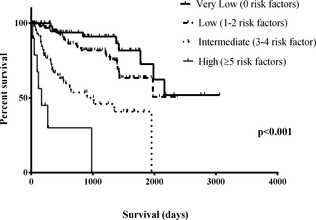
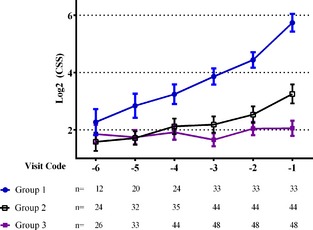
Prospective longitudinal follow-up of dogs with DMVD. History and PE data were obtained at 6-month intervals and analyzed with time-dependent Cox models to derive relative risk of cardiac death. Independent hazard ratios were used to derive a clinical severity score (CSS), the prognostic value of which was evaluated by analyzing the median survival times for different risk groups and ROC analysis. Analysis of the progression of CSS over time also was undertaken.
History of cough, exercise intolerance, decreased appetite, breathlessness (difficulty breathing) and syncope with PE findings of heart murmur intensity louder than III/VI and absence of respiratory sinus arrhythmia were independently associated with outcome and allowed development of the CSS. Clinical severity score distinguished groups of dogs with significantly different outcomes.
Routinely obtained clinical findings allow risk stratification of dogs with DMVD. Results of ancillary diagnostic tests may be complementary to history and PE findings and always should be interpreted in conjunction with these findings.
已经确定了患有退行性二尖瓣疾病(DMVD)的犬的几种风险因素。风险因素通常被孤立地考虑,并且并不总是考虑病史和体格检查(PE)提供的其他信息。
假设/目标:从患有DMVD的犬的病史和PE中获得的数据可提供预后信息,并可用于风险分层。
从初诊机构招募的患有DMVD的客户拥有的犬(n = 244)。
对患有DMVD的犬进行前瞻性纵向随访。每隔6个月获取病史和PE数据,并使用时间依赖性Cox模型进行分析,以得出心脏死亡的相对风险。使用独立风险比得出临床严重程度评分(CSS),通过分析不同风险组的中位生存时间和ROC分析来评估其预后价值。还对CSS随时间的进展进行了分析。
咳嗽、运动不耐受、食欲减退、呼吸急促(呼吸困难)和晕厥的病史,以及体格检查发现心脏杂音强度大于III/VI且无呼吸性窦性心律失常,与预后独立相关,并有助于制定CSS。临床严重程度评分区分了预后明显不同的犬组。
常规获得的临床发现可对患有DMVD的犬进行风险分层。辅助诊断测试的结果可能是对病史和体格检查结果的补充,并且始终应结合这些发现进行解释。