Ho Krystina L, Ma Lina, Cheung Stephanie, Manhas Savrina, Fang Nancy, Wang Kaiqian, Young Barry, Loewen Christopher, Mayor Thibault, Measday Vivien
Department of Biochemistry and Molecular Biology, University of British Columbia, Vancouver, British Columbia, Canada; Wine Research Centre, University of British Columbia, Vancouver, British Columbia, Canada.
Wine Research Centre, University of British Columbia, Vancouver, British Columbia, Canada.
PLoS Genet. 2015 Mar 30;11(3):e1005109. doi: 10.1371/journal.pgen.1005109. eCollection 2015 Mar.
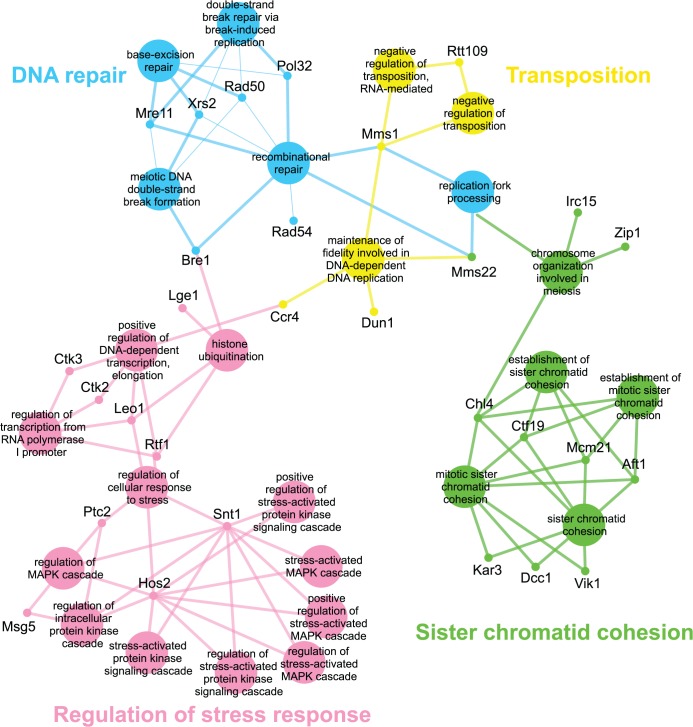
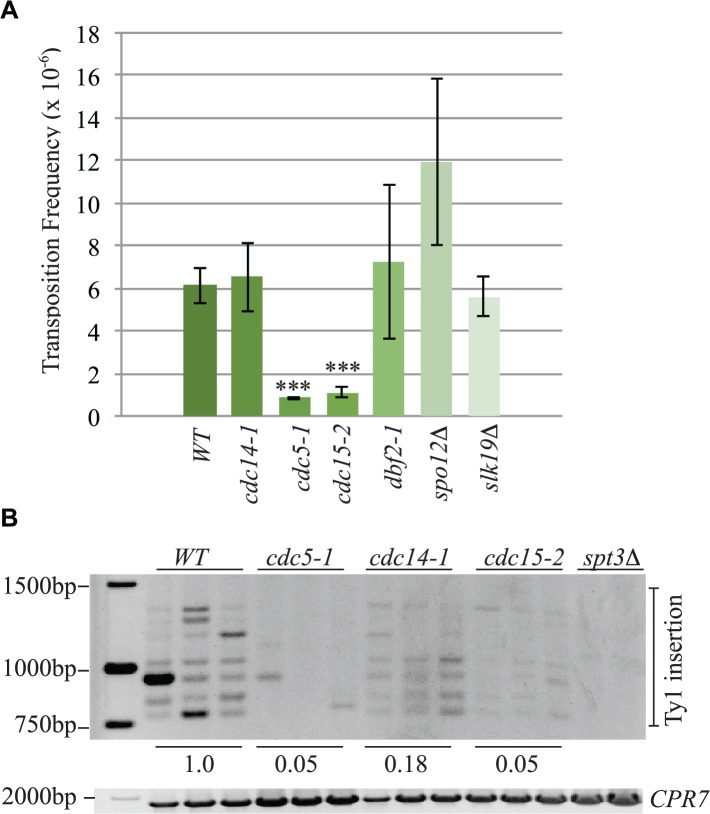
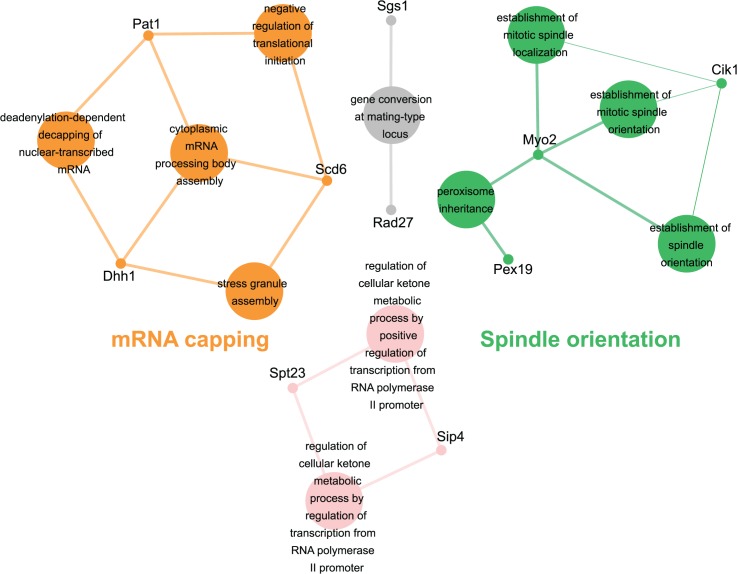
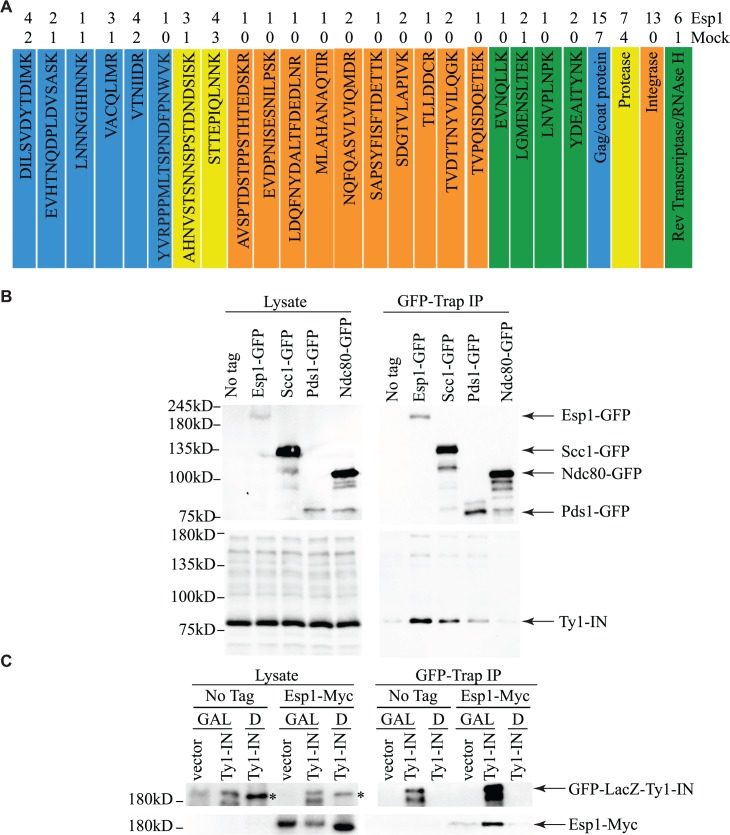
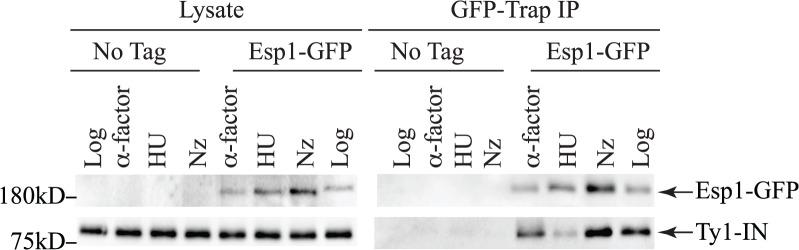
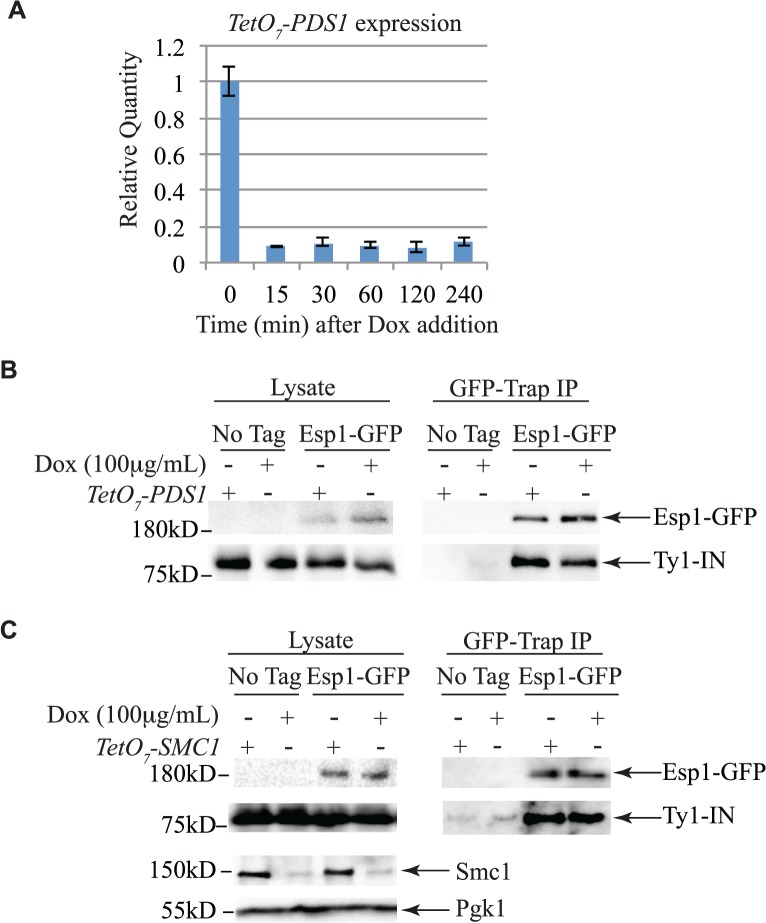
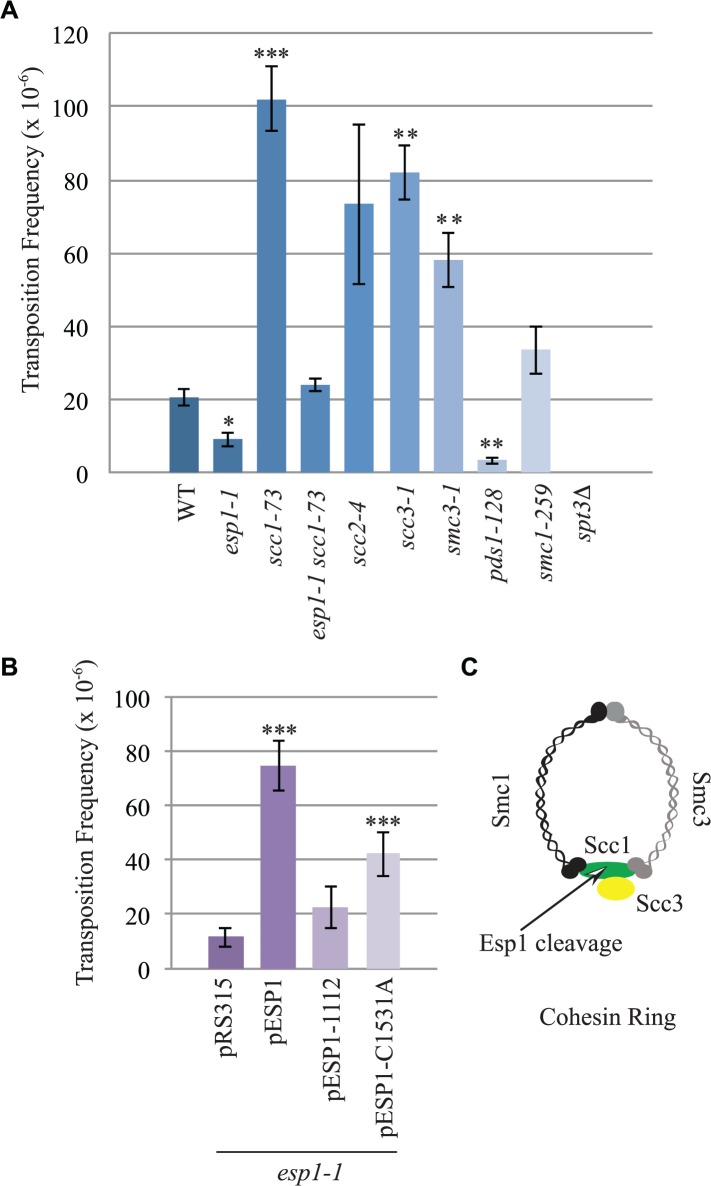
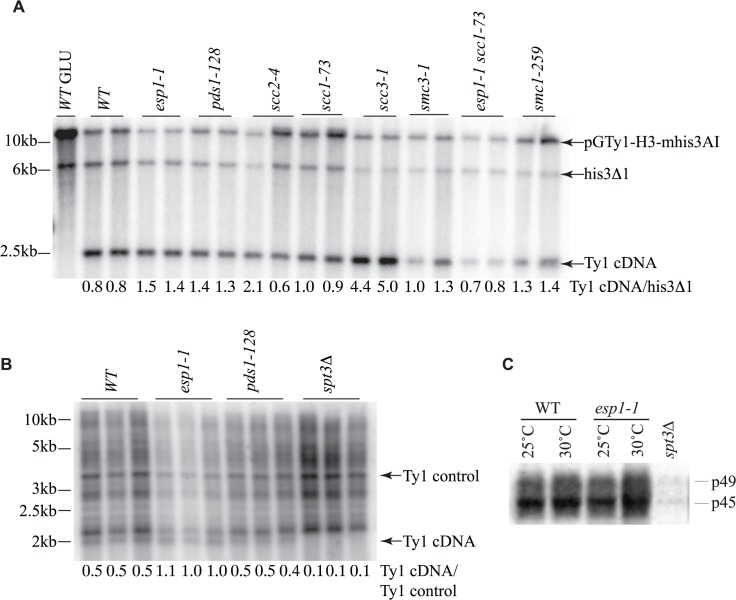
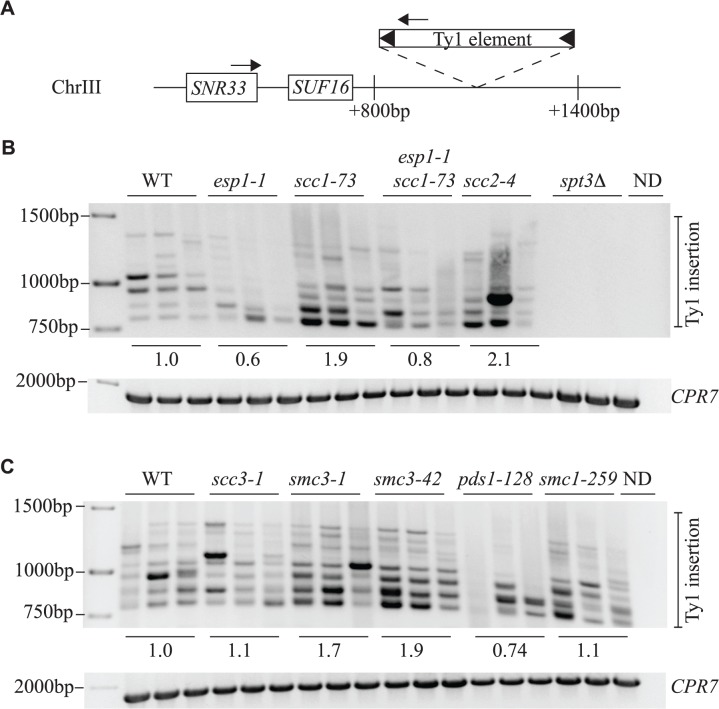
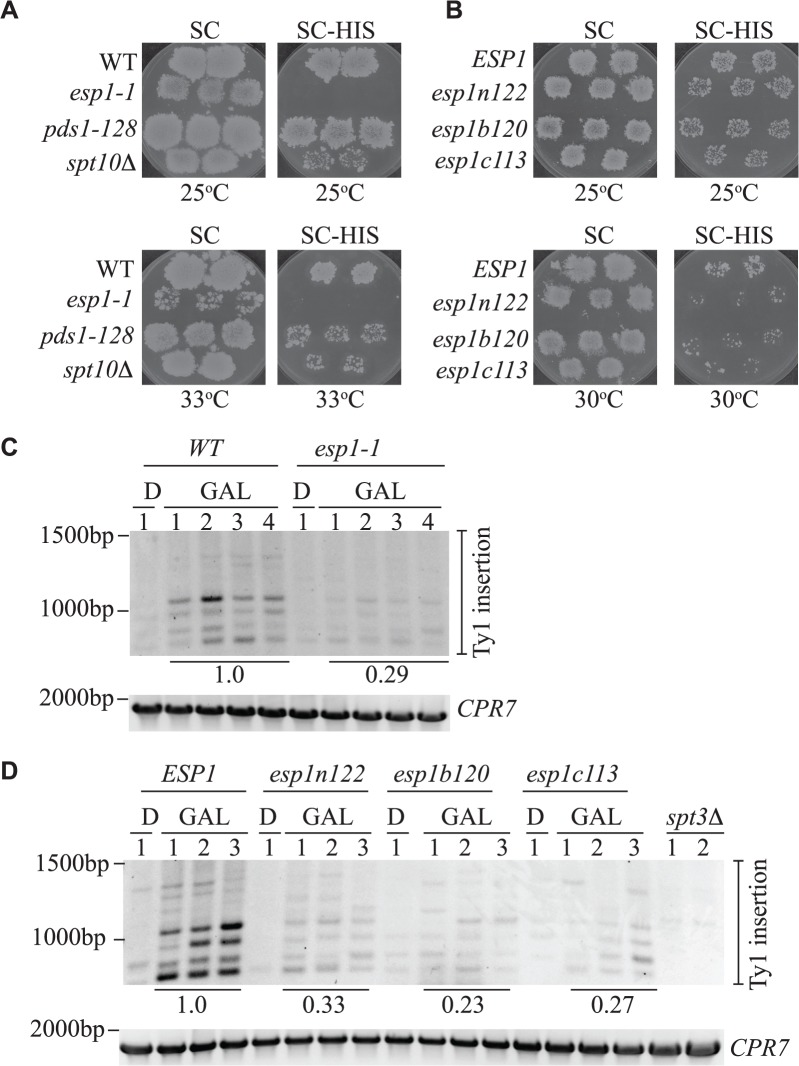
Separase/Esp1 is a protease required at the onset of anaphase to cleave cohesin and thereby enable sister chromatid separation. Esp1 also promotes release of the Cdc14 phosphatase from the nucleolus to enable mitotic exit. To uncover other potential roles for separase, we performed two complementary genome-wide genetic interaction screens with a strain carrying the budding yeast esp1-1 separase mutation. We identified 161 genes that when mutated aggravate esp1-1 growth and 44 genes that upon increased dosage are detrimental to esp1-1 viability. In addition to the expected cell cycle and sister chromatid segregation genes that were identified, 24% of the genes identified in the esp1-1 genetic screens have a role in Ty1 element retrotransposition. Retrotransposons, like retroviruses, replicate through reverse transcription of an mRNA intermediate and the resultant cDNA product is integrated into the genome by a conserved transposon or retrovirus encoded integrase protein. We purified Esp1 from yeast and identified an interaction between Esp1 and Ty1 integrase using mass spectrometry that was subsequently confirmed by co-immunoprecipitation analysis. Ty1 transposon mobility and insertion upstream of the SUF16 tRNA gene are both reduced in an esp1-1 strain but increased in cohesin mutant strains. Securin/Pds1, which is required for efficient localization of Esp1 to the nucleus, is also required for efficient Ty1 transposition. We propose that Esp1 serves two roles to mediate Ty1 transposition - one to remove cohesin and the second to target Ty1-IN to chromatin.
分离酶/Esp1是一种蛋白酶,在后期开始时发挥作用,切割黏连蛋白,从而使姐妹染色单体分离。Esp1还能促进Cdc14磷酸酶从核仁中释放出来,从而实现有丝分裂退出。为了揭示分离酶的其他潜在作用,我们用携带芽殖酵母esp1-1分离酶突变的菌株进行了两项互补的全基因组遗传相互作用筛选。我们鉴定出161个基因,这些基因发生突变时会加剧esp1-1的生长缺陷,还有44个基因,剂量增加时对esp1-1的生存能力有害。除了鉴定出预期的细胞周期和姐妹染色单体分离基因外,在esp1-1遗传筛选中鉴定出的基因中有24%在Ty1元件逆转录转座中起作用。逆转座子与逆转录病毒一样,通过mRNA中间体的逆转录进行复制,产生的cDNA产物由保守的转座子或逆转录病毒编码的整合酶蛋白整合到基因组中。我们从酵母中纯化了Esp1,并通过质谱鉴定了Esp1与Ty1整合酶之间的相互作用,随后通过免疫共沉淀分析得到证实。在esp1-1菌株中,Ty1转座子的移动性和在SUF16 tRNA基因上游的插入均降低,但在黏连蛋白突变菌株中增加。Securin/Pds1是Esp1有效定位到细胞核所必需的,也是有效进行Ty1转座所必需的。我们提出,Esp1在介导Ty1转座中发挥两个作用——一个是去除黏连蛋白,另一个是将Ty1-IN靶向染色质。