Chandramouli Balasubramanian, Di Maio Danilo, Mancini Giordano, Barone Vincenzo, Brancato Giuseppe
Scuola Normale Superiore, Piazza dei Cavalieri 7, I-56126, Pisa, Italy.
Scuola Normale Superiore, Piazza dei Cavalieri 7, I-56126, Pisa, Italy; Istituto Nazionale di Fisica Nucleare (INFN), sezione di Pisa, Largo Bruno Pontecorvo 3, 56127, Pisa, Italy.
PLoS One. 2015 Mar 31;10(3):e0120196. doi: 10.1371/journal.pone.0120196. eCollection 2015.
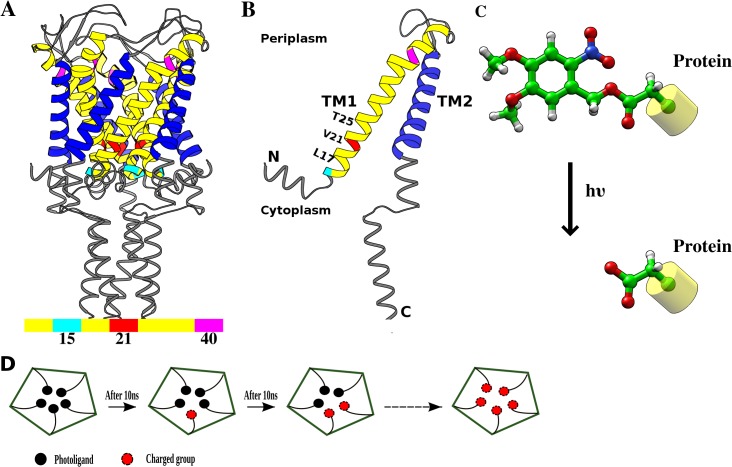
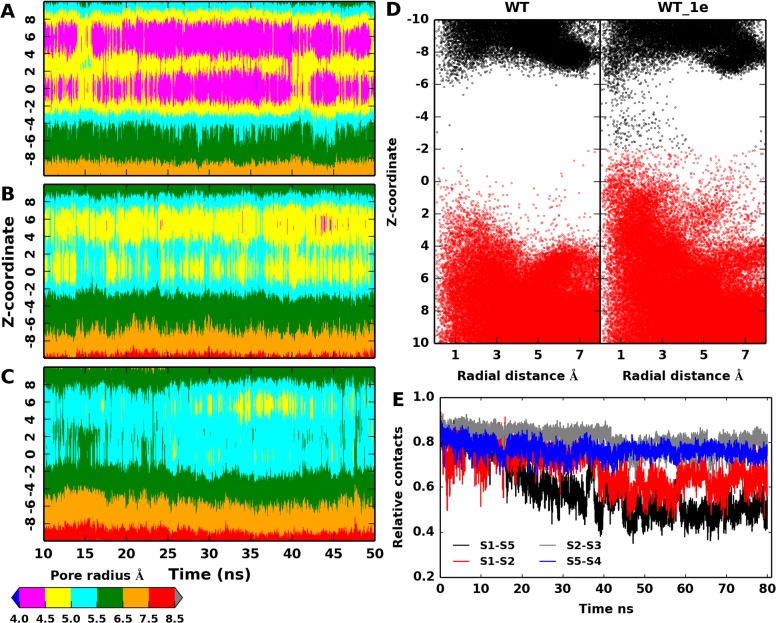
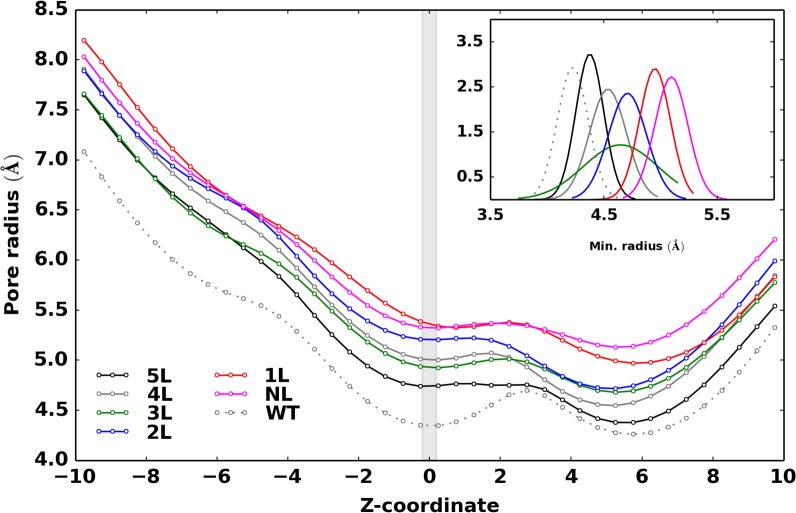
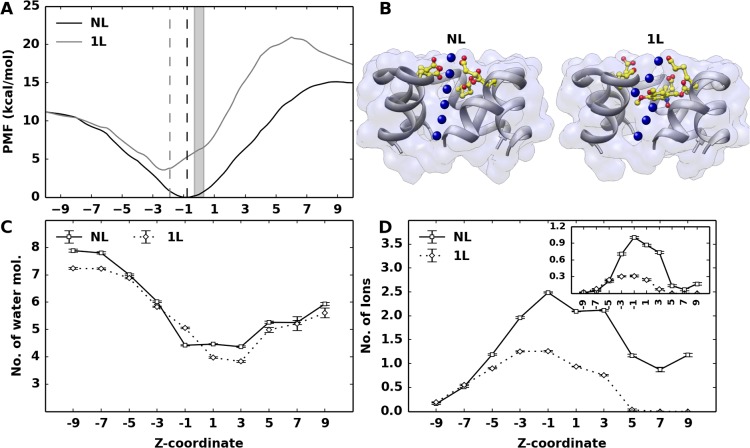
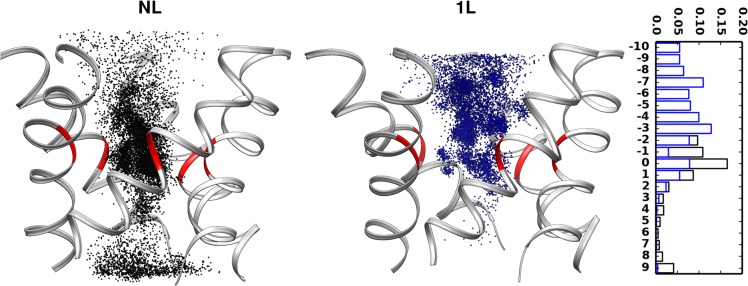
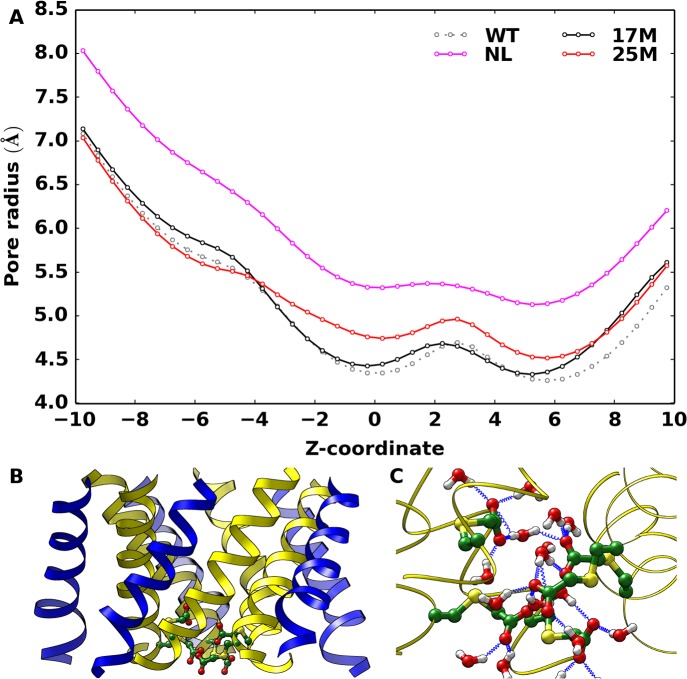
The mechanosensitive channel of large conductance (MscL) is a protein that responds to membrane tension by opening a transient pore during osmotic downshock. Due to its large pore size and functional reconstitution into lipid membranes, MscL has been proposed as a promising artificial nanovalve suitable for biotechnological applications. For example, site-specific mutations and tailored chemical modifications have shown how MscL channel gating can be triggered in the absence of tension by introducing charged residues at the hydrophobic pore level. Recently, engineered MscL proteins responsive to stimuli like pH or light have been reported. Inspired by experiments, we present a thorough computational study aiming at describing, with atomistic detail, the artificial gating mechanism and the molecular transport properties of a light-actuated bacterial MscL channel, in which a charge-induced gating mechanism has been enabled through the selective cleavage of photo-sensitive alkylating agents. Properties such as structural transitions, pore dimension, ion flux and selectivity have been carefully analyzed. Besides, the effects of charge on alternative sites of the channel with respect to those already reported have been addressed. Overall, our results provide useful molecular insights into the structural events accompanying the engineered MscL channel gating and the interplay of electrostatic effects, channel opening and permeation properties. In addition, we describe how the experimentally observed ionic current in a single-subunit charged MscL mutant is obtained through a hydrophobicity breaking mechanism involving an asymmetric inter-subunit motion.
大电导机械敏感通道(MscL)是一种蛋白质,在渗透压下降时通过打开一个瞬时孔道来响应膜张力。由于其较大的孔径以及能够功能性地重组到脂质膜中,MscL被认为是一种有前景的适用于生物技术应用的人工纳米阀。例如,位点特异性突变和定制的化学修饰已经表明,通过在疏水孔道水平引入带电残基,如何在没有张力的情况下触发MscL通道门控。最近,已经报道了对pH或光等刺激有响应的工程化MscL蛋白。受实验启发,我们进行了一项深入的计算研究,旨在以原子细节描述一种光驱动的细菌MscL通道的人工门控机制和分子传输特性,其中通过选择性裂解光敏烷基化剂实现了电荷诱导的门控机制。我们仔细分析了结构转变、孔尺寸、离子通量和选择性等性质。此外,还探讨了电荷对通道其他位点的影响,这些位点与已报道的位点不同。总体而言,我们的结果为伴随工程化MscL通道门控的结构事件以及静电效应、通道开放和渗透性质之间的相互作用提供了有用的分子见解。此外,我们描述了如何通过涉及不对称亚基间运动的疏水性破坏机制,在单亚基带电MscL突变体中获得实验观察到的离子电流。