Brockhurst J, Cheleuitte-Nieves C, Buckmaster C L, Schatzberg A F, Lyons D M
Department of Psychiatry and Behavioral Sciences, Stanford University School of Medicine, Stanford, CA, USA.
Transl Psychiatry. 2015 Mar 31;5(3):e537. doi: 10.1038/tp.2015.34.
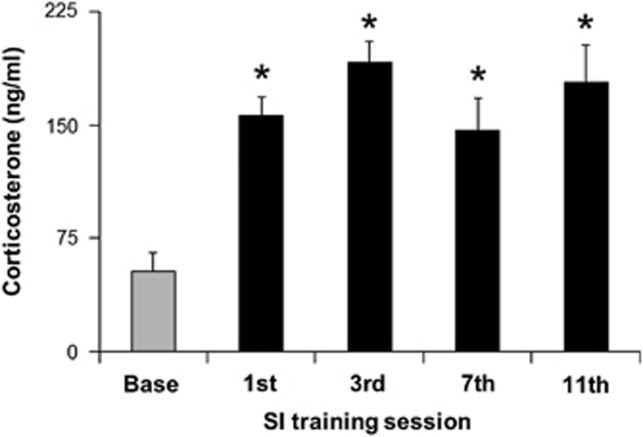
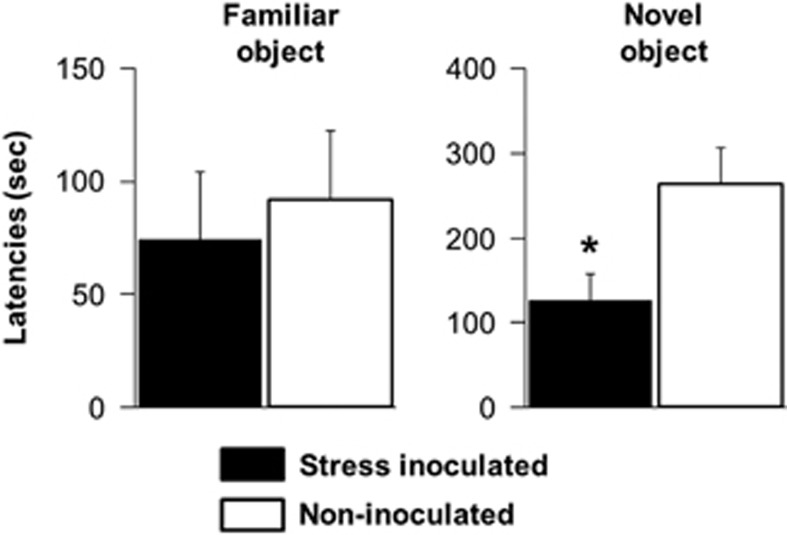
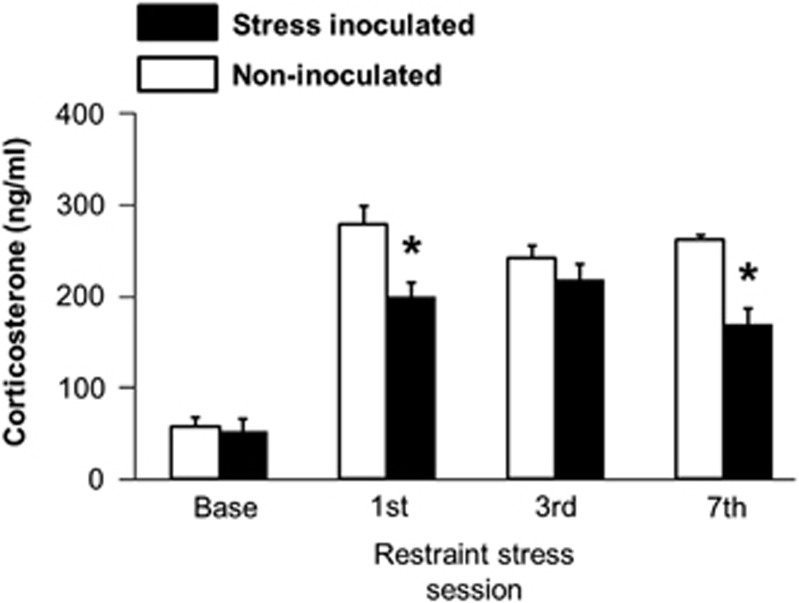
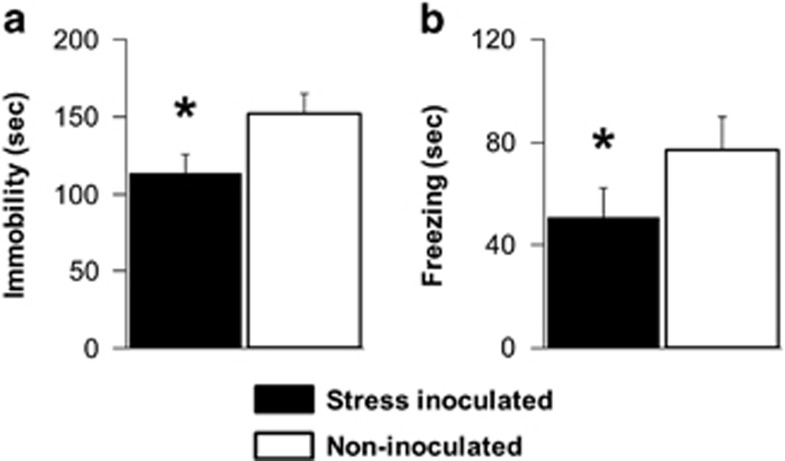
Stress inoculation entails intermittent exposure to mildly stressful situations that present opportunities to learn, practice and improve coping in the context of exposure psychotherapies and resiliency training. Here we investigate behavioral and hormonal aspects of stress inoculation modeled in mice. Mice randomized to stress inoculation or a control treatment condition were assessed for corticosterone stress hormone responses and behavior during open-field, object-exploration and tail-suspension tests. Stress inoculation training sessions that acutely increased plasma levels of corticosterone diminished subsequent immobility as a measure of behavioral despair on tail-suspension tests. Stress inoculation also decreased subsequent freezing in the open field despite comparable levels of thigmotaxis in mice from both treatment conditions. Stress inoculation subsequently decreased novel-object exploration latencies and reduced corticosterone responses to repeated restraint. These results demonstrate that stress inoculation acutely stimulates glucocorticoid signaling and then enhances subsequent indications of active coping behavior in mice. Unlike mouse models that screen for the absence of vulnerability to stress or presence of traits that occur in resilient individuals, stress inoculation training reflects an experience-dependent learning-like process that resembles interventions designed to build resilience in humans. Mouse models of stress inoculation may provide novel insights for new preventive strategies or therapeutic treatments of human psychiatric disorders that are triggered and exacerbated by stressful life events.
应激接种包括间歇性暴露于轻度应激情境,这些情境提供了在暴露疗法和复原力训练背景下学习、练习和改善应对能力的机会。在此,我们研究了小鼠模型中应激接种的行为和激素方面。将小鼠随机分为应激接种组或对照治疗组,在旷场试验、物体探索试验和悬尾试验中评估它们的皮质酮应激激素反应和行为。应激接种训练会急性增加血浆皮质酮水平,减少随后悬尾试验中作为行为绝望指标的不动时间。尽管两种治疗条件下的小鼠在趋触性水平相当,但应激接种也会减少随后在旷场试验中的僵住时间。应激接种随后会减少对新物体的探索潜伏期,并降低对重复束缚的皮质酮反应。这些结果表明,应激接种会急性刺激糖皮质激素信号传导,然后增强小鼠随后积极应对行为的表现。与筛选对压力不敏感或具有复原力个体特征的小鼠模型不同,应激接种训练反映了一种依赖经验的类似学习的过程,类似于旨在增强人类复原力的干预措施。应激接种的小鼠模型可能为因应激性生活事件引发和加剧的人类精神疾病的新预防策略或治疗方法提供新见解。