• 文献检索
  • 文档翻译
  • 深度研究
  • 学术资讯
  • Suppr Zotero 插件Zotero 插件
  • 邀请有礼
  • 套餐&价格
  • 历史记录
应用&插件
Suppr Zotero 插件Zotero 插件浏览器插件Mac 客户端Windows 客户端微信小程序
定价
高级版会员购买积分包购买API积分包
服务
文献检索文档翻译深度研究API 文档MCP 服务
关于我们
关于 Suppr公司介绍联系我们用户协议隐私条款
关注我们

Suppr 超能文献

核心技术专利:CN118964589B侵权必究
粤ICP备2023148730 号-1Suppr @ 2026

文献检索

告别复杂PubMed语法,用中文像聊天一样搜索,搜遍4000万医学文献。AI智能推荐,让科研检索更轻松。

立即免费搜索

文件翻译

保留排版,准确专业,支持PDF/Word/PPT等文件格式,支持 12+语言互译。

免费翻译文档

深度研究

AI帮你快速写综述,25分钟生成高质量综述,智能提取关键信息,辅助科研写作。

立即免费体验

成体神经发生过程中神经球培养物中昼夜节律振荡器的发育。

Development of circadian oscillators in neurosphere cultures during adult neurogenesis.

作者信息

Malik Astha, Jamasbi Roudabeh J, Kondratov Roman V, Geusz Michael E

机构信息

Department of Biology, Bowling Green State University, Bowling Green, Ohio, United States of America.

Department of Biology, Bowling Green State University, Bowling Green, Ohio, United States of America; Department of Public and Allied Health, Bowling Green State University, Bowling Green, Ohio, United States of America.

出版信息

PLoS One. 2015 Mar 31;10(3):e0122937. doi: 10.1371/journal.pone.0122937. eCollection 2015.

DOI:10.1371/journal.pone.0122937
PMID:25826427
原文链接:https://pmc.ncbi.nlm.nih.gov/articles/PMC4380296/
Abstract

Circadian rhythms are common in many cell types but are reported to be lacking in embryonic stem cells. Recent studies have described possible interactions between the molecular mechanism of circadian clocks and the signaling pathways that regulate stem cell differentiation. Circadian rhythms have not been examined well in neural stem cells and progenitor cells that produce new neurons and glial cells during adult neurogenesis. To evaluate circadian timing abilities of cells undergoing neural differentiation, neurospheres were prepared from the mouse subventricular zone (SVZ), a rich source of adult neural stem cells. Circadian rhythms in mPer1 gene expression were recorded in individual spheres, and cell types were characterized by confocal immunofluorescence microscopy at early and late developmental stages in vitro. Circadian rhythms were observed in neurospheres induced to differentiate into neurons or glia, and rhythms emerged within 3-4 days as differentiation proceeded, suggesting that the neural stem cell state suppresses the functioning of the circadian clock. Evidence was also provided that neural stem progenitor cells derived from the SVZ of adult mice are self-sufficient clock cells capable of producing a circadian rhythm without input from known circadian pacemakers of the organism. Expression of mPer1 occurred in high frequency oscillations before circadian rhythms were detected, which may represent a role for this circadian clock gene in the fast cycling of gene expression responsible for early cell differentiation.

摘要

昼夜节律在许多细胞类型中普遍存在,但据报道胚胎干细胞中缺乏昼夜节律。最近的研究描述了生物钟的分子机制与调节干细胞分化的信号通路之间可能存在的相互作用。在成年神经发生过程中产生新的神经元和神经胶质细胞的神经干细胞和祖细胞中,昼夜节律尚未得到充分研究。为了评估神经分化细胞的昼夜计时能力,从小鼠脑室下区(SVZ)制备了神经球,该区域是成年神经干细胞的丰富来源。在单个神经球中记录mPer1基因表达的昼夜节律,并通过共聚焦免疫荧光显微镜在体外发育的早期和晚期对细胞类型进行表征。在诱导分化为神经元或神经胶质细胞的神经球中观察到昼夜节律,并且随着分化的进行,节律在3-4天内出现,这表明神经干细胞状态抑制了生物钟的功能。还提供了证据表明,源自成年小鼠SVZ的神经干细胞祖细胞是能够产生昼夜节律的自给自足的生物钟细胞,无需生物体已知的昼夜起搏器的输入。在检测到昼夜节律之前,mPer1的表达以高频振荡出现,这可能代表该生物钟基因在负责早期细胞分化的基因快速循环中的作用。
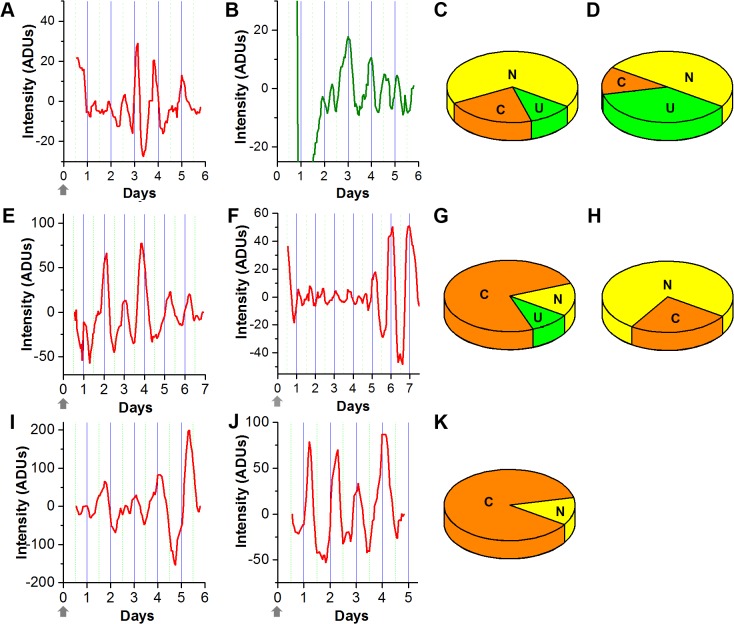
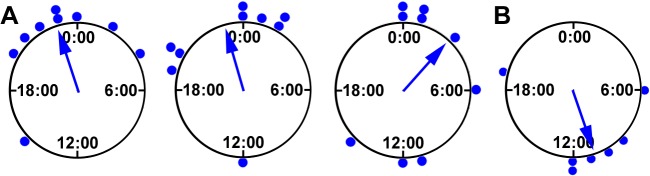
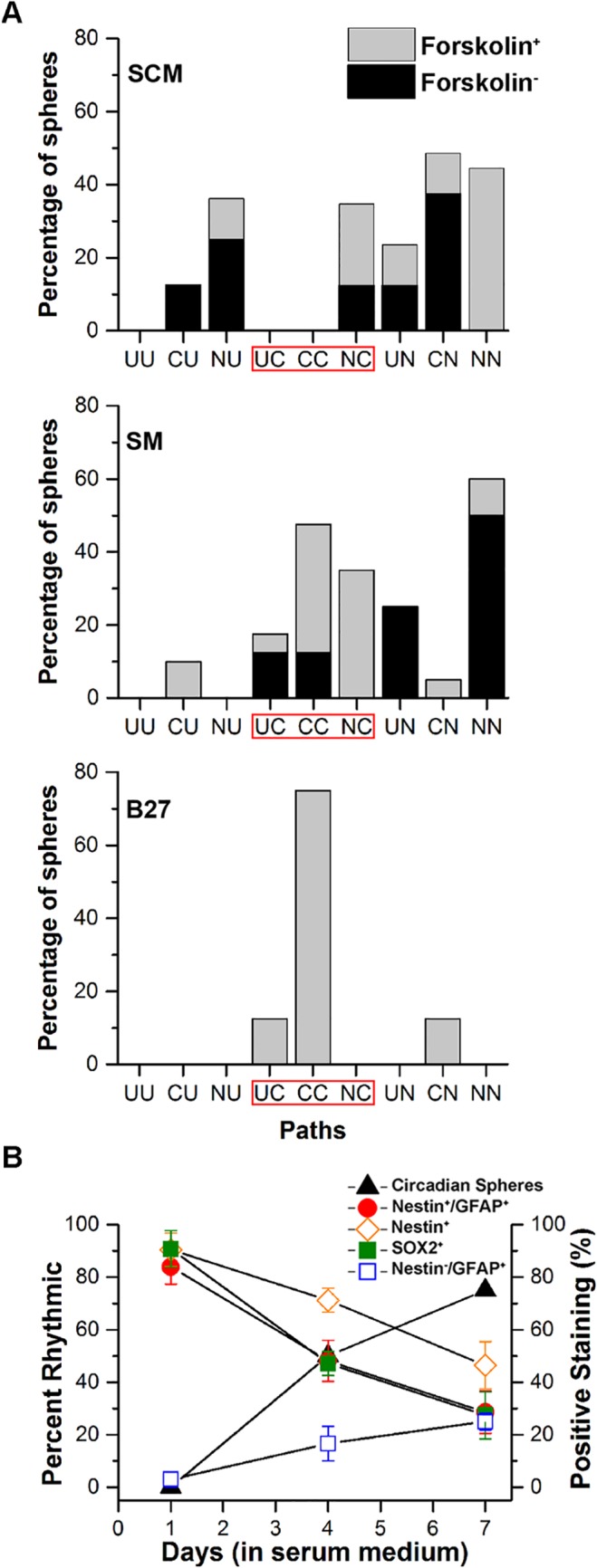
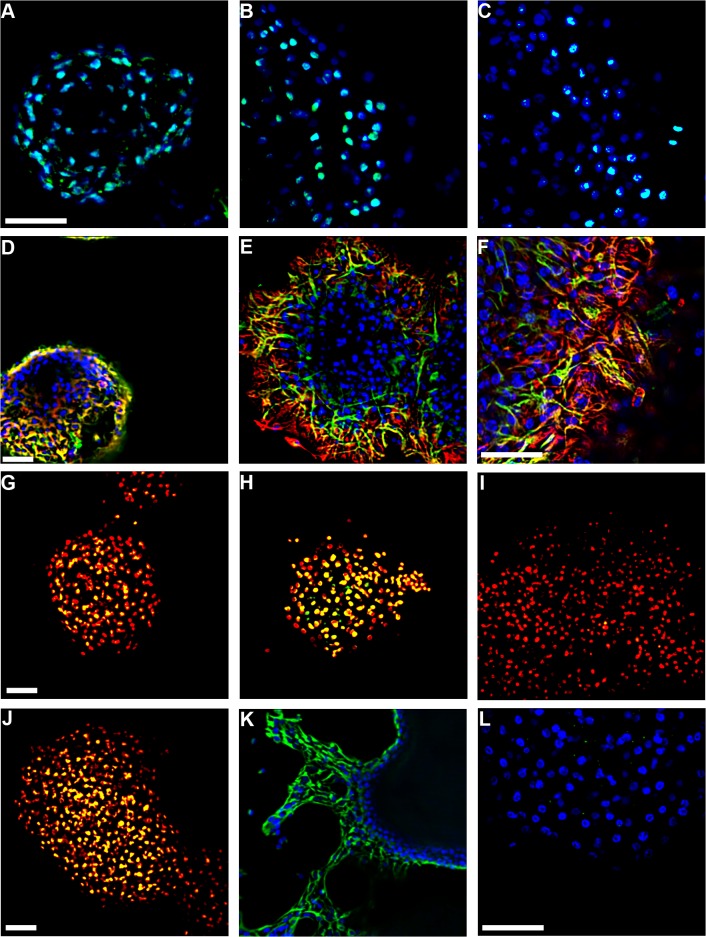
https://cdn.ncbi.nlm.nih.gov/pmc/blobs/7583/4380296/427de618ee1f/pone.0122937.g004.jpg
https://cdn.ncbi.nlm.nih.gov/pmc/blobs/7583/4380296/0541abeec1c3/pone.0122937.g001.jpg
https://cdn.ncbi.nlm.nih.gov/pmc/blobs/7583/4380296/b701ab26f056/pone.0122937.g002.jpg
https://cdn.ncbi.nlm.nih.gov/pmc/blobs/7583/4380296/8eef149ee044/pone.0122937.g003.jpg
https://cdn.ncbi.nlm.nih.gov/pmc/blobs/7583/4380296/427de618ee1f/pone.0122937.g004.jpg
https://cdn.ncbi.nlm.nih.gov/pmc/blobs/7583/4380296/0541abeec1c3/pone.0122937.g001.jpg
https://cdn.ncbi.nlm.nih.gov/pmc/blobs/7583/4380296/b701ab26f056/pone.0122937.g002.jpg
https://cdn.ncbi.nlm.nih.gov/pmc/blobs/7583/4380296/8eef149ee044/pone.0122937.g003.jpg
https://cdn.ncbi.nlm.nih.gov/pmc/blobs/7583/4380296/427de618ee1f/pone.0122937.g004.jpg

相似文献

1
Development of circadian oscillators in neurosphere cultures during adult neurogenesis.成体神经发生过程中神经球培养物中昼夜节律振荡器的发育。
PLoS One. 2015 Mar 31;10(3):e0122937. doi: 10.1371/journal.pone.0122937. eCollection 2015.
2
Circadian Clock Genes Are Essential for Normal Adult Neurogenesis, Differentiation, and Fate Determination.昼夜节律时钟基因对于正常的成年神经发生、分化和命运决定至关重要。
PLoS One. 2015 Oct 6;10(10):e0139655. doi: 10.1371/journal.pone.0139655. eCollection 2015.
3
A riot of rhythms: neuronal and glial circadian oscillators in the mediobasal hypothalamus.节奏的狂欢:中脑基底部神经元和神经胶质的生物钟振荡器。
Mol Brain. 2009 Aug 27;2:28. doi: 10.1186/1756-6606-2-28.
4
Neuromedin s-producing neurons act as essential pacemakers in the suprachiasmatic nucleus to couple clock neurons and dictate circadian rhythms.产生神经介素S的神经元在视交叉上核中充当重要的起搏器,以耦合时钟神经元并决定昼夜节律。
Neuron. 2015 Mar 4;85(5):1086-102. doi: 10.1016/j.neuron.2015.02.006.
5
Behavioural rhythm splitting in the CS mouse is related to clock gene expression outside the suprachiasmatic nucleus.CS小鼠的行为节律分裂与视交叉上核以外的时钟基因表达有关。
Eur J Neurosci. 2001 Oct;14(7):1121-8. doi: 10.1046/j.0953-816x.2001.01732.x.
6
Ontogeny of Circadian Rhythms and Synchrony in the Suprachiasmatic Nucleus.视交叉上核中昼夜节律和同步的个体发生。
J Neurosci. 2018 Feb 7;38(6):1326-1334. doi: 10.1523/JNEUROSCI.2006-17.2017. Epub 2017 Oct 20.
7
Musashi-2 and related stem cell proteins in the mouse suprachiasmatic nucleus and their potential role in circadian rhythms.小鼠视交叉上核中的Musashi-2及相关干细胞蛋白及其在昼夜节律中的潜在作用。
Int J Dev Neurosci. 2019 Jun;75:44-58. doi: 10.1016/j.ijdevneu.2019.04.007. Epub 2019 May 3.
8
Differential maturation of circadian rhythms in clock gene proteins in the suprachiasmatic nucleus and the pars tuberalis during mouse ontogeny.小鼠个体发育过程中视交叉上核和结节部生物钟基因蛋白昼夜节律的差异成熟。
Eur J Neurosci. 2009 Feb;29(3):477-89. doi: 10.1111/j.1460-9568.2008.06605.x.
9
Calcium Circadian Rhythmicity in the Suprachiasmatic Nucleus: Cell Autonomy and Network Modulation.视交叉上核中的钙昼夜节律:细胞自主性和网络调节。
eNeuro. 2017 Aug 18;4(4). doi: 10.1523/ENEURO.0160-17.2017. eCollection 2017 Jul-Aug.
10
A TTX-sensitive local circuit is involved in the expression of PK2 and BDNF circadian rhythms in the mouse suprachiasmatic nucleus.一种对河豚毒素敏感的局部回路参与了小鼠视交叉上核中PK2和脑源性神经营养因子昼夜节律的表达。
Eur J Neurosci. 2008 Feb;27(4):909-16. doi: 10.1111/j.1460-9568.2008.06053.x. Epub 2008 Feb 13.

引用本文的文献

1
Stem Cells Run Like Clockwork for Stroke Therapeutics.干细胞在中风治疗中如时钟般精准运行。
Stem Cell Rev Rep. 2025 Jul 18. doi: 10.1007/s12015-025-10895-8.
2
The mutual impacts of stem cells and sleep: opportunities for improved stem cell therapy.干细胞与睡眠的相互影响:改善干细胞治疗的机遇
Stem Cell Res Ther. 2025 Mar 29;16(1):157. doi: 10.1186/s13287-025-04235-3.
3
Circadian rhythms in stem cells and their therapeutic potential.干细胞中的昼夜节律及其治疗潜力。

本文引用的文献

1
Embryonic development of circadian oscillations in the mouse hypothalamus.小鼠下丘脑昼夜节律振荡的胚胎发育
J Biol Rhythms. 2014 Aug;29(4):299-310. doi: 10.1177/0748730414545086.
2
Adult neural stem cells stake their ground.成年神经干细胞坚守阵地。
Trends Neurosci. 2014 Oct;37(10):563-71. doi: 10.1016/j.tins.2014.08.006. Epub 2014 Sep 12.
3
Pax6 is essential for the maintenance and multi-lineage differentiation of neural stem cells, and for neuronal incorporation into the adult olfactory bulb.Pax6对于神经干细胞的维持和多谱系分化,以及神经元融入成年嗅球至关重要。
Stem Cell Res Ther. 2025 Feb 23;16(1):85. doi: 10.1186/s13287-025-04178-9.
4
The Relevance of Circadian Clocks to Stem Cell Differentiation and Cancer Progression.昼夜节律时钟与干细胞分化和癌症进展的相关性
NeuroSci. 2022 Mar 29;3(2):146-165. doi: 10.3390/neurosci3020012. eCollection 2022 Jun.
5
Current progress and challenges in the development of brain tissue models: How to grow up the changeable brain in vitro?脑组织模型开发的当前进展与挑战:如何在体外培育多变的大脑?
J Tissue Eng. 2024 Mar 20;15:20417314241235527. doi: 10.1177/20417314241235527. eCollection 2024 Jan-Dec.
6
Using bioluminescence to image gene expression and spontaneous behavior in freely moving mice.利用生物发光技术在自由活动的小鼠中对基因表达和自发行为进行成像。
PLoS One. 2023 Jan 20;18(1):e0279875. doi: 10.1371/journal.pone.0279875. eCollection 2023.
7
Luminescent Human iPSC-Derived Neurospheroids Enable Modeling of Neurotoxicity After Oxygen-glucose Deprivation.发光人诱导多能干细胞衍生神经球可用于模拟氧葡萄糖剥夺后的神经毒性。
Neurotherapeutics. 2022 Mar;19(2):550-569. doi: 10.1007/s13311-022-01212-z. Epub 2022 Mar 14.
8
The Lineage Before Time: Circadian and Nonclassical Clock Influences on Development.远古的谱系:昼夜节律和非经典时钟对发育的影响。
Annu Rev Cell Dev Biol. 2020 Oct 6;36:469-509. doi: 10.1146/annurev-cellbio-100818-125454.
9
Parkin Mutation Affects Clock Gene-Dependent Energy Metabolism.Parkin 突变影响时钟基因依赖性能量代谢。
Int J Mol Sci. 2019 Jun 5;20(11):2772. doi: 10.3390/ijms20112772.
10
Circuit development in the master clock network of mammals.哺乳动物主时钟网络中的电路发育。
Eur J Neurosci. 2020 Jan;51(1):82-108. doi: 10.1111/ejn.14259. Epub 2018 Dec 5.
Stem Cells Dev. 2014 Dec 1;23(23):2813-30. doi: 10.1089/scd.2014.0058. Epub 2014 Sep 17.
4
Directing mouse embryonic neurosphere differentiation toward an enriched neuronal population.引导小鼠胚胎神经球分化为丰富的神经元群体。
Int J Dev Neurosci. 2014 Oct;37:94-9. doi: 10.1016/j.ijdevneu.2014.07.001. Epub 2014 Jul 9.
5
Circadian properties of cancer stem cells in glioma cell cultures and tumorspheres.胶质瘤细胞培养物和肿瘤球体中癌症干细胞的昼夜节律特性。
Cancer Lett. 2014 Apr 1;345(1):65-74. doi: 10.1016/j.canlet.2013.11.009. Epub 2013 Dec 11.
6
The circadian molecular clock regulates adult hippocampal neurogenesis by controlling the timing of cell-cycle entry and exit.昼夜节律分子钟通过控制细胞周期进入和退出的时间来调节成年海马神经发生。
Cell Rep. 2013 Nov 27;5(4):961-73. doi: 10.1016/j.celrep.2013.10.037. Epub 2013 Nov 21.
7
Pax6 mediates ß-catenin signaling for self-renewal and neurogenesis by neocortical radial glial stem cells.Pax6通过新皮质放射状胶质干细胞介导β-连环蛋白信号传导以实现自我更新和神经发生。
Stem Cells. 2014 Jan;32(1):45-58. doi: 10.1002/stem.1561.
8
Suprachiasmatic astrocytes modulate the circadian clock in response to TNF-α.视交叉上核星形胶质细胞响应 TNF-α 调节生物钟。
J Immunol. 2013 Nov 1;191(9):4656-64. doi: 10.4049/jimmunol.1300450. Epub 2013 Sep 23.
9
The adaptive significance of adult neurogenesis: an integrative approach.成年神经发生的适应意义:一种综合方法。
Front Neuroanat. 2013 Jul 16;7:21. doi: 10.3389/fnana.2013.00021. eCollection 2013.
10
Regulation of progenitor cell proliferation and neuronal differentiation in enteric nervous system neurospheres.肠神经嵴神经球中前体细胞增殖和神经元分化的调控。
PLoS One. 2013;8(1):e54809. doi: 10.1371/journal.pone.0054809. Epub 2013 Jan 23.