• 文献检索
  • 文档翻译
  • 深度研究
  • 学术资讯
  • Suppr Zotero 插件Zotero 插件
  • 邀请有礼
  • 套餐&价格
  • 历史记录
应用&插件
Suppr Zotero 插件Zotero 插件浏览器插件Mac 客户端Windows 客户端微信小程序
定价
高级版会员购买积分包购买API积分包
服务
文献检索文档翻译深度研究API 文档MCP 服务
关于我们
关于 Suppr公司介绍联系我们用户协议隐私条款
关注我们

Suppr 超能文献

核心技术专利:CN118964589B侵权必究
粤ICP备2023148730 号-1Suppr @ 2026

文献检索

告别复杂PubMed语法,用中文像聊天一样搜索,搜遍4000万医学文献。AI智能推荐,让科研检索更轻松。

立即免费搜索

文件翻译

保留排版,准确专业,支持PDF/Word/PPT等文件格式,支持 12+语言互译。

免费翻译文档

深度研究

AI帮你快速写综述,25分钟生成高质量综述,智能提取关键信息,辅助科研写作。

立即免费体验

生命最初两年神经认知发育中的社会经济差异。

Socioeconomic disparities in neurocognitive development in the first two years of life.

作者信息

Noble Kimberly G, Engelhardt Laura E, Brito Natalie H, Mack Luke J, Nail Elizabeth J, Angal Jyoti, Barr Rachel, Fifer William P, Elliott Amy J

机构信息

Pediatrics, Office of Physicians and Surgeons, Columbia University, New York, NY.

Teachers College, Columbia University, New York, NY.

出版信息

Dev Psychobiol. 2015 Jul;57(5):535-51. doi: 10.1002/dev.21303. Epub 2015 Mar 30.

DOI:10.1002/dev.21303
PMID:25828052
原文链接:https://pmc.ncbi.nlm.nih.gov/articles/PMC4821066/
Abstract

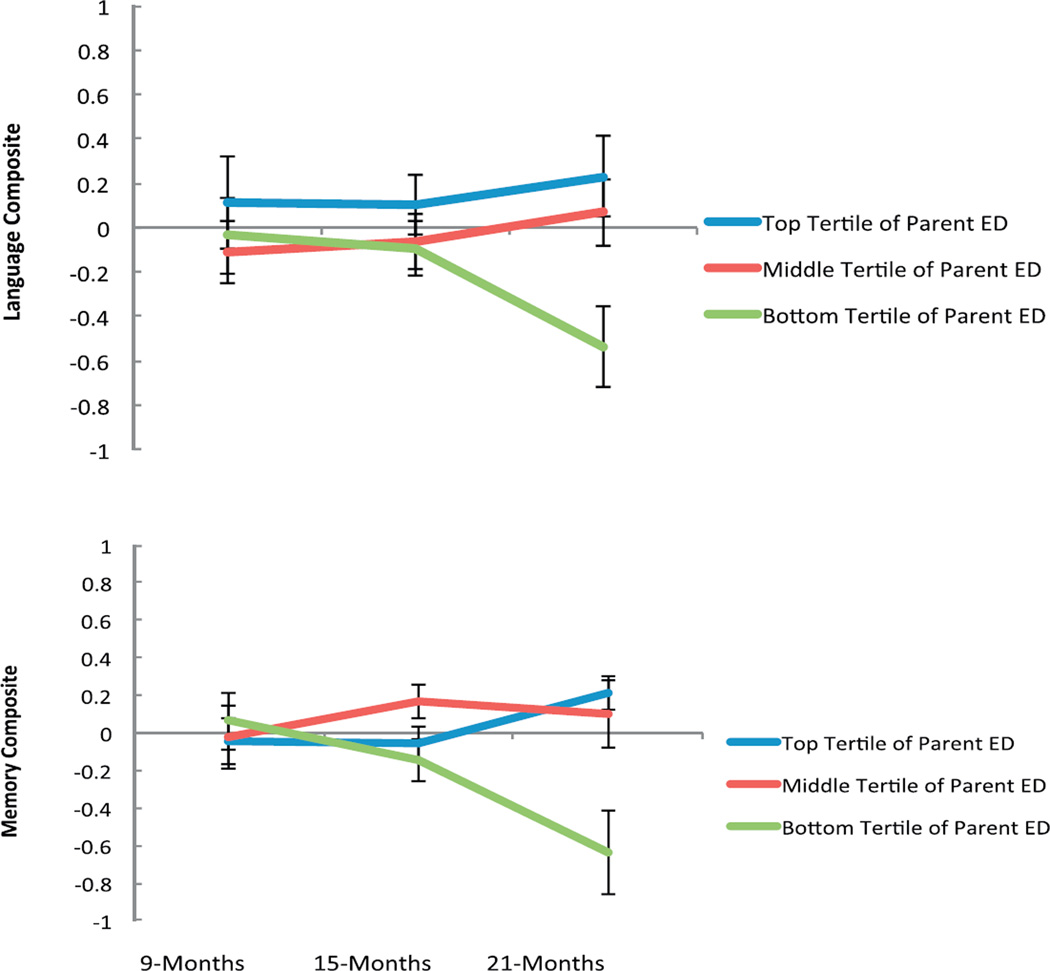
Socioeconomic status (SES) is strongly associated with cognition and achievement. Socioeconomic disparities in language and memory skills have been reported from elementary school through adolescence. Less is known about the extent to which such disparities emerge in infancy. Here, 179 infants from socioeconomically diverse families were recruited. Using a cohort-sequential design, 90 infants were followed at 9 and 15 months, and 89 were followed at 15 and 21 months. SES disparities in developmental trajectories of language and memory were present such that, at 21 months of age, children of highly educated parents scored approximately .8 standard deviations higher in both language and memory than children of less educated parents. The home language and literacy environment and parental warmth partially accounted for disparities in language, but not memory development.

摘要

社会经济地位(SES)与认知和成就密切相关。从小学到青春期,语言和记忆技能方面的社会经济差异已有报道。对于这些差异在婴儿期出现的程度,人们了解较少。在此,招募了179名来自社会经济背景各异家庭的婴儿。采用队列序贯设计,90名婴儿在9个月和15个月时接受跟踪,89名婴儿在15个月和21个月时接受跟踪。语言和记忆发展轨迹存在社会经济地位差异,即到21个月大时,高学历父母的孩子在语言和记忆方面的得分比低学历父母的孩子高出约0.8个标准差。家庭语言和读写环境以及父母的温暖程度部分解释了语言方面的差异,但对记忆发展没有影响。
https://cdn.ncbi.nlm.nih.gov/pmc/blobs/835a/4821066/8824b2e5898f/nihms771441f1.jpg

相似文献

1
Socioeconomic disparities in neurocognitive development in the first two years of life.生命最初两年神经认知发育中的社会经济差异。
Dev Psychobiol. 2015 Jul;57(5):535-51. doi: 10.1002/dev.21303. Epub 2015 Mar 30.
2
Associations among family socioeconomic status, EEG power at birth, and cognitive skills during infancy.家庭社会经济地位、出生时的脑电图功率与婴儿期认知技能之间的关联。
Dev Cogn Neurosci. 2016 Jun;19:144-51. doi: 10.1016/j.dcn.2016.03.004. Epub 2016 Mar 14.
3
Infant feeding effects on early neurocognitive development in Asian children.亚洲儿童的喂养方式对早期神经认知发育的影响。
Am J Clin Nutr. 2015 Feb;101(2):326-36. doi: 10.3945/ajcn.114.095414. Epub 2014 Dec 10.
4
Cumulative risk disparities in children's neurocognitive functioning: a developmental cascade model.儿童神经认知功能的累积风险差异:一种发展级联模型。
Dev Sci. 2016 Mar;19(2):179-94. doi: 10.1111/desc.12302. Epub 2015 Apr 6.
5
Infant recall memory and communication predicts later cognitive development.婴儿的回忆记忆和沟通能力可预测其日后的认知发展。
Infant Behav Dev. 2006 Dec;29(4):545-53. doi: 10.1016/j.infbeh.2006.07.002. Epub 2006 Sep 1.
6
Postpartum maternal mental health is associated with cognitive development of HIV-exposed infants in Zimbabwe: a cross-sectional study.津巴布韦产后母亲心理健康与暴露于艾滋病毒的婴儿认知发育相关:一项横断面研究。
AIDS Care. 2018 Jun;30(sup2):74-82. doi: 10.1080/09540121.2018.1468015. Epub 2018 May 30.
7
Socioeconomic gradients predict individual differences in neurocognitive abilities.社会经济梯度预示着神经认知能力的个体差异。
Dev Sci. 2007 Jul;10(4):464-80. doi: 10.1111/j.1467-7687.2007.00600.x.
8
Language, learning, and memory in children with and without single-suture craniosynostosis.患有和未患有单缝颅缝早闭症儿童的语言、学习与记忆
J Neurosurg Pediatr. 2016 May;17(5):578-88. doi: 10.3171/2015.9.PEDS15238. Epub 2016 Jan 1.
9
Childrearing practices and developmental expectations for Mexican-American mothers and the developmental status of their infants.墨西哥裔美国母亲的育儿方式和对孩子发展的期望及其婴儿的发育状况。
Phys Ther. 2004 May;84(5):439-53.
10
Language, motor and cognitive development of extremely preterm children: modeling individual growth trajectories over the first three years of life.极早产儿的语言、运动和认知发展:模拟生命最初三年的个体生长轨迹
J Commun Disord. 2014 May-Jun;49:55-68. doi: 10.1016/j.jcomdis.2014.02.005. Epub 2014 Feb 22.

引用本文的文献

1
Cognitive Functions and Behavioral Outcomes of Very Low Birth Weight Neonates in Middle Childhood.极低出生体重新生儿在童年中期的认知功能和行为结果
Indian Pediatr. 2025 Aug 27. doi: 10.1007/s13312-025-00171-w.
2
The Power of Early Experience: Neonatal Skin-To-Skin Care Mitigates SES-Related Disparities in Developmental Outcomes.早期经历的力量:新生儿皮肤接触护理可减轻发育结果中与社会经济地位相关的差异。
Infancy. 2025 May-Jun;30(3):e70024. doi: 10.1111/infa.70024.
3
Resting-State Sensory-Motor Connectivity between Hand and Mouth as a Neural Marker of Socioeconomic Disadvantage, Psychosocial Stress, Cognitive Difficulties, Impulsivity, Depression, and Substance Use in Children.

本文引用的文献

1
Socioeconomic status and cognitive functioning: moving from correlation to causation.社会经济地位与认知功能:从相关性到因果关系。
Wiley Interdiscip Rev Cogn Sci. 2012 May;3(3):377-386. doi: 10.1002/wcs.1176. Epub 2012 Apr 2.
2
Age-related changes in spreading activation during infancy.婴儿期扩散激活的年龄相关变化。
Child Dev. 2014 Mar-Apr;85(2):549-63. doi: 10.1111/cdev.12163. Epub 2013 Sep 30.
3
Commentary: neurocognitive consequences of socioeconomic disparities.评论:社会经济差异对神经认知的影响
手与口之间的静息态感觉运动连接作为儿童社会经济劣势、心理社会压力、认知困难、冲动性、抑郁和物质使用的神经标志物
J Cell Neurosci. 2025;2(1):31-46. doi: 10.31586/jcn.2025.1280. Epub 2025 Mar 25.
4
Cognitive impairment and dementia-Are they linked to childhood health and socioeconomic status? A systematic review.认知障碍与痴呆——它们与儿童期健康及社会经济地位有关联吗?一项系统综述。
PLoS One. 2025 Mar 27;20(3):e0311074. doi: 10.1371/journal.pone.0311074. eCollection 2025.
5
Resting-State Functional Connectivity Between the Cingulo-Opercular and Default Mode Networks May Explain Socioeconomic Inequalities in Cognitive Development.扣带回-岛盖网络与默认模式网络之间的静息态功能连接可能解释认知发展中的社会经济不平等现象。
J Cell Neurosci. 2025;2(1):1-11. doi: 10.31586/jcn.2025.1241. Epub 2025 Feb 25.
6
Population Diversity Matters: Heterogeneity of Biopsychosocial Pathways from Socioeconomic Status to Tobacco Use via Cerebral Cortical Volume in the ABCD Study.人群多样性很重要:ABCD研究中从社会经济地位通过大脑皮质体积到烟草使用的生物心理社会途径的异质性
J Cell Neurosci. 2025;1(1):12-23. doi: 10.31586/jcn.2025.1132. Epub 2025 Jan 23.
7
Annual Research Review: How did COVID-19 affect young children's language environment and language development? A scoping review.年度研究综述:新冠疫情如何影响幼儿的语言环境和语言发展?一项范围综述。
J Child Psychol Psychiatry. 2025 Apr;66(4):569-587. doi: 10.1111/jcpp.14102. Epub 2024 Dec 27.
8
The relation of verbal and nonverbal skills to basic numerical processing of preterm versus term-born preschoolers.早产与足月出生的学龄前儿童的语言和非语言技能与基本数字处理的关系。
J Exp Child Psychol. 2025 Mar;251:106128. doi: 10.1016/j.jecp.2024.106128. Epub 2024 Dec 2.
9
Family Socioeconomic Status and Neurodevelopment Among Patients With Dextro-Transposition of the Great Arteries.右旋型大动脉转位患者的家庭社会经济地位与神经发育。
JAMA Netw Open. 2024 Nov 4;7(11):e2445863. doi: 10.1001/jamanetworkopen.2024.45863.
10
Measuring Socioeconomic and Stress Disparities in Infant Declarative Memory Using the Visual Paired Comparison Task.使用视觉配对比较任务衡量婴儿陈述性记忆中的社会经济和压力差异。
Dev Psychobiol. 2024 Nov;66(7):e22557. doi: 10.1002/dev.22557.
Dev Sci. 2013 Sep;16(5):708-12. doi: 10.1111/desc.12081. Epub 2013 Jul 30.
4
Socioeconomic status and functional brain development - associations in early infancy.社会经济地位与大脑功能发育——婴儿早期的关联。
Dev Sci. 2013 Sep;16(5):676-87. doi: 10.1111/desc.12079. Epub 2013 Aug 7.
5
What are the links between maternal social status, hippocampal function, and HPA axis function in children?母亲的社会地位、海马功能和 HPA 轴功能之间有什么联系?
Dev Sci. 2013 Sep;16(5):665-75. doi: 10.1111/desc.12087. Epub 2013 Aug 7.
6
Neurocognitive consequences of socioeconomic disparities: the intersection of cognitive neuroscience and public health.社会经济差异的神经认知后果:认知神经科学与公共卫生的交叉领域
Dev Sci. 2013 Sep;16(5):639-40. doi: 10.1111/desc.12076. Epub 2013 Jun 25.
7
SES differences in language processing skill and vocabulary are evident at 18 months.在 18 个月时,SES 在语言处理技能和词汇方面的差异就很明显。
Dev Sci. 2013 Mar;16(2):234-248. doi: 10.1111/desc.12019. Epub 2012 Dec 8.
8
Reciprocal influences between maternal language and children's language and cognitive development in low-income families.低收入家庭中母婴语言与儿童语言和认知发展的相互影响。
J Child Lang. 2014 Mar;41(2):305-26. doi: 10.1017/S0305000912000700. Epub 2013 Jan 30.
9
Hippocampal volume varies with educational attainment across the life-span.海马体体积随受教育程度在整个生命周期中而变化。
Front Hum Neurosci. 2012 Nov 9;6:307. doi: 10.3389/fnhum.2012.00307. eCollection 2012.
10
The influence of socioeconomic status on children's brain structure.社会经济地位对儿童大脑结构的影响。
PLoS One. 2012;7(8):e42486. doi: 10.1371/journal.pone.0042486. Epub 2012 Aug 3.