Zhao Jiang, Song Qixiang, Wang Liang, Dong Xingyou, Yang Xingliang, Bai Xinyu, Song Bo, Damaser Margot, Li Longkun
Department of Urology, Second Affiliated Hospital, Third Military Medical University, Chongqing, China.
Department of Biomedical Engineering, the Cleveland Clinic, Cleveland, OH, United States of America.
PLoS One. 2015 Apr 1;10(4):e0122597. doi: 10.1371/journal.pone.0122597. eCollection 2015.
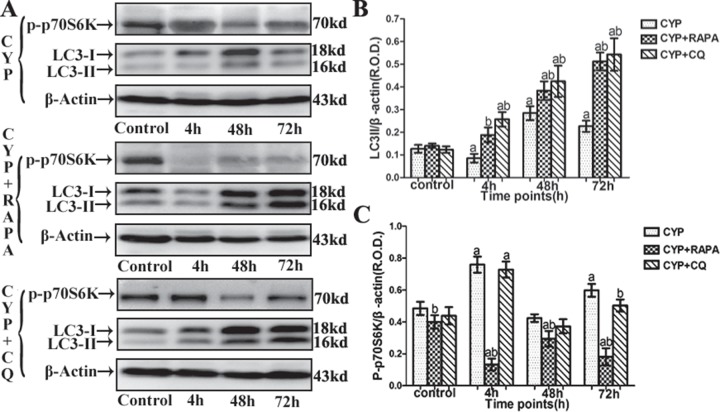
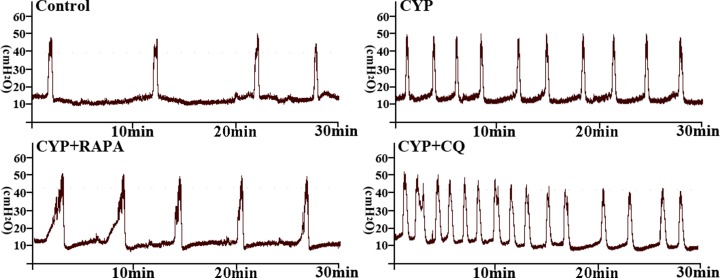
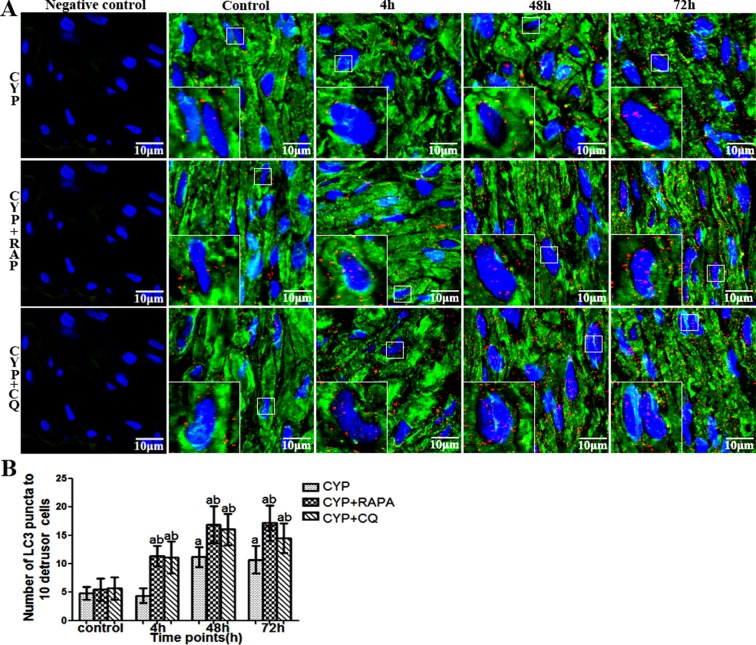
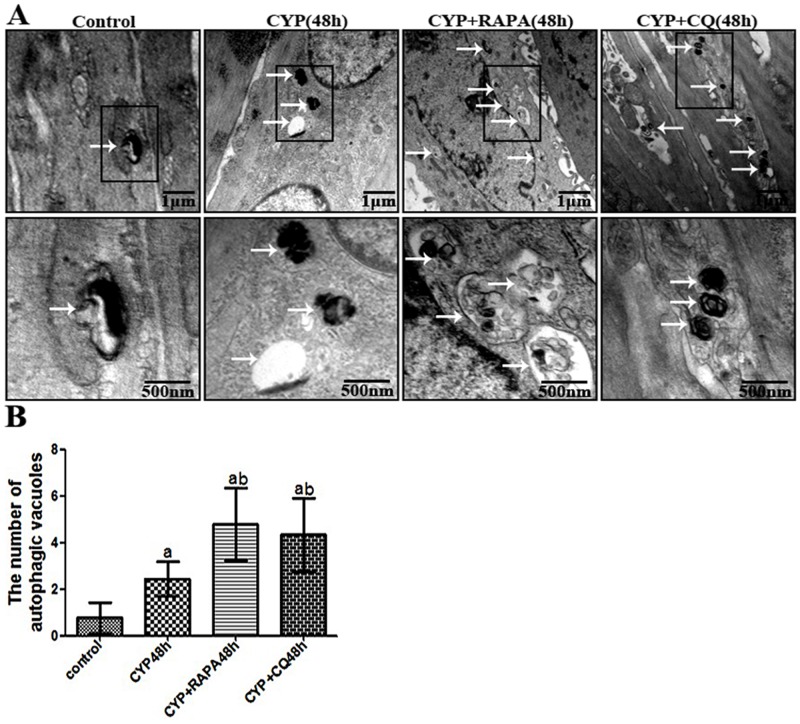
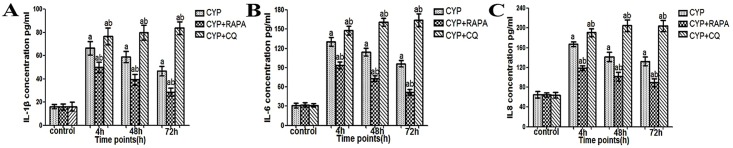
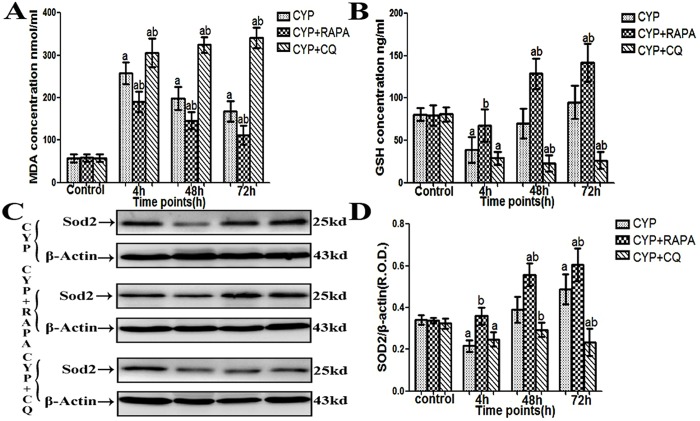
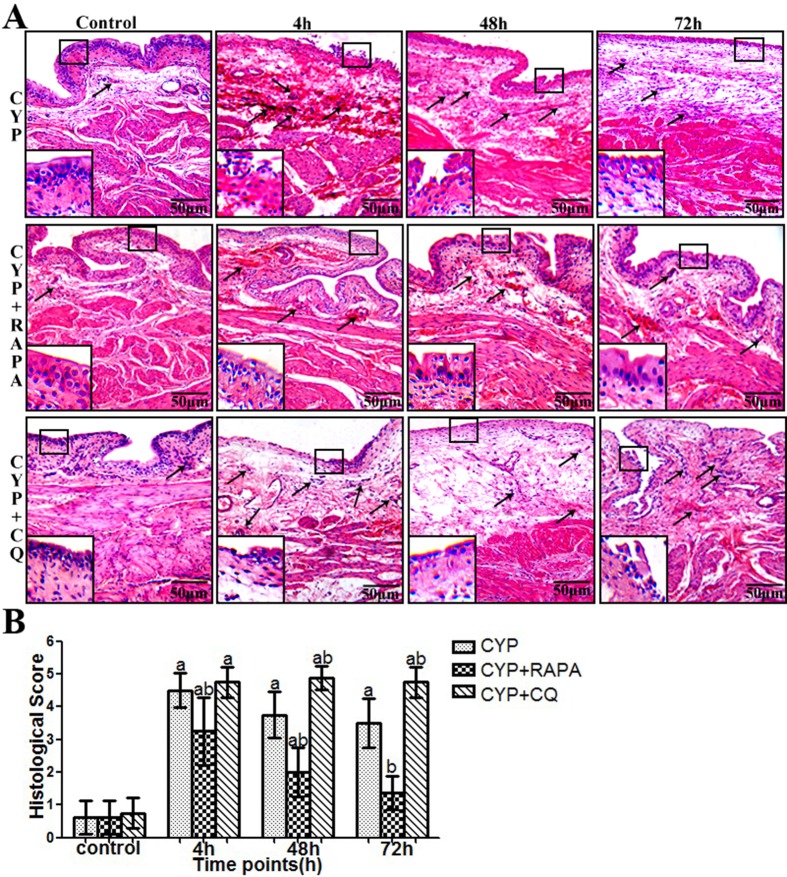
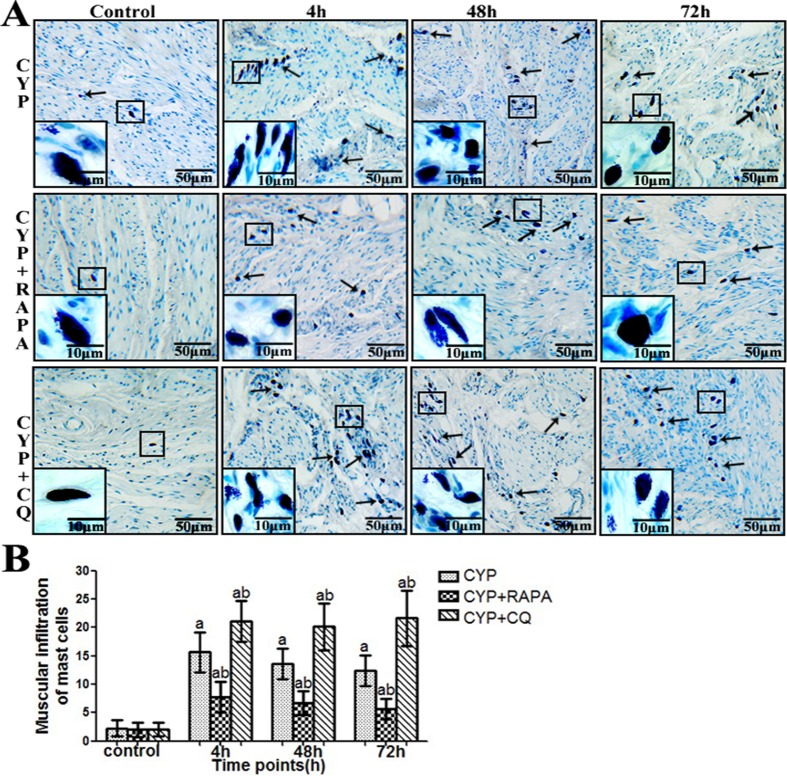
Autophagy, a highly conserved homeostatic cellular process that removes and recycles damaged proteins and organelles in response to cellular stress, is believed to play a crucial role in the immune response and inflammation. The role of autophagy in bladder cystitis, however, has not well been clarified. Here we investigate the role of detrusor myocytes autophagy (DMA) in cyclophosphamide-induced cystitis animal model. 164 female Sprague-Dawley rats were randomized into three experimental groups and compared to three control groups, respectively. The expressions of microtubule-associated protein 1 light chain 3 (LC3), p-p70s6k (the phosphorylated form of ribosomal protein S6), SOD2 (superoxide dismutase 2) in the bladder muscular layer were measured using western blot. The co-location of LC3, alpha-smooth muscle actin (α-SMA), and autophagic vacuoles were investigated with double-labeled immunofluorescence and transmission electron microscopy (TEM). The expression of lL-1β, IL-6, IL-8, malondialdehyde (MDA), and glutathione (GSH) in the detrusor layer were analyzed using ELISA. The bladder inflammation and the number of mast cells in the muscular layer were analyzed by histology. The bladder function was evaluated using cystometry. In cyclophosphamide-induced cystitis, autophagy was detected in detrusor myocytes by increased LC3, p-p70s6k expression, and autophagosomes. However, the presence of enhanced inflammation and oxidative stress in the cyclophosphamide-treated group suggest autophagy of detrusor myocytes may not be sufficiently activated. Inflammation and oxidative stress were significantly decreased and the bladder histology and micturition function were significantly improved with rapamycin (RAPA, autophagy agonist) pre-treatment. In contrast, inflammation and oxidative stress were dramatically increased and the bladder histology and function were negatively affected with chloroquine (CQ, autophagy blocker) pre-treated. These findings preferentially provide evidence of the association between DMA and cyclophosphamide-induced cystitis in rats. The autophagy agonist RAPA significantly decreased the inflammation and protected the bladder function, which might be considered as a potential treatment for interstitial cystitis.
自噬是一种高度保守的细胞稳态过程,可在细胞应激时清除和回收受损蛋白质及细胞器,据信其在免疫反应和炎症中起关键作用。然而,自噬在膀胱膀胱炎中的作用尚未完全阐明。在此,我们研究了逼尿肌细胞自噬(DMA)在环磷酰胺诱导的膀胱炎动物模型中的作用。164只雌性Sprague-Dawley大鼠被随机分为三个实验组,并分别与三个对照组进行比较。使用蛋白质免疫印迹法检测膀胱肌层中微管相关蛋白1轻链3(LC3)、磷酸化核糖体蛋白S6(p-p70s6k)、超氧化物歧化酶2(SOD2)的表达。通过双标免疫荧光和透射电子显微镜(TEM)研究LC3、α-平滑肌肌动蛋白(α-SMA)和自噬泡的共定位。使用酶联免疫吸附测定法(ELISA)分析逼尿肌层中白细胞介素-1β(IL-1β)、白细胞介素-6(IL-6)、白细胞介素-8(IL-8)、丙二醛(MDA)和谷胱甘肽(GSH)的表达。通过组织学分析膀胱炎症和肌层中肥大细胞的数量。使用膀胱内压测量法评估膀胱功能。在环磷酰胺诱导的膀胱炎中,通过LC3、p-p70s6k表达增加和自噬体检测到逼尿肌细胞中的自噬。然而,环磷酰胺治疗组中炎症和氧化应激增强,提示逼尿肌细胞自噬可能未被充分激活。雷帕霉素(RAPA,自噬激动剂)预处理可显著降低炎症和氧化应激,并显著改善膀胱组织学和排尿功能。相反,氯喹(CQ,自噬阻滞剂)预处理可显著增加炎症和氧化应激,并对膀胱组织学和功能产生负面影响。这些发现优先提供了DMA与大鼠环磷酰胺诱导的膀胱炎之间关联的证据。自噬激动剂RAPA显著减轻炎症并保护膀胱功能,这可能被视为间质性膀胱炎的一种潜在治疗方法。