Liu Lijuan, Sun Chengliang, Liu Shuangri, Chai Rushan, Huang Weiqing, Liu Xingxing, Tang Caixian, Zhang Yongsong
Ministry of Education Key Laboratory of Environmental Remediation and Ecosystem Health, College of Environmental and Resource Sciences, Zhejiang University, Hangzhou, China.
Zhejiang Provincial Key Laboratory of Subtropical Soil and Plant Nutrition, College of Environmental and Resource Sciences, Zhejiang University, Hangzhou, China.
PLoS One. 2015 Apr 1;10(4):e0121304. doi: 10.1371/journal.pone.0121304. eCollection 2015.
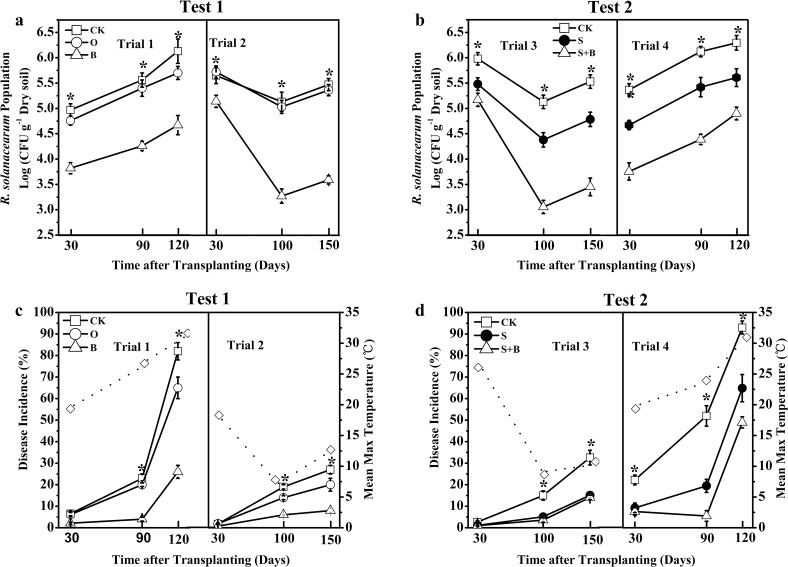
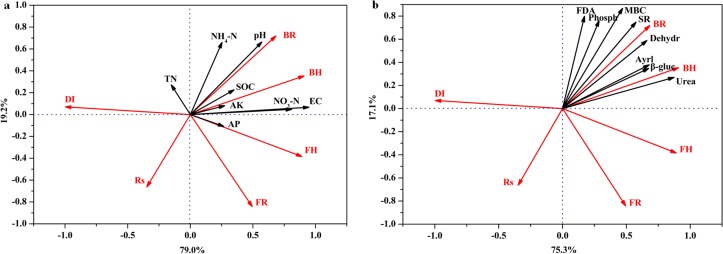
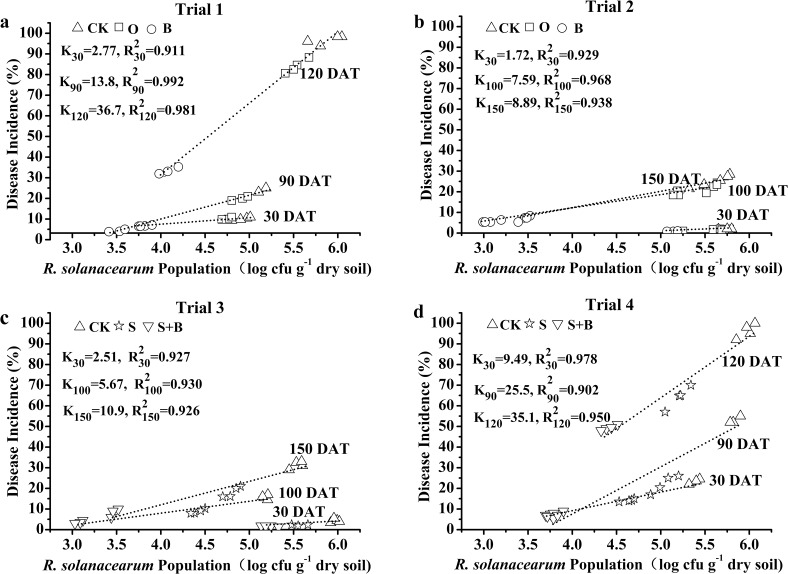
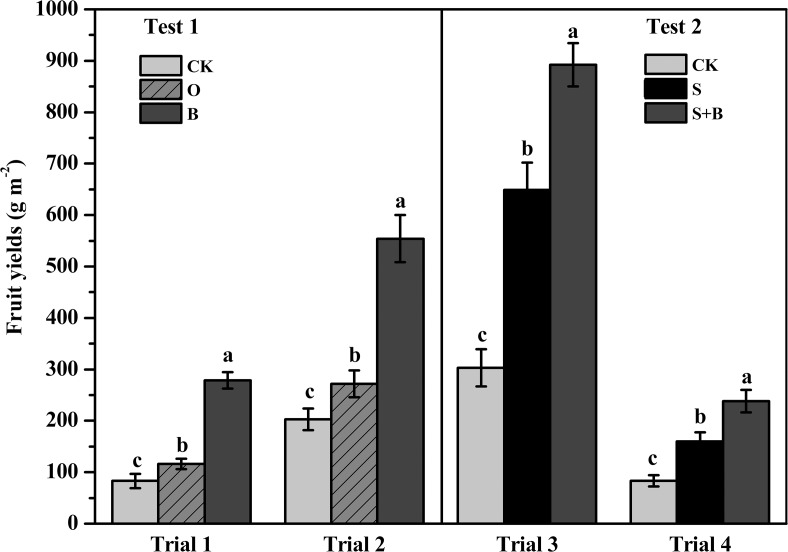
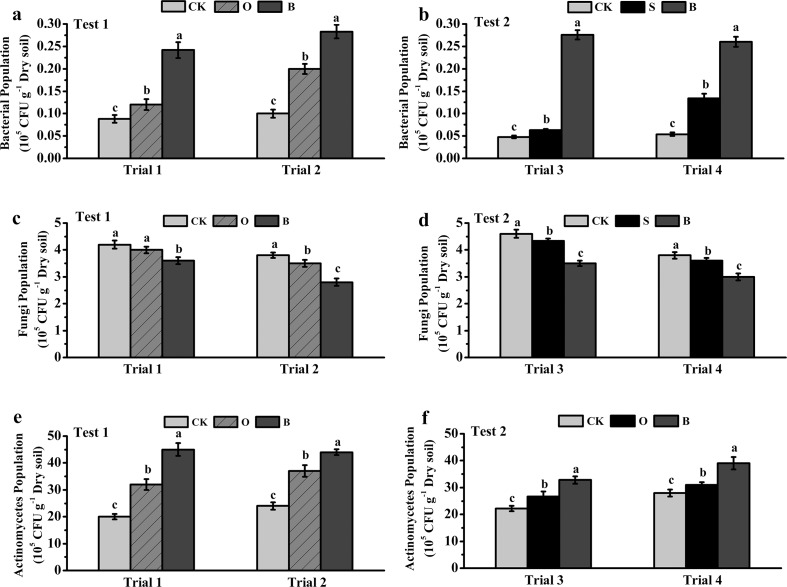
Tomato bacterial wilt caused by Ralstonia solanacearum is one of the most destructive soil-borne diseases. Many strategies have been taken to improve soil suppressiveness against this destructive disease, but limited success has been achieved. In this study, a novel bioorganic fertilizer revealed a higher suppressive ability against bacterial wilt compared with several soil management methods in the field over four growing seasons from March 2011 to July 2013. The application of the bioorganic fertilizer significantly (P<0.05) reduced disease incidence of tomato and increased fruit yields in four independent trials. The association among the level of disease incidence, soil physicochemical and biological properties was investigated. The soil treated with the bioorganic fertilizer increased soil pH value, electric conductivity, organic carbon, NH4+-N, NO3--N and available K content, microbial activities and microbial biomass carbon content, which were positively related with soil suppressiveness. Bacterial and actinomycete populations assessed using classical plate counts were highest, whereas R. solanacearum and fungal populations were lowest in soil applied with the bioorganic fertilizer. Microbial community diversity and richness were assessed using denaturing gel gradient electrophoresis profile analysis. The soil treated with the bioorganic fertilizer exhibited higher bacterial community diversity but lower fungal community diversity. Redundancy analysis showed that bacterial community diversity and richness negatively related with bacterial wilt suppressiveness, while fungal community richness positively correlated with R. solanacearum population. We concluded that the alteration of soil physicochemical and biological properties in soil treated with the bioorganic fertilizer induced the soil suppressiveness against tomato bacterial wilt.
由青枯雷尔氏菌引起的番茄青枯病是最具破坏性的土传病害之一。人们已采取多种策略来提高土壤对这种破坏性病害的抑制能力,但成效有限。在本研究中,一种新型生物有机肥在2011年3月至2013年7月的四个生长季中,在田间表现出比几种土壤管理方法更高的对青枯病的抑制能力。在四项独立试验中,施用这种生物有机肥显著(P<0.05)降低了番茄的发病率并提高了果实产量。研究了发病率水平与土壤理化和生物学性质之间的关系。施用生物有机肥处理的土壤提高了土壤pH值、电导率、有机碳、铵态氮、硝态氮和速效钾含量、微生物活性和微生物生物量碳含量,这些与土壤抑制能力呈正相关。使用经典平板计数法评估的细菌和放线菌数量在施用生物有机肥的土壤中最高,而青枯雷尔氏菌和真菌数量最低。使用变性凝胶梯度电泳图谱分析评估微生物群落多样性和丰富度。施用生物有机肥处理的土壤表现出较高的细菌群落多样性但较低的真菌群落多样性。冗余分析表明,细菌群落多样性和丰富度与青枯病抑制能力呈负相关,而真菌群落丰富度与青枯雷尔氏菌数量呈正相关。我们得出结论,施用生物有机肥处理的土壤中理化和生物学性质的改变诱导了土壤对番茄青枯病的抑制能力。