Schulkey Claire E, Regmi Suk D, Magnan Rachel A, Danzo Megan T, Luther Herman, Hutchinson Alayna K, Panzer Adam A, Grady Mary M, Wilson David B, Jay Patrick Y
Department of Pediatrics, Washington University School of Medicine, St Louis, Missouri 63110 USA.
1] Department of Pediatrics, Washington University School of Medicine, St Louis, Missouri 63110 USA. [2] Department of Developmental Biology, Washington University School of Medicine, St Louis, Missouri 63110 USA.
Nature. 2015 Apr 9;520(7546):230-3. doi: 10.1038/nature14361. Epub 2015 Apr 1.
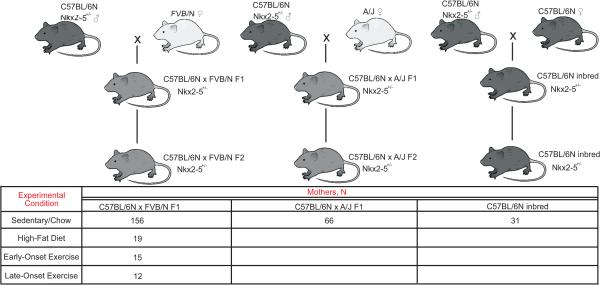
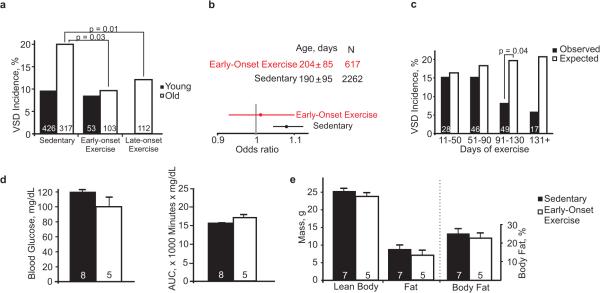
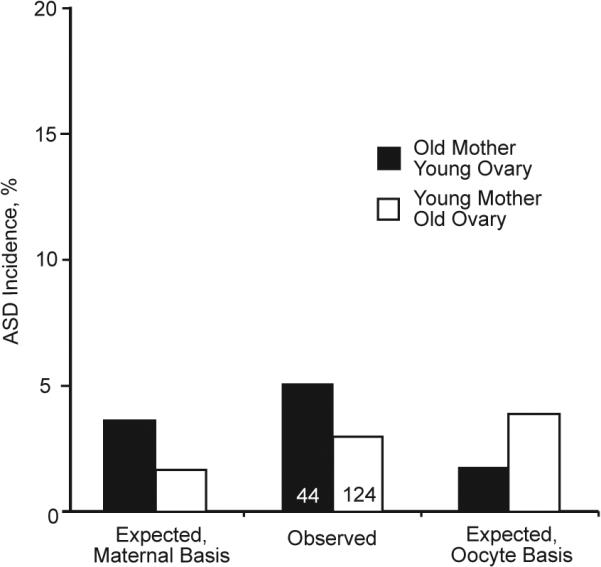
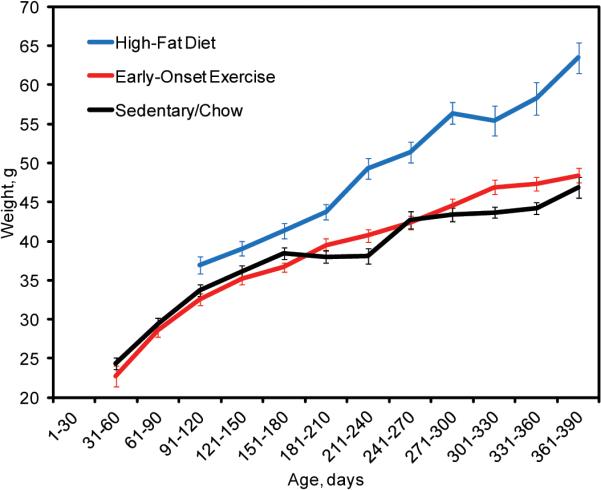
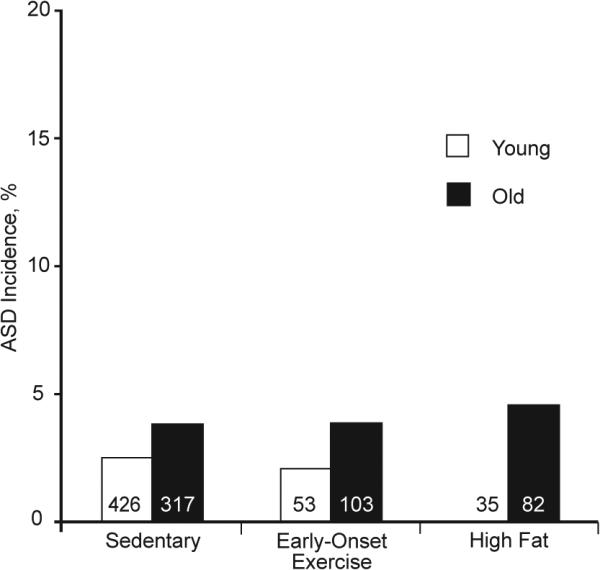
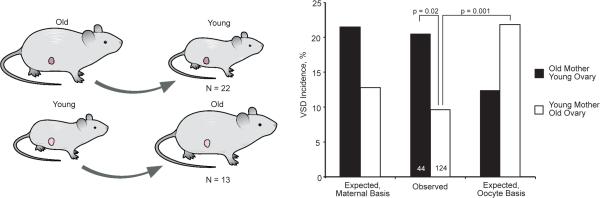
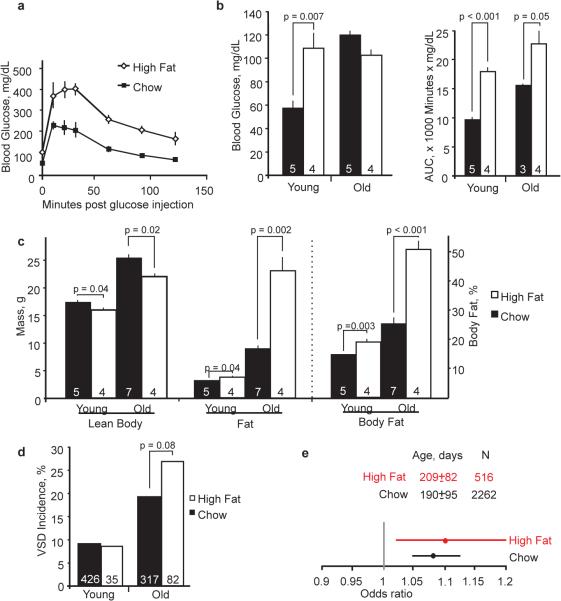
Maternal age is a risk factor for congenital heart disease even in the absence of any chromosomal abnormality in the newborn. Whether the basis of this risk resides with the mother or oocyte is unknown. The impact of maternal age on congenital heart disease can be modelled in mouse pups that harbour a mutation of the cardiac transcription factor gene Nkx2-5 (ref. 8). Here, reciprocal ovarian transplants between young and old mothers establish a maternal basis for the age-associated risk in mice. A high-fat diet does not accelerate the effect of maternal ageing, so hyperglycaemia and obesity do not simply explain the mechanism. The age-associated risk varies with the mother's strain background, making it a quantitative genetic trait. Most remarkably, voluntary exercise, whether begun by mothers at a young age or later in life, can mitigate the risk when they are older. Thus, even when the offspring carry a causal mutation, an intervention aimed at the mother can meaningfully reduce their risk of congenital heart disease.
即使新生儿不存在任何染色体异常,母亲年龄也是先天性心脏病的一个风险因素。这种风险的根源在于母亲还是卵母细胞尚不清楚。母亲年龄对先天性心脏病的影响可以在携带心脏转录因子基因Nkx2-5突变的幼鼠中进行模拟(参考文献8)。在这里,年轻和年老母亲之间的卵巢相互移植为小鼠中与年龄相关的风险建立了母体基础。高脂饮食不会加速母体衰老的影响,因此高血糖和肥胖并不能简单地解释其机制。与年龄相关的风险因母亲的品系背景而异,使其成为一种数量遗传性状。最值得注意的是,无论是母亲在年轻时还是在晚年开始的自愿运动,都可以在她们年老时降低风险。因此,即使后代携带致病突变,针对母亲的干预措施也可以显著降低他们患先天性心脏病的风险。