
与脊椎动物的中间丝蛋白相比,无脊椎动物的细胞质中间丝蛋白更接近核纤层蛋白;一种线虫的两种肌肉蛋白的序列特征分析
Cytoplasmic intermediate filament proteins of invertebrates are closer to nuclear lamins than are vertebrate intermediate filament proteins; sequence characterization of two muscle proteins of a nematode.
作者信息
Weber K, Plessmann U, Ulrich W
机构信息
Max Planck Institute for Biophysical Chemistry, Department of Biochemistry, Göttingen, FRG.
出版信息
EMBO J. 1989 Nov;8(11):3221-7. doi: 10.1002/j.1460-2075.1989.tb08481.x.
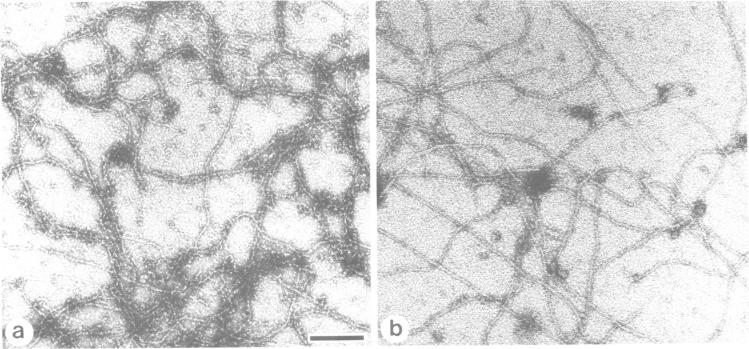
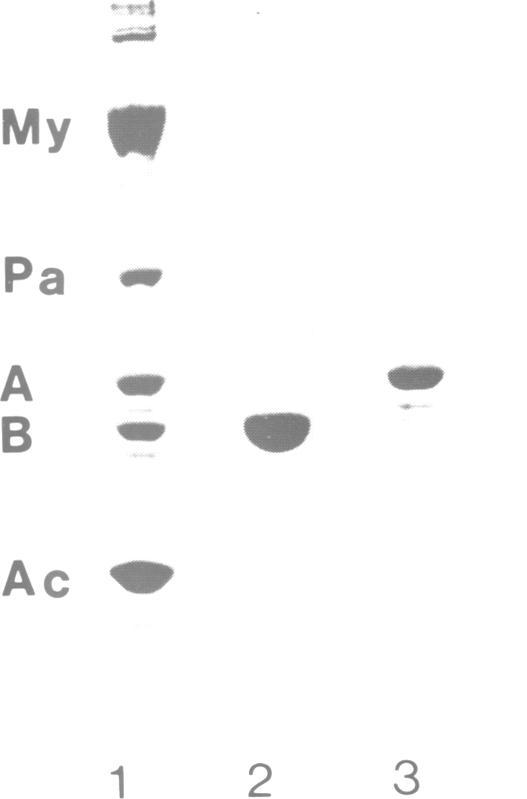
The giant body muscle cells of the nematode Ascaris lumbricoides show a complex three dimensional array of intermediate filaments (IFs). They contain two proteins, A (71 kd) and B (63 kd), which we now show are able to form homopolymeric filaments in vitro. The complete amino acid sequence of B and 80% of A have been determined. A and B are two homologous proteins with a 55% sequence identity over the rod and tail domains. Sequence comparisons with the only other invertebrate IF protein currently known (Helix pomatia) and with vertebrate IF proteins show that along the coiled-coil rod domain, sequence principles rather than actual sequences are conserved in evolution. Noticeable exceptions are the consensus sequences at the ends of the rod, which probably play a direct role in IF assembly. Like the Helix IF protein the nematode proteins have six extra heptads in the coil 1b segment. These are characteristic of nuclear lamins from vertebrates and invertebrates and are not found in vertebrate IF proteins. Unexpectedly the enhanced homology between lamins and invertebrate IF proteins continues in the tail domains, which in vertebrate IF proteins totally diverge. The sequence alignment necessitates the introduction of a 15 residue deletion in the tail domain of all three invertebrate IF proteins. Its location coincides with the position of the karyophilic signal sequence, which dictates nuclear entry of the lamins. The results provide the first molecular support for the speculation that nuclear lamins and cytoplasmic IF proteins arose in eukaryotic evolution from a common lamin-like predecessor.
线虫蛔虫的巨大体肌细胞显示出中间丝(IFs)的复杂三维阵列。它们含有两种蛋白质,A(71kd)和B(63kd),我们现在证明它们能够在体外形成同聚丝。已经确定了B的完整氨基酸序列和A的80%。A和B是两种同源蛋白质,在杆状和尾部结构域具有55%的序列同一性。与目前已知的唯一其他无脊椎动物IF蛋白(苹果螺)以及脊椎动物IF蛋白的序列比较表明,沿着卷曲螺旋杆状结构域,序列原则而非实际序列在进化中是保守的。明显的例外是杆状结构两端的共有序列,它们可能在IF组装中起直接作用。与苹果螺IF蛋白一样,线虫蛋白在1b螺旋段有六个额外的七肽重复序列。这些是脊椎动物和无脊椎动物核纤层蛋白的特征,在脊椎动物IF蛋白中未发现。出乎意料的是,核纤层蛋白与无脊椎动物IF蛋白之间增强的同源性在尾部结构域继续存在,而在脊椎动物IF蛋白中尾部结构域完全不同。序列比对需要在所有三种无脊椎动物IF蛋白的尾部结构域引入一个15个残基的缺失。其位置与亲核信号序列的位置一致,亲核信号序列决定核纤层蛋白进入细胞核。这些结果为核纤层蛋白和细胞质IF蛋白在真核生物进化中起源于共同的类核纤层蛋白前体这一推测提供了首个分子支持。
 Zotero 插件