Fleming Aoife, Bradley Colin, Cullinan Shane, Byrne Stephen
Pharmaceutical Care Research Group, School of Pharmacy, University College Cork, Cork, Ireland,
Drugs Aging. 2015 Apr;32(4):295-303. doi: 10.1007/s40266-015-0252-2.
The objective of this review was to synthesize the findings of qualitative studies investigating the factors influencing antibiotic prescribing in long-term care facilities (LTCFs). These findings will inform the development of future antimicrobial stewardship strategies (AMS) in this setting.
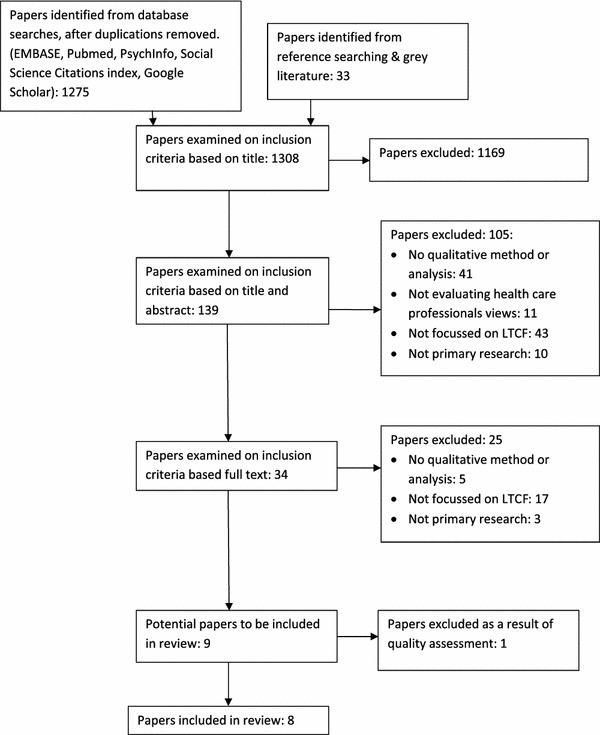
We searched Embase, PubMed, PsycInfo, Social Science Citations Index and Google Scholar for all qualitative studies investigating health care professionals' views on antibiotic prescribing in LTCFs. The quality of the papers was assessed using the Critical Appraisal Skills Programme (CASP) assessment tool for qualitative research. Thematic synthesis was used to integrate the emergent themes into an overall analytical theme.
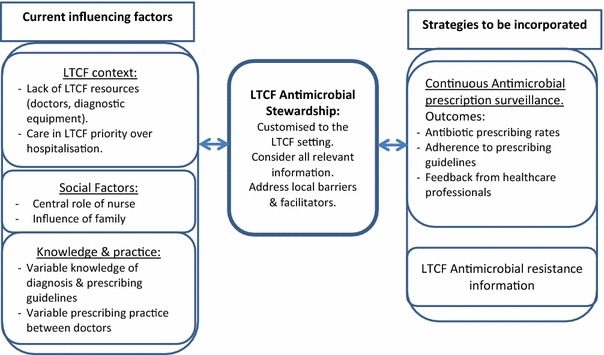
The synthesis of eight qualitative studies indicated that health care professionals and administrators have identified factors that influence antibiotic prescribing in LTCFs. These factors include variations in knowledge and practice among health care professionals, and the LTCF context, which is unique given the complex patient population and restricted access to doctors and diagnostic tests. The social factors underpinning the interaction between nurses, residents' families and doctors also influence decision making around antibiotic prescribing. The study also found that there is an acknowledged need for collaborative, evidence-based AMS specific to LTCFs, as antibiotic prescribing is heavily influenced by factors unique to this setting.
This review highlighted the key contextual challenges for AMS in LTCFs. The findings provide an in-depth insight into the factors--such as the LTCF context, social factors, variability in knowledge and prescribing practices, and antimicrobial resistance--that impact on antibiotic prescribing and AMS strategies. These factors must be considered in order to ensure the feasibility and applicability of future AMS interventions.
本综述的目的是综合定性研究的结果,这些研究调查了长期护理机构(LTCF)中影响抗生素处方的因素。这些结果将为该环境下未来抗菌药物管理策略(AMS)的制定提供参考。
我们在Embase、PubMed、PsycInfo、社会科学引文索引和谷歌学术中搜索了所有定性研究,这些研究调查了医疗保健专业人员对长期护理机构抗生素处方的看法。使用定性研究的批判性评估技能计划(CASP)评估工具对论文质量进行评估。采用主题综合法将新出现的主题整合为一个总体分析主题。
八项定性研究的综合表明,医疗保健专业人员和管理人员已经确定了影响长期护理机构抗生素处方的因素。这些因素包括医疗保健专业人员在知识和实践方面的差异,以及长期护理机构的环境,鉴于患者群体复杂且获得医生和诊断测试的机会有限,该环境具有独特性。护士、居民家属和医生之间互动的社会因素也会影响抗生素处方的决策。该研究还发现,鉴于抗生素处方受到该环境特有因素的严重影响,人们公认需要针对长期护理机构制定协作性的、基于证据的抗菌药物管理策略。
本综述强调了长期护理机构抗菌药物管理面临的关键背景挑战。研究结果深入洞察了影响抗生素处方和抗菌药物管理策略的因素,如长期护理机构的环境、社会因素、知识和处方实践的变异性以及抗菌药物耐药性。为确保未来抗菌药物管理干预措施的可行性和适用性,必须考虑这些因素。