Fu S, Davies K P
Department of Urology, Albert Einstein College of Medicine, Bronx, NY, USA.
1] Department of Urology, Albert Einstein College of Medicine, Bronx, NY, USA [2] Department of Physiology and Biophysics, Albert Einstein College of Medicine, Bronx, NY, USA.
Int J Impot Res. 2015 Jul;27(4):140-5. doi: 10.1038/ijir.2015.5. Epub 2015 Apr 2.
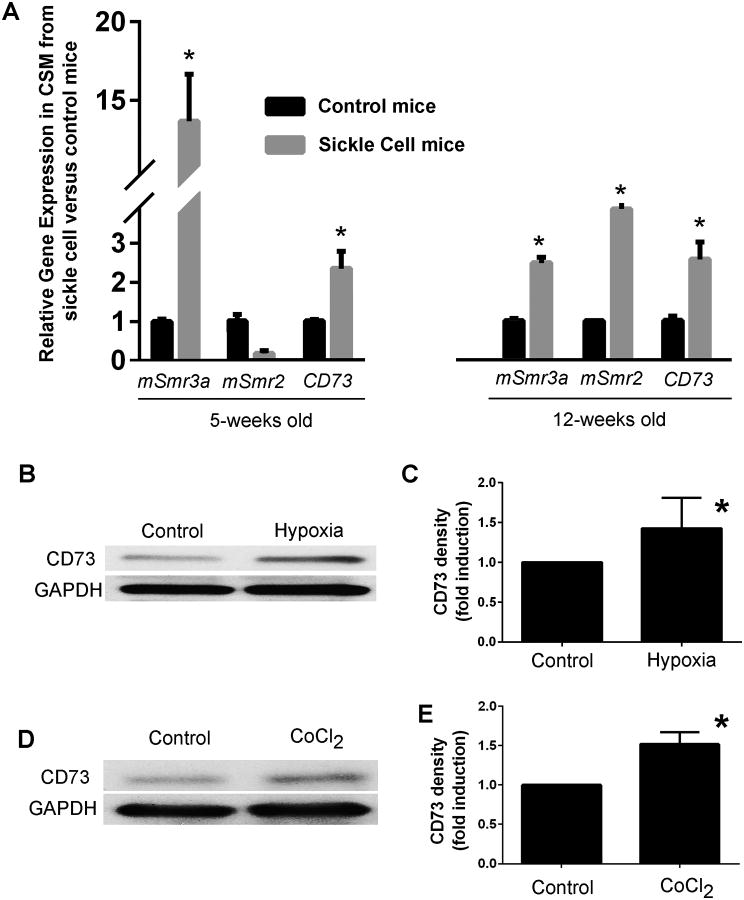
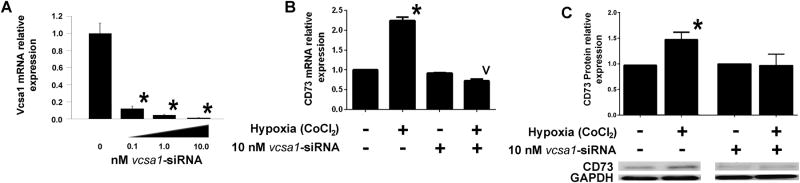
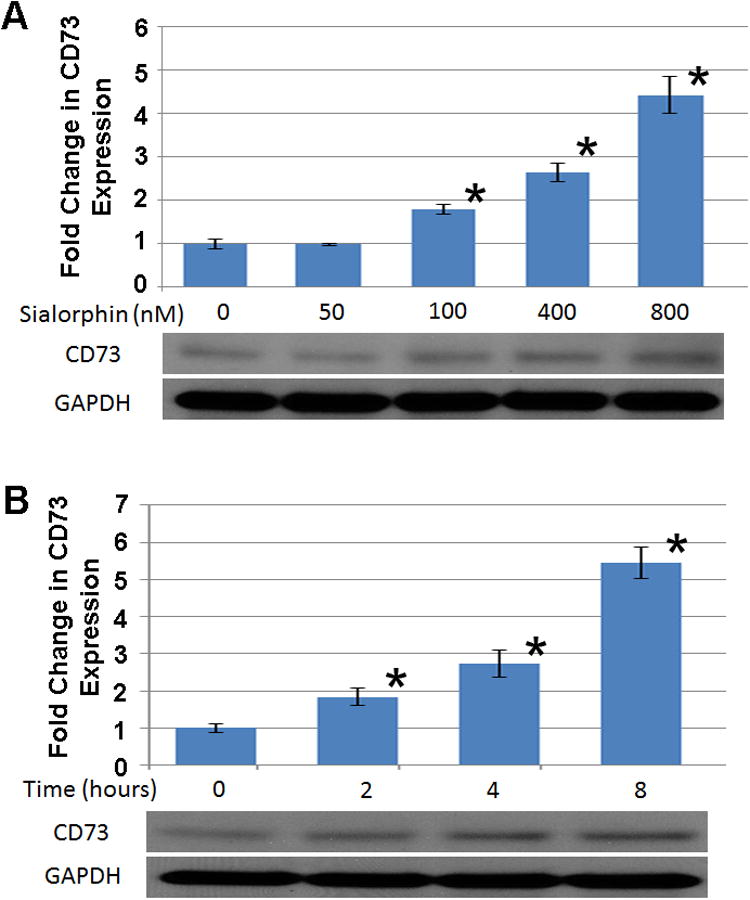
The precise molecular mechanisms underlying priapism associated with sickle cell disease remain to be defined. However, there is increasing evidence that upregulated activity of the opiorphin and adenosine pathways in corporal tissue, resulting in heighted relaxation of smooth muscle, have an important role in development of priapism. A key enzyme in the adenosine pathway is CD73, an ecto-5'-nucleotidase (5'-ribonucleotide phosphohydrolase; EC 3.1.3.5) which catalyzes the conversion of adenosine mononucleotides to adenosine. In the present study we investigated how sickle cell disease and hypoxia regulate the interplay between opiorphin and CD73. In the corpora of sickle cell mice we observed significantly elevated expression of both the mouse opiorphin homolog mSmr3a (14-fold) and CD73 (2.2-fold) relative to non-sickle cell controls at a life stage before the exhibition of priapism. Sickle cell disease has a pronounced hypoxic component, therefore we determined if CD73 was also modulated in in vitro corporal smooth muscle (CSM) models of hypoxia. Hypoxia significantly increased CD73 protein and mRNA expression by 1.5-fold and 2-fold, respectively. We previously demonstrated that expression of another component of the adenosine signaling pathway, the adensosine 2B receptor, can be regulated by sialorphin (the rat opiorphin homolologue), and we demonstrate that sialorphin also regulates CD73 expression in a dose- and time-dependent fashion. Using siRNA to knockdown sialorphin mRNA expression in CSM cells in vitro, we demonstrate that the hypoxic upregulation of CD73 is dependent on the upregulation of sialorphin. Overall, our data provide further evidence to support a role for opiorphin in CSM in regulating the cellular response to hypoxia or sickle cell disease by activating smooth muscle relaxant pathways.
与镰状细胞病相关的阴茎异常勃起的精确分子机制仍有待确定。然而,越来越多的证据表明,阴茎组织中阿片样肽和腺苷途径的活性上调,导致平滑肌高度松弛,在阴茎异常勃起的发生中起重要作用。腺苷途径中的一种关键酶是CD73,一种胞外5'-核苷酸酶(5'-核糖核苷酸磷酸水解酶;EC 3.1.3.5),它催化单磷酸腺苷转化为腺苷。在本研究中,我们调查了镰状细胞病和缺氧如何调节阿片样肽与CD73之间的相互作用。在镰状细胞小鼠的阴茎海绵体中,我们观察到在出现阴茎异常勃起之前的生命阶段,相对于非镰状细胞对照,小鼠阿片样肽同源物mSmr3a(14倍)和CD73(2.2倍)的表达均显著升高。镰状细胞病有明显的缺氧成分,因此我们确定在体外缺氧的阴茎海绵体平滑肌(CSM)模型中CD73是否也受到调节。缺氧分别使CD73蛋白和mRNA表达显著增加1.5倍和2倍。我们之前证明,腺苷信号通路的另一个组成部分——腺苷2B受体的表达可受唾液吗啡肽(大鼠阿片样肽同源物)调节,并且我们证明唾液吗啡肽也以剂量和时间依赖性方式调节CD73表达。使用小干扰RNA(siRNA)在体外敲低CSM细胞中唾液吗啡肽mRNA的表达,我们证明CD73的缺氧上调依赖于唾液吗啡肽的上调。总体而言,我们的数据提供了进一步的证据,支持阿片样肽在CSM中通过激活平滑肌舒张途径来调节细胞对缺氧或镰状细胞病的反应。