Abu Nadiah, Mohamed Nurul Elyani, Yeap Swee Keong, Lim Kian Lam, Akhtar M Nadeem, Zulfadli Aimi Jamil, Kee Beh Boon, Abdullah Mohd Puad, Omar Abdul Rahman, Alitheen Noorjahan Banu
Bright Sparks Unit, Universiti Malaya, Kuala Lumpur, Malaysia ; Department of Cell and Molecular Biology, Faculty of Biotechnology and Biomolecular Sciences, Universiti Putra Malaysia, Serdang, Selangor Darul Ehsan, Malaysia.
Department of Cell and Molecular Biology, Faculty of Biotechnology and Biomolecular Sciences, Universiti Putra Malaysia, Serdang, Selangor Darul Ehsan, Malaysia.
Drug Des Devel Ther. 2015 Mar 6;9:1401-17. doi: 10.2147/DDDT.S67976. eCollection 2015.
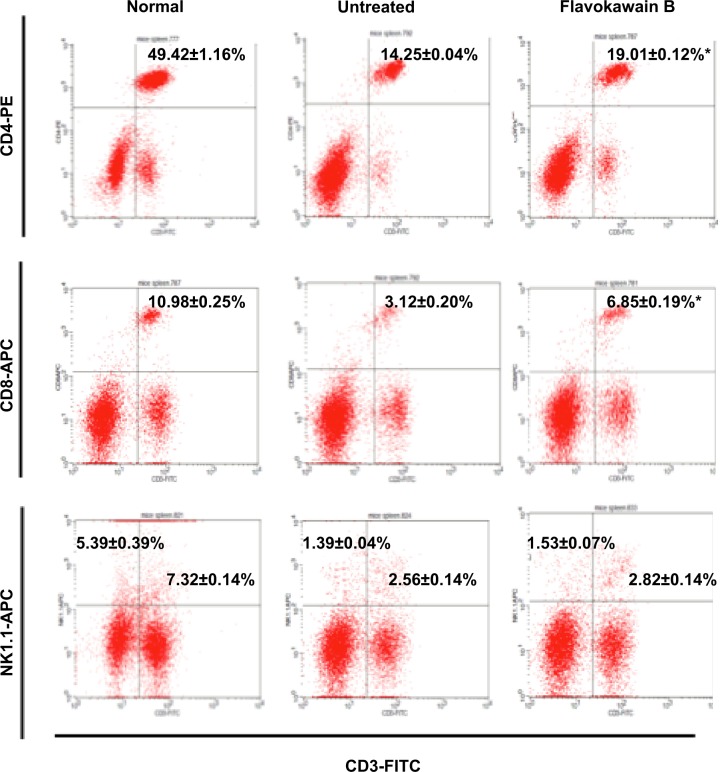
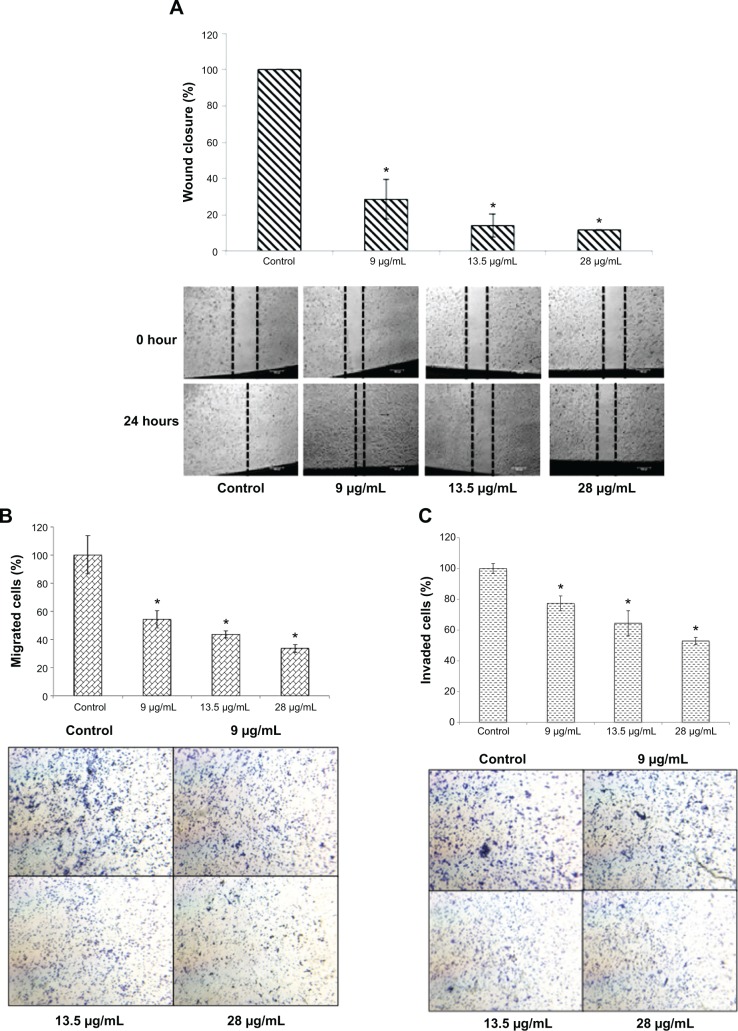
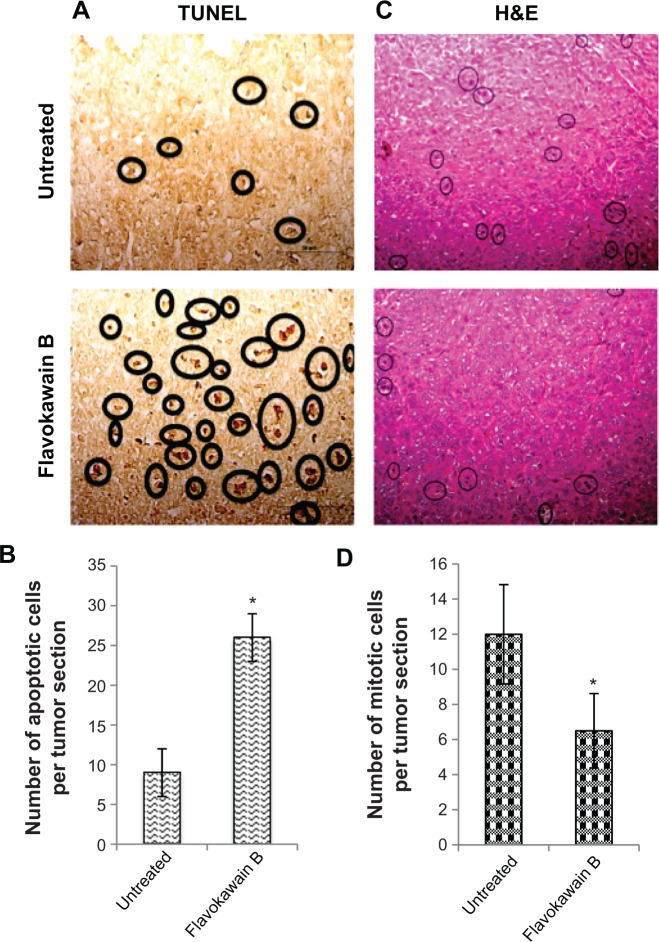
Flavokawain B (FKB) is a naturally occurring chalcone that can be isolated through the root extracts of the kava-kava plant (Piper methysticum). It can also be synthesized chemically to increase the yield. This compound is a promising candidate as a biological agent, as it is reported to be involved in a wide range of biological activities. Furthermore, FKB was reported to have antitumorigenic effects in several cancer cell lines in vitro. However, the in vivo antitumor effects of FKB have not been reported on yet. Breast cancer is one of the major causes of cancer-related deaths in the world today. Any potential treatment should not only impede the growth of the tumor, but also modulate the immune system efficiently and inhibit the formation of secondary tumors. As presented in our study, FKB induced apoptosis in 4T1 tumors in vivo, as evidenced by the terminal deoxynucleotidyl transferase dUTP nick end labeling and hematoxylin and eosin staining of the tumor. FKB also regulated the immune system by increasing both helper and cytolytic T-cell and natural killer cell populations. In addition, FKB also enhanced the levels of interleukin 2 and interferon gamma but suppressed interleukin 1B. Apart from that, FKB was also found to inhibit metastasis, as evaluated by clonogenic assay, bone marrow smearing assay, real-time polymerase chain reaction, Western blot, and proteome profiler analysis. All in all, FKB may serve as a promising anticancer agent, especially in treating breast cancer.
黄樟素B(FKB)是一种天然存在的查尔酮,可从卡瓦胡椒植物(Piper methysticum)的根提取物中分离得到。它也可以通过化学合成来提高产量。这种化合物作为一种生物制剂很有前景,因为据报道它参与了广泛的生物活性。此外,据报道FKB在体外对几种癌细胞系具有抗肿瘤作用。然而,FKB的体内抗肿瘤作用尚未见报道。乳腺癌是当今世界癌症相关死亡的主要原因之一。任何潜在的治疗方法不仅应阻碍肿瘤的生长,还应有效调节免疫系统并抑制继发性肿瘤的形成。如我们的研究所示,FKB在体内诱导4T1肿瘤细胞凋亡,这通过肿瘤的末端脱氧核苷酸转移酶dUTP缺口末端标记以及苏木精和伊红染色得以证实。FKB还通过增加辅助性T细胞、细胞溶解性T细胞和自然杀伤细胞的数量来调节免疫系统。此外,FKB还提高了白细胞介素2和干扰素γ的水平,但抑制了白细胞介素1B。除此之外,通过克隆形成试验、骨髓涂片试验、实时聚合酶链反应、蛋白质印迹和蛋白质组分析评估发现,FKB还能抑制转移。总而言之,FKB可能是一种很有前景的抗癌药物,尤其是在治疗乳腺癌方面。