College of Marine Science, University of South Florida , St. Petersburg, FL , USA.
Ecosystems Center, Marine Biological Laboratory , Woods Hole, MA , USA.
PeerJ. 2015 Mar 26;3:e874. doi: 10.7717/peerj.874. eCollection 2015.
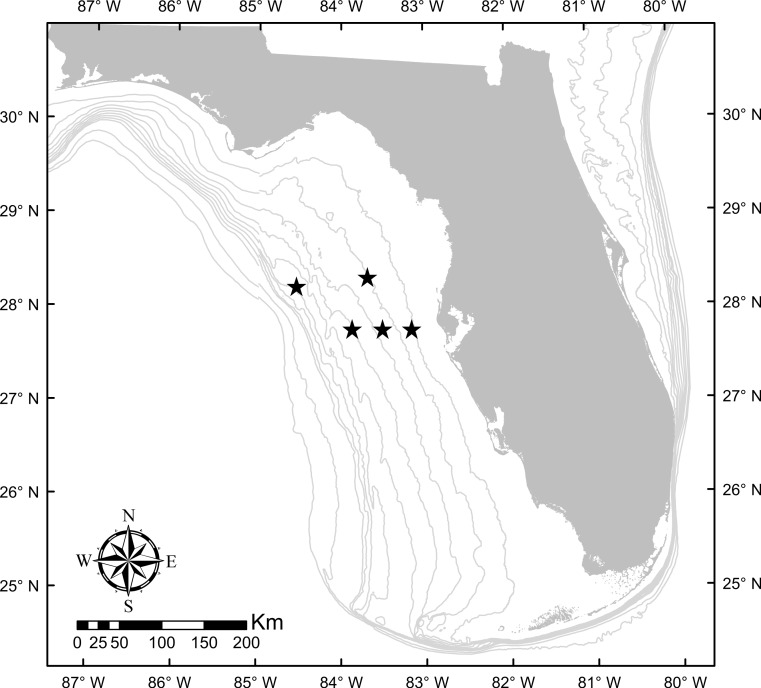
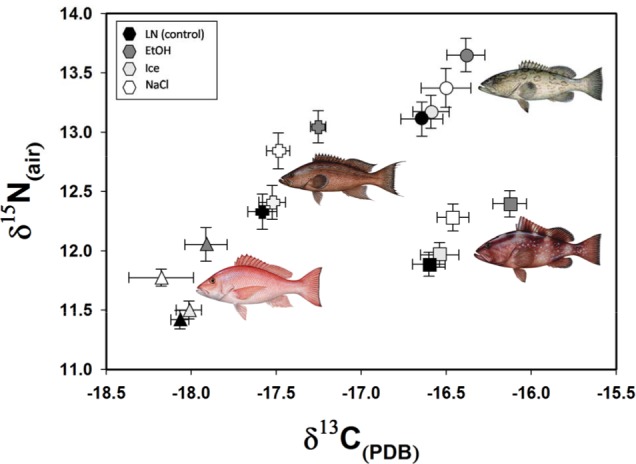
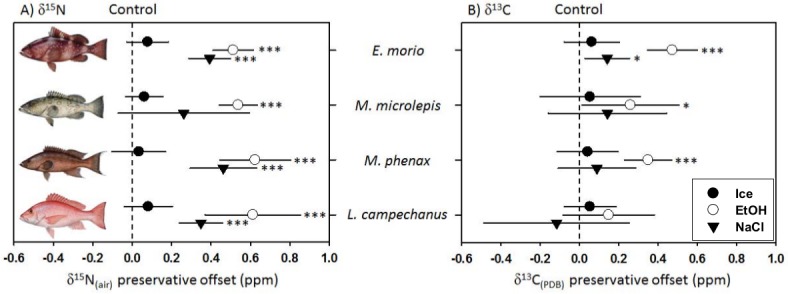
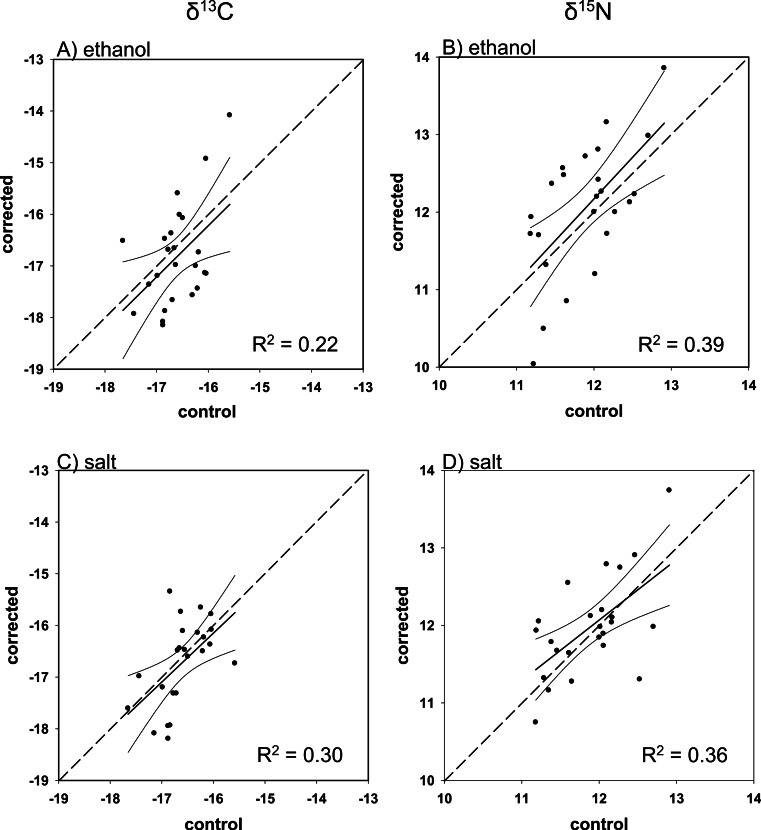
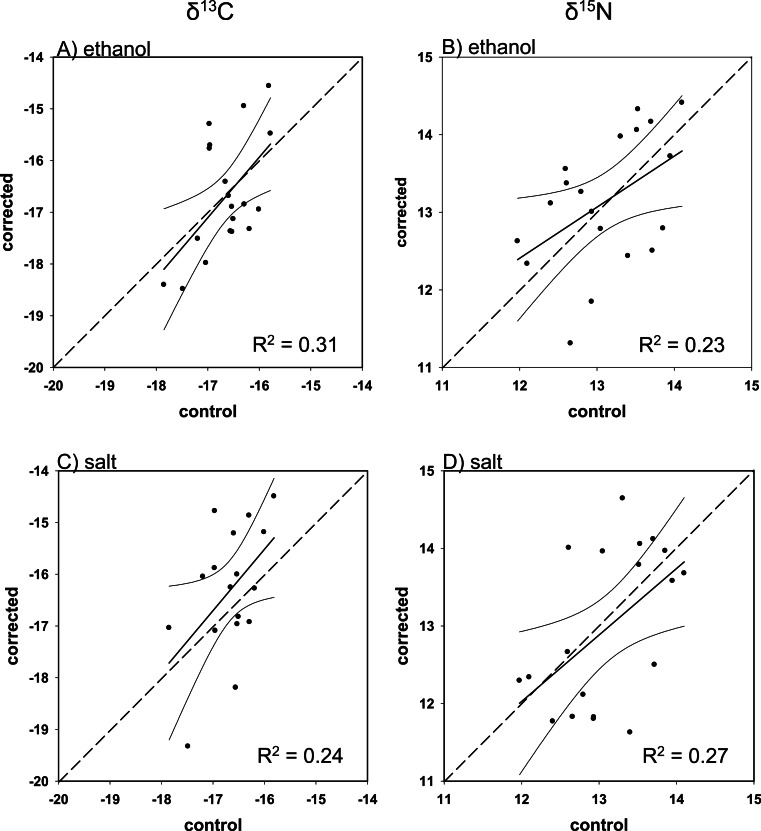
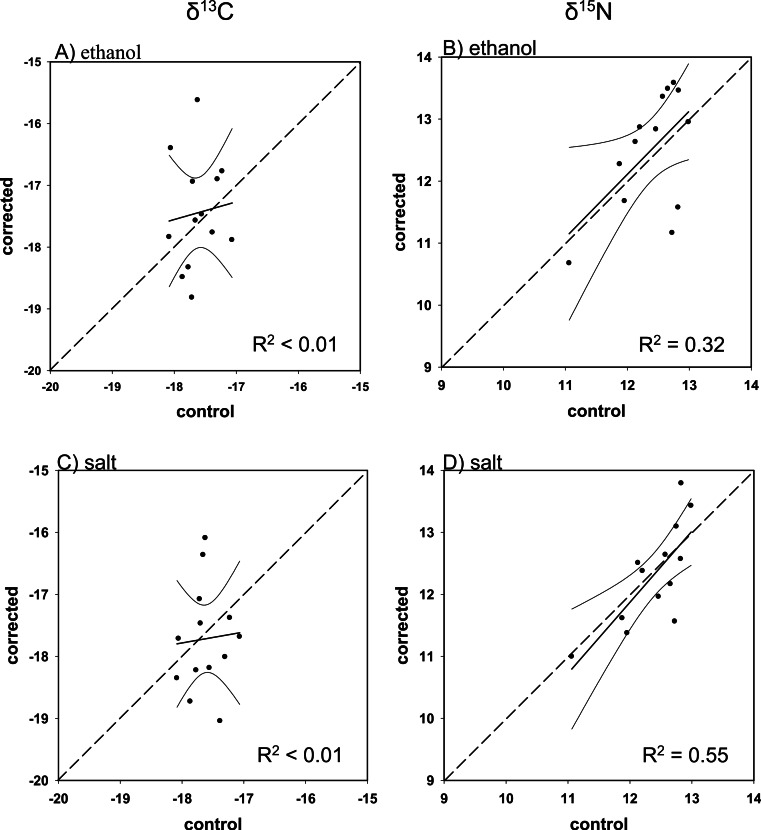
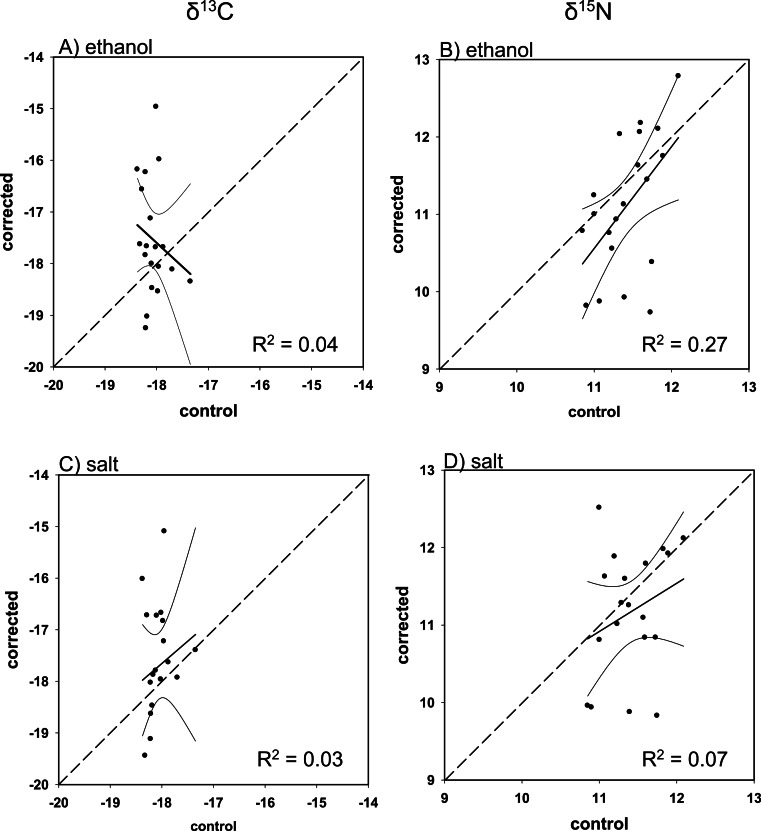
Research that uses stable isotope analysis often involves a delay between sample collection in the field and laboratory processing, therefore requiring preservation to prevent or reduce tissue degradation and associated isotopic compositions. Although there is a growing literature describing the effects of various preservation techniques, the results are often contextual, unpredictable and vary among taxa, suggesting the need to treat each species individually. We conducted a controlled experiment to test the effects of four preservation methods of muscle tissue from four species of upper trophic-level reef fish collected from the eastern Gulf of Mexico (Red Grouper Epinephelus morio, Gag Mycteroperca microlepis, Scamp Mycteroperca phenax, and Red Snapper Lutjanus campechanus). We used a paired design to measure the effects on isotopic values for carbon and nitrogen after storage using ice, 95% ethanol, and sodium chloride (table salt), against that in a liquid nitrogen control. Mean offsets for both δ (13)C and δ (15)N values from controls were lowest for samples preserved on ice, intermediate for those preserved with salt, and highest with ethanol. Within species, both salt and ethanol significantly enriched the δ (15)N values in nearly all comparisons. Ethanol also had strong effects on the δ (13)C values in all three groupers. Conversely, for samples preserved on ice, we did not detect a significant offset in either isotopic ratio for any of the focal species. Previous studies have addressed preservation-induced offsets in isotope values using a mass balance correction that accounts for changes in the isotope value to that in the C/N ratio. We tested the application of standard mass balance corrections for isotope values that were significantly affected by the preservation methods and found generally poor agreement between corrected and control values. The poor performance by the correction may have been due to preferential loss of lighter isotopes and corresponding low levels of mass loss with a substantial change in the isotope value of the sample. Regardless of mechanism, it was evident that accounting for offsets caused by different preservation methods was not possible using the standard correction. Caution is warranted when interpreting the results from specimens stored in either ethanol or salt, especially when using those from multiple preservation techniques. We suggest the use of ice as the preferred preservation technique for muscle tissue when conducting stable isotope analysis as it is widely available, inexpensive, easy to transport and did not impart a significant offset in measured isotopic values. Our results provide additional evidence that preservation effects on stable isotope analysis can be highly contextual, thus requiring their effects to be measured and understood for each species and isotopic ratio of interest before addressing research questions.
研究使用稳定同位素分析时,通常在野外采集样本和实验室处理之间存在延迟,因此需要保存样本以防止或减少组织降解和相关的同位素组成。尽管有越来越多的文献描述了各种保存技术的效果,但结果往往是上下文相关的、不可预测的,并且在不同的分类群中有所不同,这表明需要针对每个物种单独处理。我们进行了一项对照实验,以测试从墨西哥湾东部采集的四种上层营养级珊瑚礁鱼类(红石斑鱼 Epinephelus morio、大口石斑鱼 Mycteroperca microlepis、小鳍石斑鱼 Mycteroperca phenax 和红鲷鱼 Lutjanus campechanus)的肌肉组织的四种保存方法对碳和氮同位素值的影响。我们使用配对设计来测量在使用冰、95%乙醇和氯化钠(食盐)保存后,对控制组的同位素值的影响,与液氮对照组进行比较。在控制组中,δ(13)C 和 δ(15)N 值的平均偏移量最低的是保存在冰上的样本,其次是用盐保存的样本,最高的是用乙醇保存的样本。在同种内,盐和乙醇几乎在所有比较中都显著增加了 δ(15)N 值。乙醇还对三种石斑鱼的 δ(13)C 值产生了强烈影响。相反,对于保存在冰上的样本,我们没有检测到任何焦点物种的任何同位素比值有显著偏移。以前的研究使用质量平衡校正来解决保存引起的同位素值偏移问题,该校正考虑了同位素值与 C/N 比值的变化。我们测试了对受保存方法显著影响的同位素值应用标准质量平衡校正的效果,发现校正值与对照值之间的一致性通常较差。这种校正效果不佳可能是由于较轻同位素的优先损失以及样品同位素值发生实质性变化时的质量损失较低。无论机制如何,显然,使用标准校正无法解释不同保存方法引起的偏移。当解释保存在乙醇或盐中的样本的结果时,特别是当使用来自多种保存技术的样本时,应保持谨慎。当进行稳定同位素分析时,我们建议使用冰作为肌肉组织的首选保存技术,因为它广泛可用、价格低廉、易于运输,并且不会对测量的同位素值产生显著偏移。我们的结果提供了更多证据表明,稳定同位素分析的保存效果可能具有高度的上下文相关性,因此在解决研究问题之前,需要测量和了解每个物种和感兴趣的同位素比值的保存效果。