Powers Kimberly A, Miller William C
*Department of Epidemiology, Gillings School of Global Public Health, The University of North Carolina at Chapel Hill, Chapel Hill, NC; and †Department of Medicine, School of Medicine, The University of North Carolina at Chapel Hill, Chapel Hill, NC.
J Acquir Immune Defic Syndr. 2015 Jul 1;69(3):341-7. doi: 10.1097/QAI.0000000000000611.
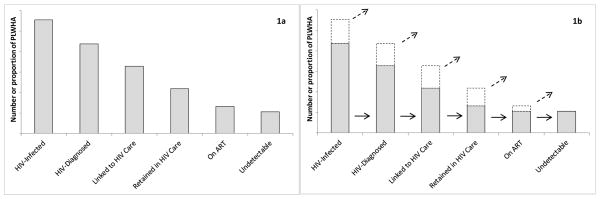
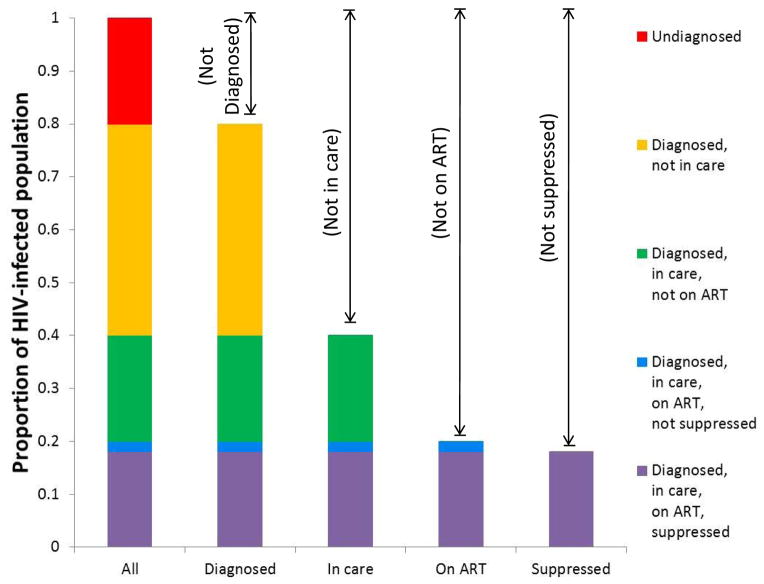
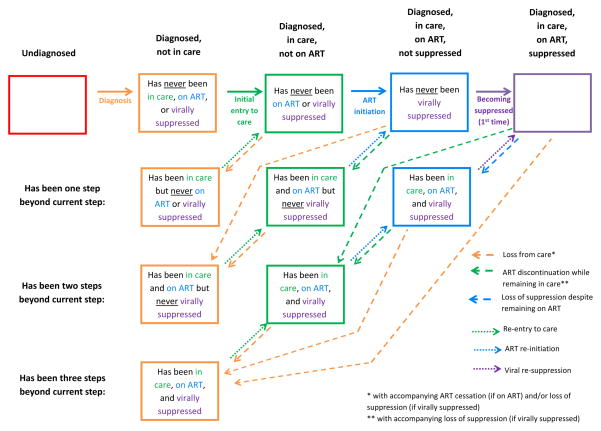
The HIV cascade--often referred to as "the HIV continuum"--provides a valuable framework for population-level representations of engagement with the HIV healthcare system. The importance and appeal of this framework are evidenced by a large body of scientific literature, as well as by the adoption of cascade-related indicators by medical and public health organizations worldwide. Despite its centrality in the fields of HIV treatment and prevention, however, the traditional cascade provides limited description of the processes affecting the numbers it represents. Representations that describe these processes and capture the dynamic nature of HIV-infected persons' pathways through the healthcare system are essential for monitoring and predicting intervention effects and epidemic trends. We propose here a complementary schema--termed the "HIV States and Transitions" framework--designed to maintain key strengths of the traditional cascade while addressing key limitations and more fully describing the dynamic aspects of HIV testing, care, and treatment at the population level.
艾滋病病毒感染进程——通常被称为“艾滋病病毒感染连续过程”——为从人群层面描述与艾滋病病毒医疗保健系统的接触情况提供了一个有价值的框架。大量科学文献以及全球医学和公共卫生组织采用与感染进程相关的指标,都证明了这一框架的重要性和吸引力。然而,尽管传统的感染进程在艾滋病病毒治疗和预防领域处于核心地位,但它对影响其所代表数字的过程描述有限。描述这些过程并把握艾滋病病毒感染者在医疗保健系统中动态路径的表述,对于监测和预测干预效果及流行趋势至关重要。我们在此提出一个补充模式——称为“艾滋病病毒状态与转变”框架——旨在保留传统感染进程的关键优势,同时解决关键局限性,并更全面地描述人群层面艾滋病病毒检测、护理和治疗的动态方面。