Amissah Lucy, Mohren Godefridus M J, Kyereh Boateng, Poorter Lourens
Council for Scientific and Industrial Research-Forestry Research Institute of Ghana, KNUST, Kumasi, Ghana; Forest Ecology and Forest Management Group, Wageningen University, Wageningen, The Netherlands.
Forest Ecology and Forest Management Group, Wageningen University, Wageningen, The Netherlands.
PLoS One. 2015 Apr 2;10(4):e0121004. doi: 10.1371/journal.pone.0121004. eCollection 2015.
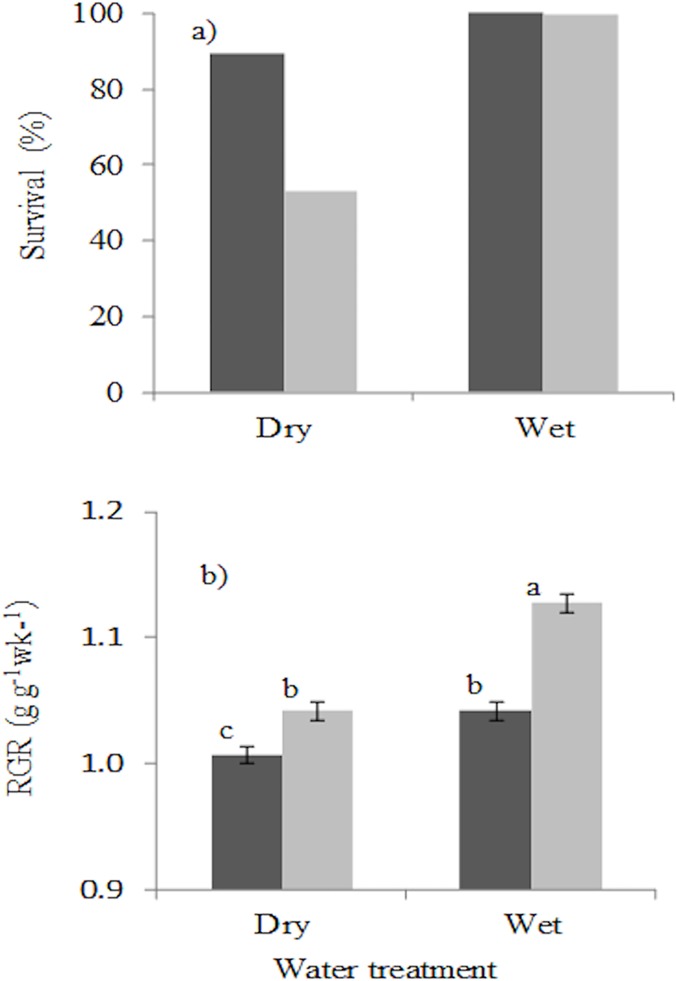
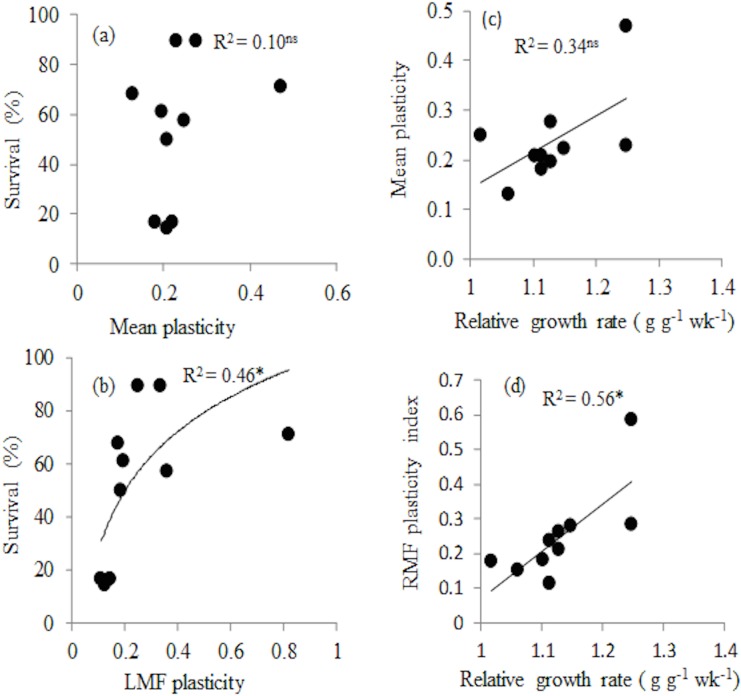
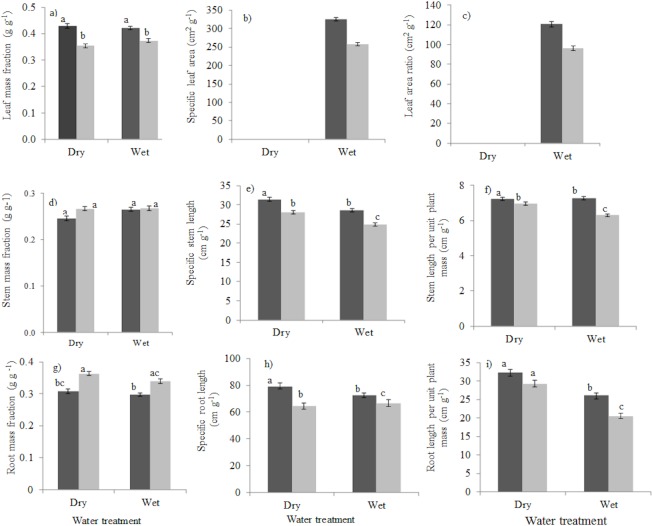
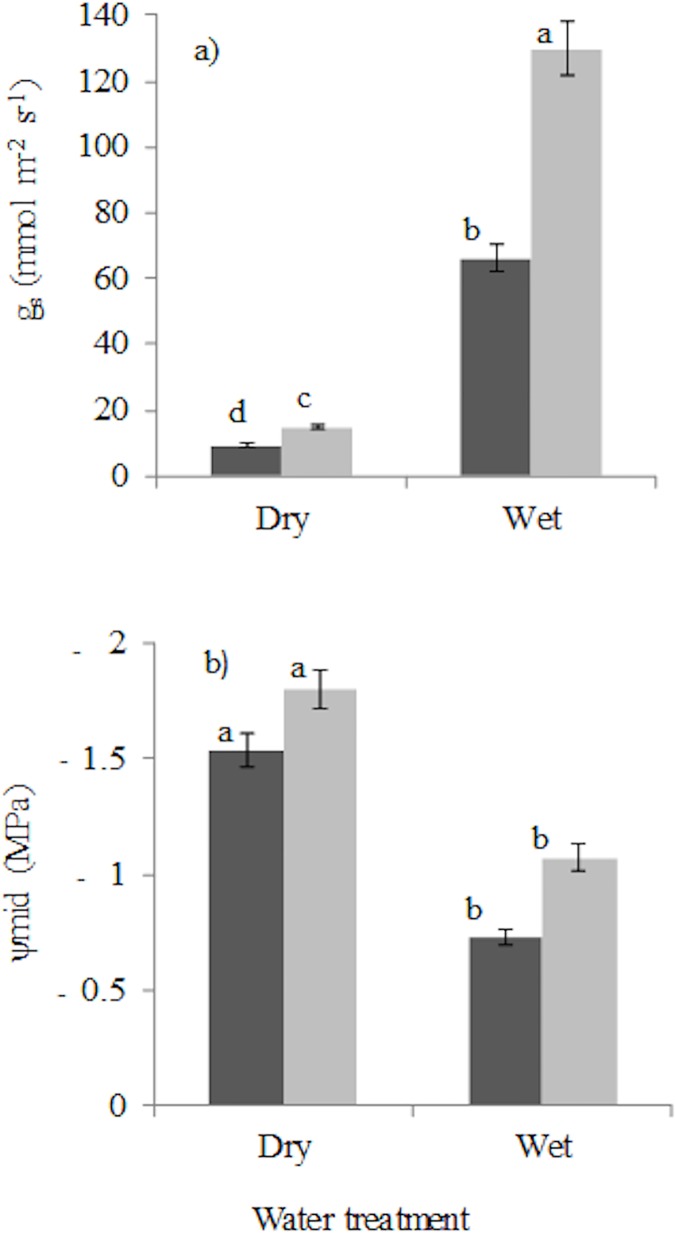
In tropical forests light and water availability are the most important factors for seedling growth and survival but an increasing frequency of drought may affect tree regeneration. One central question is whether drought and shade have interactive effects on seedling growth and survival. Here, we present results of a greenhouse experiment, in which seedlings of 10 Ghanaian tree species were exposed to combinations of strong seasonal drought (continuous watering versus withholding water for nine weeks) and shade (5% irradiance versus 20% irradiance). We evaluated the effects of drought and shade on seedling survival and growth and plasticity of 11 underlying traits related to biomass allocation, morphology and physiology. Seedling survival under dry conditions was higher in shade than in high light, thus providing support for the "facilitation hypothesis" that shade enhances plant performance through improved microclimatic conditions, and rejecting the trade-off hypothesis that drought should have stronger impact in shade because of reduced root investment. Shaded plants had low biomass fraction in roots, in line with the trade-off hypothesis, but they compensated for this with a higher specific root length (i.e., root length per unit root mass), resulting in a similar root length per plant mass and, hence, similar water uptake capacity as high-light plants. The majority (60%) of traits studied responded independently to drought and shade, indicating that within species shade- and drought tolerances are not in trade-off, but largely uncoupled. When individual species responses were analysed, then for most of the traits only one to three species showed significant interactive effects between drought and shade. The uncoupled response of most species to drought and shade should provide ample opportunity for niche differentiation and species coexistence under a range of water and light conditions. Overall our greenhouse results suggest that, in the absence of root competition shaded tropical forest tree seedlings may be able to survive prolonged drought.
在热带森林中,光照和水分供应是影响幼苗生长和存活的最重要因素,但干旱频率的增加可能会影响树木的更新。一个核心问题是干旱和遮荫是否对幼苗生长和存活具有交互作用。在此,我们展示了一项温室实验的结果,实验中10种加纳树种的幼苗被置于强烈季节性干旱(持续浇水与停水9周)和遮荫(5%光照强度与20%光照强度)的组合条件下。我们评估了干旱和遮荫对幼苗存活、生长以及与生物量分配、形态和生理相关的11个潜在性状可塑性的影响。在干旱条件下,遮荫环境中幼苗的存活率高于高光环境,从而为“促进假说”提供了支持,即遮荫通过改善微气候条件提高植物性能,同时反驳了权衡假说,即由于根系投资减少,干旱在遮荫环境中应该有更强的影响。与权衡假说一致,遮荫植物根系中的生物量比例较低,但它们通过更高的比根长(即单位根质量的根长)来弥补这一点,从而使每单位植物质量的根长与高光植物相似,进而具有相似的水分吸收能力。所研究的大多数(60%)性状对干旱和遮荫的反应是独立的,这表明在物种内部,耐荫性和耐旱性并非相互权衡,而是在很大程度上相互独立。当分析单个物种的反应时,对于大多数性状,只有一到三个物种在干旱和遮荫之间表现出显著的交互作用。大多数物种对干旱和遮荫的非耦合反应应该为在一系列水分和光照条件下的生态位分化和物种共存提供充足的机会。总体而言,我们的温室实验结果表明,在没有根系竞争的情况下,遮荫的热带森林树木幼苗可能能够在长期干旱中存活。