Lee Jung Ryeol, Youm Hye Won, Lee Hee Jun, Jee Byung Chul, Suh Chang Suk, Kim Seok Hyun
Department of Obstetrics and Gynecology, Seoul National University Bundang Hospital, Seongnam, Korea.; Department of Obstetrics and Gynecology, Seoul National University College of Medicine, Seoul, Korea.
Department of Obstetrics and Gynecology, Seoul National University College of Medicine, Seoul, Korea.
Yonsei Med J. 2015 May;56(3):778-84. doi: 10.3349/ymj.2015.56.3.778.
To investigate the effect of antifreeze protein (AFP) supplementation on ovarian vitrification and transplantation.
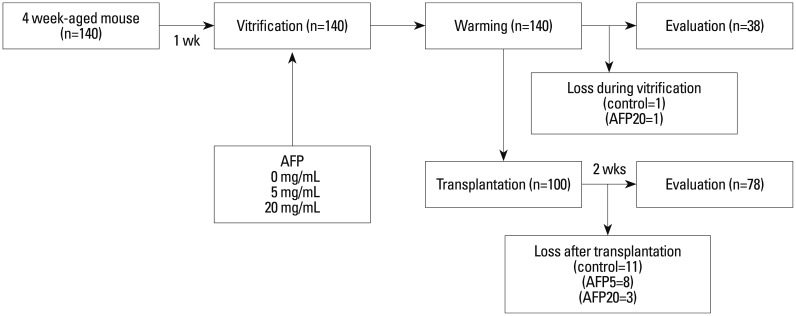
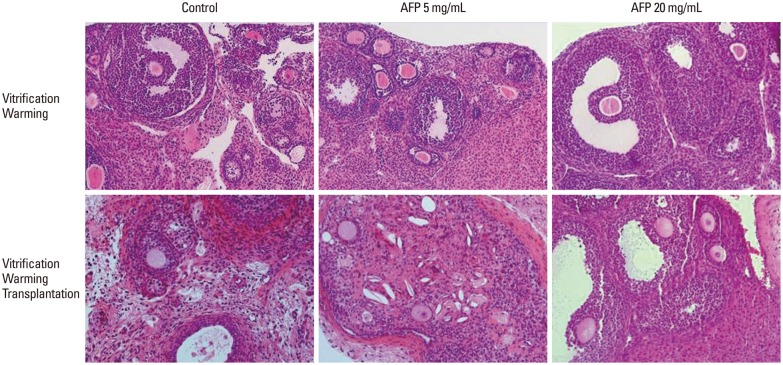
In this experimental study, we researched a total of 182 ovaries from 4-week-old ICR mice. The equilibration solution included 20% ethylene glycol (EG), and the vitrification solution included 40% EG, 18% Ficoll, and 0.3 M sucrose. Intact ovaries were first suspended in 1 mL of equilibration solution for 10 min, and then mixed with 0.5 mL of vitrification solution for 5 min. Ovaries were randomly assigned to 3 groups and 0, 5, or 20 mg/mL of type III AFP was added into the vitrification solution (control, AFP5, and AFP20 groups, respectively). The vitrified ovaries were evaluated after warming and 2 weeks after autotransplantation. The main outcome measurements are follicular morphology and apoptosis assessed by histology and the TUNEL assay.
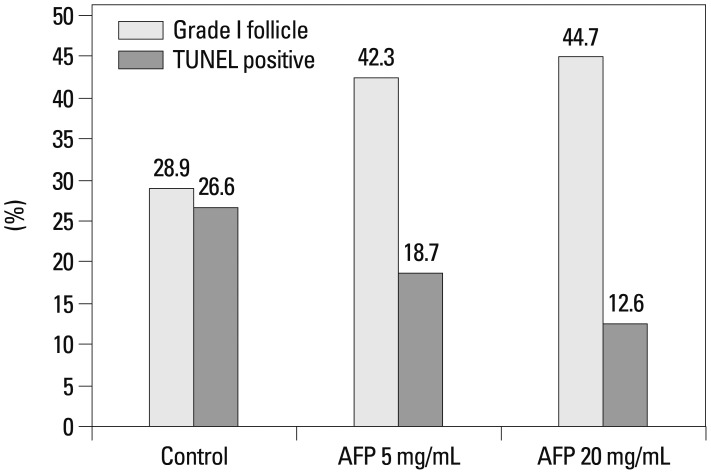
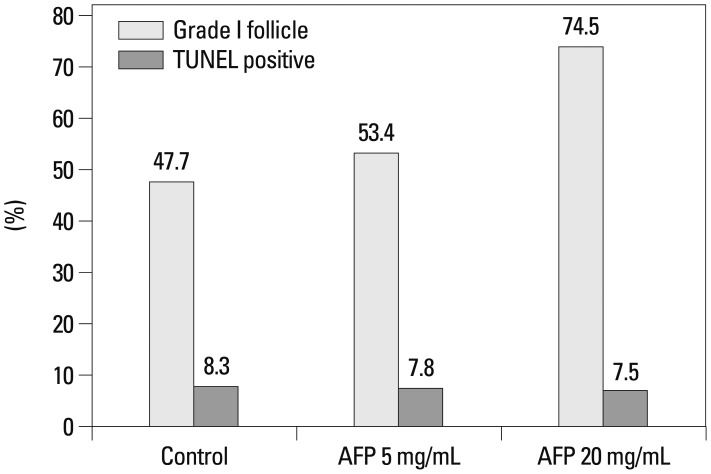
A significantly higher intact follicle ratio was shown in the AFP treated groups (control, 28.9%; AFP5, 42.3%; and AFP20, 44.7%). The rate of apoptotic follicles was significantly lower in the AFP treated groups (control, 26.6%; AFP5, 18.7%; and AFP20, 12.6%). After transplantation of the vitrified-warmed ovaries, a significantly higher intact follicle ratio was shown in the AFP20 group. The rate of apoptotic follicles was similar among the groups.
The results of the present study suggest that supplementing AFP in the vitrification solution has beneficial effects on the survival of ovarian tissue during cryopreservation and transplantation.
探讨添加抗冻蛋白(AFP)对卵巢玻璃化冷冻及移植的影响。
在本实验研究中,我们共研究了4周龄ICR小鼠的182个卵巢。平衡液包含20%乙二醇(EG),玻璃化液包含40%EG、18%聚蔗糖和0.3M蔗糖。完整的卵巢首先悬浮于1mL平衡液中10分钟,然后与0.5mL玻璃化液混合5分钟。卵巢被随机分为3组,分别向玻璃化液中添加0、5或20mg/mL的III型AFP(分别为对照组、AFP5组和AFP20组)。玻璃化冷冻的卵巢在复温后及自体移植2周后进行评估。主要观察指标为通过组织学和TUNEL检测评估的卵泡形态和凋亡情况。
AFP处理组的完整卵泡比率显著更高(对照组为28.9%;AFP5组为42.3%;AFP20组为44.7%)。AFP处理组的凋亡卵泡率显著更低(对照组为26.6%;AFP5组为18.7%;AFP20组为12.6%)。玻璃化冷冻-复温后的卵巢移植后,AFP20组的完整卵泡比率显著更高。各组间凋亡卵泡率相似。
本研究结果表明,在玻璃化液中添加AFP对卵巢组织在冷冻保存和移植过程中的存活具有有益作用。