Leikam C, Hufnagel A L, Otto C, Murphy D J, Mühling B, Kneitz S, Nanda I, Schmid M, Wagner T U, Haferkamp S, Bröcker E-B, Schartl M, Meierjohann S
Department of Physiological Chemistry I, University of Wurzburg, Biocenter, Am Hubland, Wurzburg, Germany.
Experimental Surgery, Experimental Transplantation Immunology, Clinic of General, Visceral, Vascular and Pediatric Surgery (Surgical Clinic I), University of Wurzburg Hospital, Wurzburg, Germany.
Cell Death Dis. 2015 Apr 2;6(4):e1711. doi: 10.1038/cddis.2015.71.
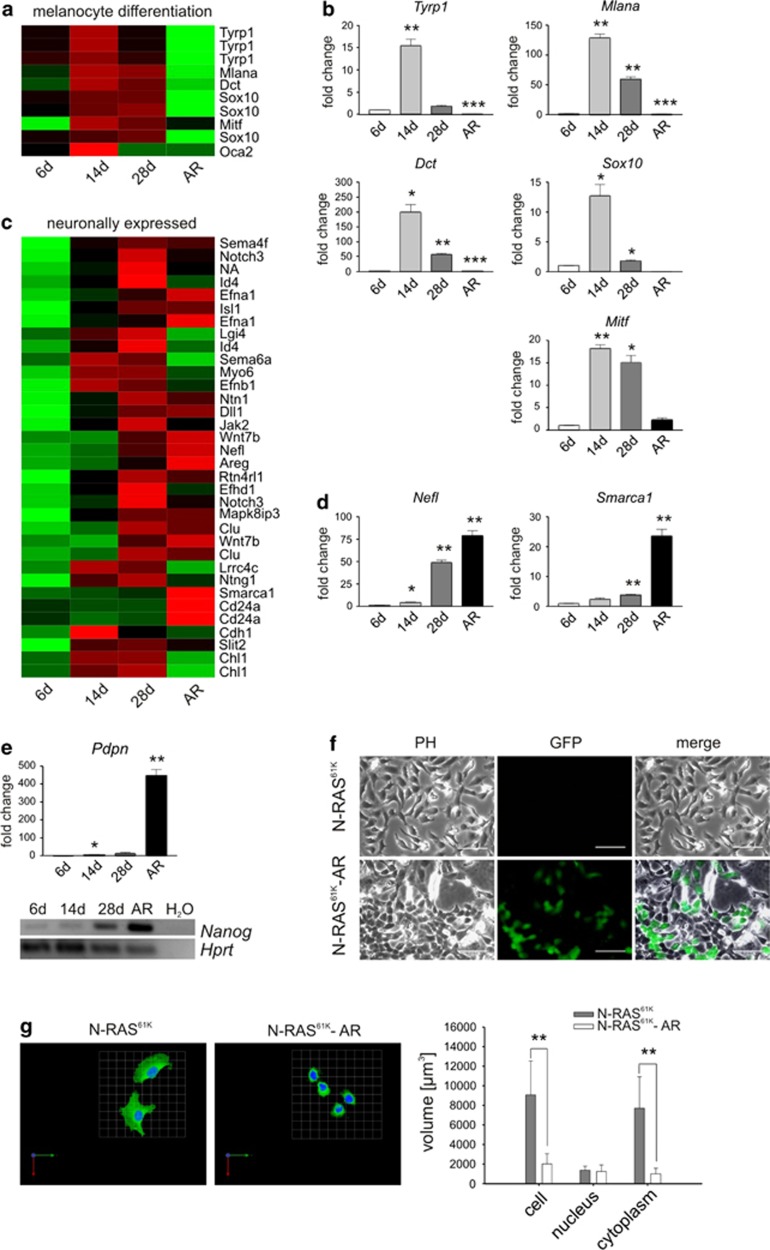
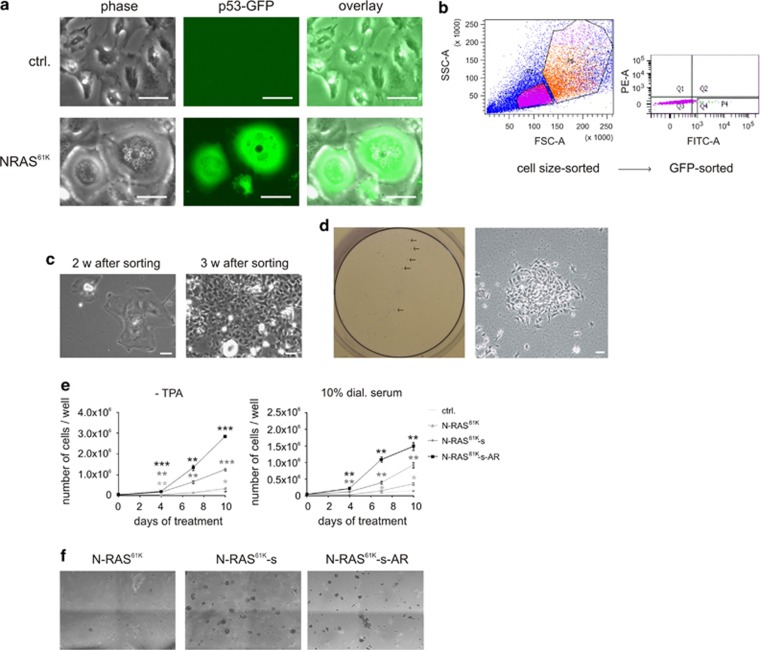
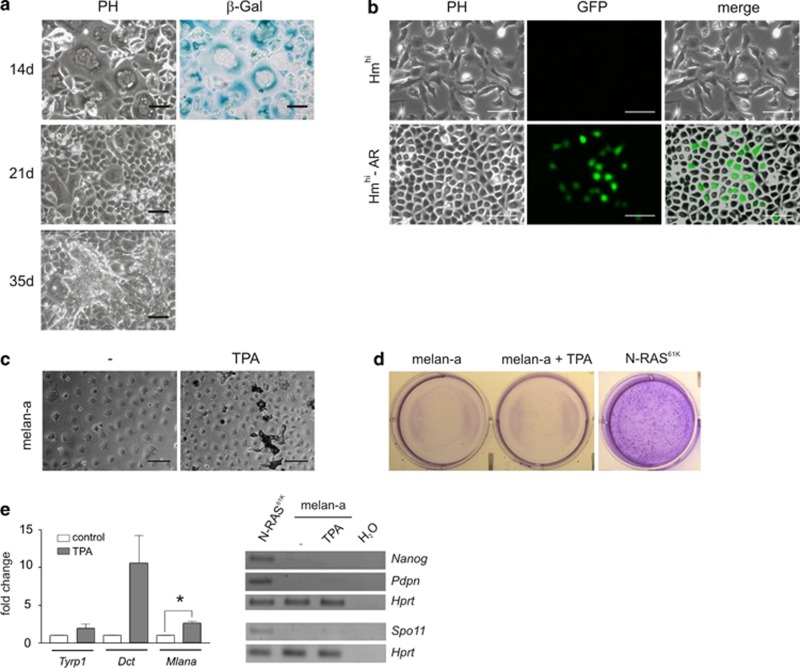
Oncogenic signaling in melanocytes results in oncogene-induced senescence (OIS), a stable cell-cycle arrest frequently characterized by a bi- or multinuclear phenotype that is considered as a barrier to cancer progression. However, the long-sustained conviction that senescence is a truly irreversible process has recently been challenged. Still, it is not known whether cells driven into OIS can progress to cancer and thereby pose a potential threat. Here, we show that prolonged expression of the melanoma oncogene N-RAS(61K) in pigment cells overcomes OIS by triggering the emergence of tumor-initiating mononucleated stem-like cells from senescent cells. This progeny is dedifferentiated, highly proliferative, anoikis-resistant and induces fast growing, metastatic tumors. Our data describe that differentiated cells, which are driven into senescence by an oncogene, use this senescence state as trigger for tumor transformation, giving rise to highly aggressive tumor-initiating cells. These observations provide the first experimental in vitro evidence for the evasion of OIS on the cellular level and ensuing transformation.
黑素细胞中的致癌信号传导会导致癌基因诱导的衰老(OIS),这是一种稳定的细胞周期停滞,其特征通常是双核或多核表型,被认为是癌症进展的障碍。然而,长期以来认为衰老确实是一个不可逆过程的信念最近受到了挑战。不过,尚不清楚被诱导进入OIS的细胞是否会发展为癌症,从而构成潜在威胁。在这里,我们表明,色素细胞中黑色素瘤致癌基因N-RAS(61K)的长期表达通过触发衰老细胞中肿瘤起始单核干细胞样细胞的出现来克服OIS。这种子代细胞去分化,具有高度增殖性,抗失巢凋亡,并能诱导快速生长的转移性肿瘤。我们的数据表明,被致癌基因驱动进入衰老的分化细胞利用这种衰老状态作为肿瘤转化的触发因素,产生高度侵袭性的肿瘤起始细胞。这些观察结果为细胞水平上逃避OIS及随后的转化提供了首个体外实验证据。