Nygren Jim, Shad Nadeem, Kvarnheden Anders, Westerbergh Anna
Department of Plant Biology, Uppsala BioCenter, Linnean Centre for Plant Biology in Uppsala, Swedish University of Agricultural Sciences, Uppsala, Sweden.
PLoS One. 2015 Apr 2;10(4):e0121580. doi: 10.1371/journal.pone.0121580. eCollection 2015.
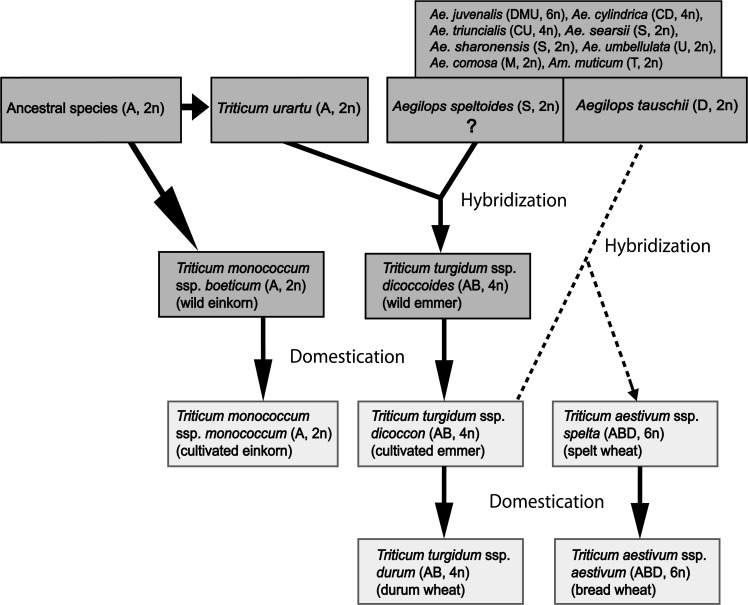
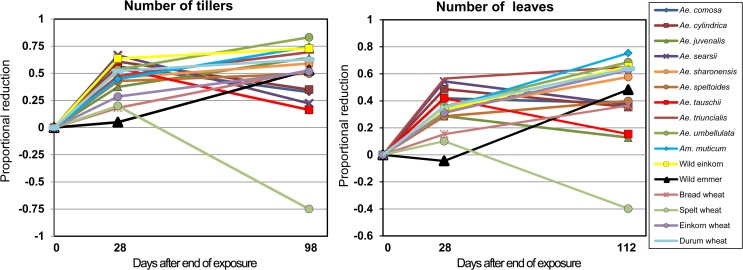
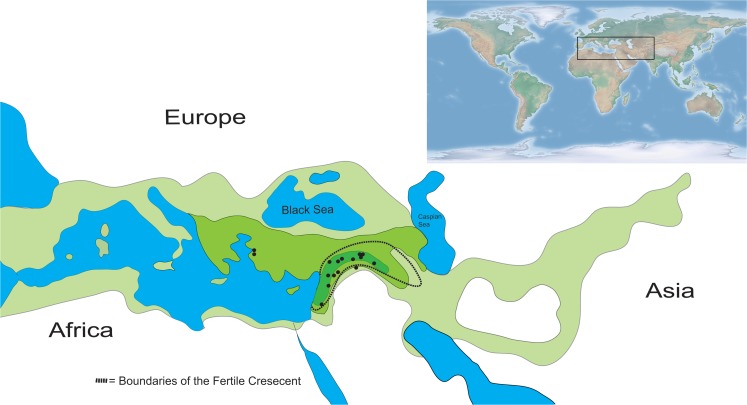
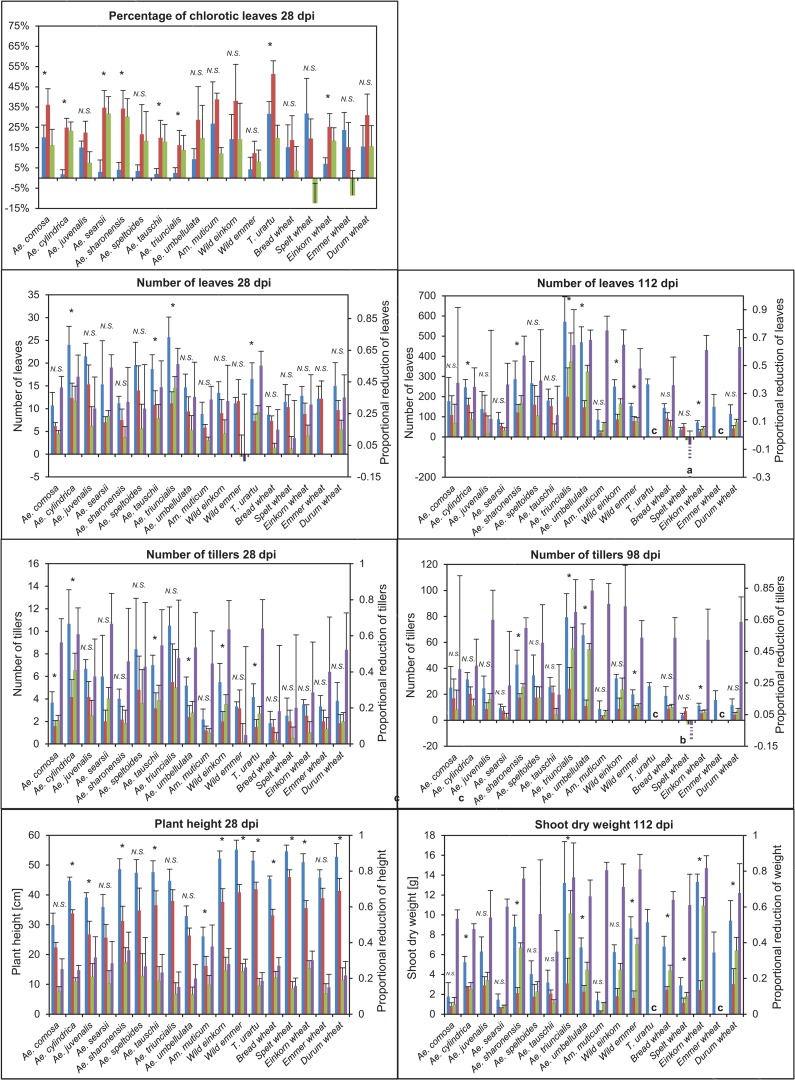
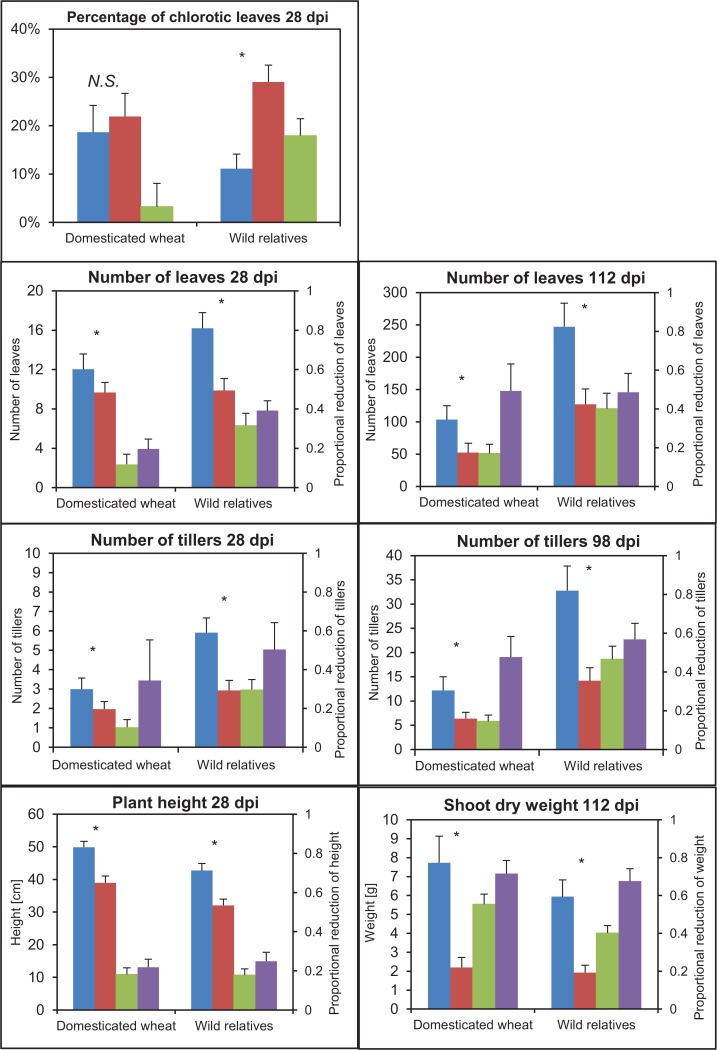
We investigated the variation in plant response in host-pathogen interactions between wild (Aegilops spp., Triticum spp.) and domesticated wheat (Triticum spp.) and Wheat dwarf virus (WDV). The distribution of WDV and its wild host species overlaps in Western Asia in the Fertile Crescent, suggesting a coevolutionary relationship. Bread wheat originates from a natural hybridization between wild emmer wheat (carrying the A and B genomes) and the wild D genome donor Aegilops tauschii, followed by polyploidization and domestication. We studied whether the strong selection during these evolutionary processes, leading to genetic bottlenecks, may have resulted in a loss of resistance in domesticated wheat. In addition, we investigated whether putative fluctuations in intensity of selection imposed on the host-pathogen interactions have resulted in a variation in susceptibility to WDV. To test our hypotheses we evaluated eighteen wild and domesticated wheat taxa, directly or indirectly involved in wheat evolution, for traits associated with WDV disease such as leaf chlorosis, different growth traits and WDV content. The plants were exposed to viruliferous leafhoppers (Psammotettix alienus) in a greenhouse trial and evaluated at two time points. We found three different plant response patterns: i) continuous reduction in growth over time, ii) weak response at an early stage of plant development but a much stronger response at a later stage, and iii) remission of symptoms over time. Variation in susceptibility may be explained by differences in the intensity of natural selection, shaping the coevolutionary interaction between WDV and the wild relatives. However, genetic bottlenecks during wheat evolution have not had a strong impact on WDV resistance. Further, this study indicates that the variation in susceptibility may be associated with the genome type and that the ancestor Ae. tauschii may be useful as genetic resource for the improvement of WDV resistance in wheat.
我们研究了野生(节节麦属、小麦属)与驯化小麦(小麦属)以及小麦矮缩病毒(WDV)之间宿主 - 病原体相互作用中植物反应的差异。WDV及其野生宿主物种在西亚新月沃地分布重叠,表明存在共同进化关系。面包小麦起源于野生二粒小麦(携带A和B基因组)与野生D基因组供体节节麦的自然杂交,随后经过多倍体化和驯化。我们研究了在这些进化过程中导致遗传瓶颈的强烈选择是否可能导致驯化小麦抗性丧失。此外,我们调查了宿主 - 病原体相互作用中假定的选择强度波动是否导致对WDV易感性的差异。为了验证我们的假设,我们评估了直接或间接参与小麦进化的18个野生和驯化小麦分类群与WDV病害相关的性状,如叶片黄化、不同生长性状和WDV含量。在温室试验中让这些植物接触带毒叶蝉(Psammotettix alienus),并在两个时间点进行评估。我们发现了三种不同的植物反应模式:i)随时间生长持续减少;ii)植物发育早期反应较弱,但后期反应强烈得多;iii)症状随时间缓解。易感性的差异可能由自然选择强度的差异来解释,自然选择塑造了WDV与野生近缘种之间的共同进化相互作用。然而,小麦进化过程中的遗传瓶颈对WDV抗性没有强烈影响。此外,这项研究表明易感性的差异可能与基因组类型有关,并且祖先节节麦可能作为改良小麦WDV抗性的遗传资源。