Unités Mixtes de Recherche, Ecologie et Biologie des Interactions, Université of Poitiers/Centre National de la Recherche Scientifique Poitiers, France.
Front Plant Sci. 2013 Jul 24;4:272. doi: 10.3389/fpls.2013.00272. eCollection 2013.
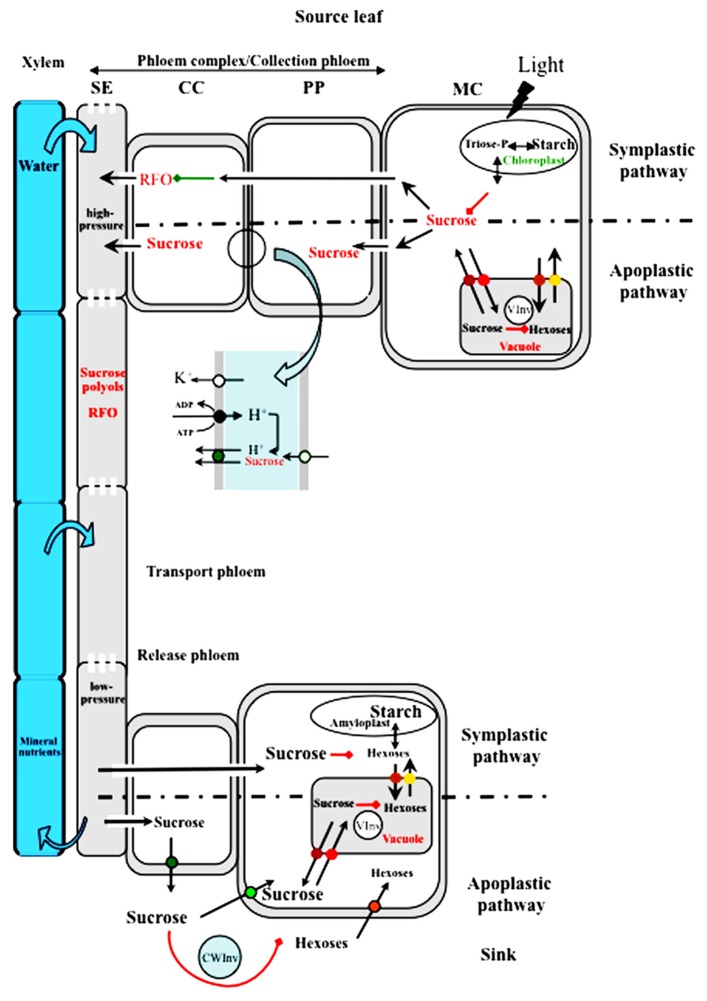
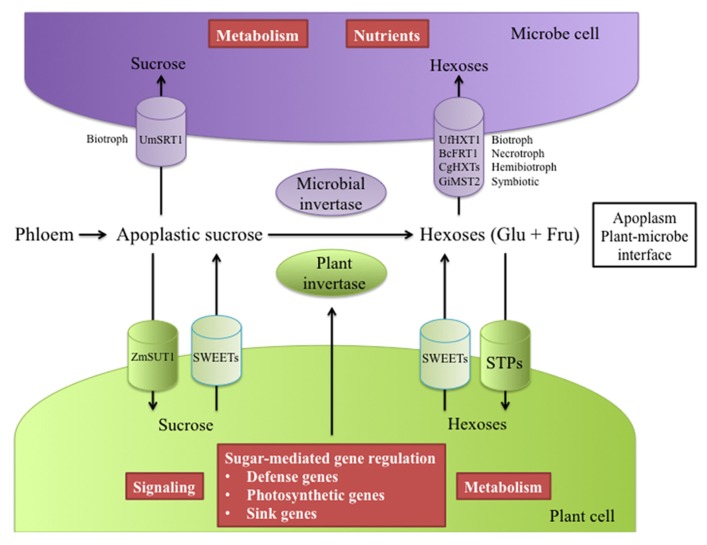
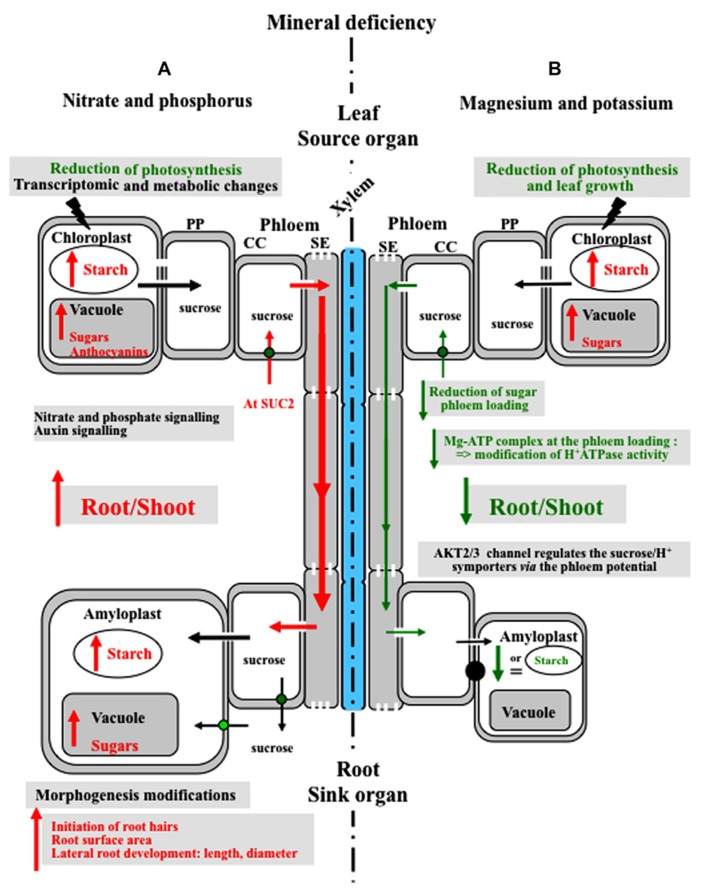
Source-to-sink transport of sugar is one of the major determinants of plant growth and relies on the efficient and controlled distribution of sucrose (and some other sugars such as raffinose and polyols) across plant organs through the phloem. However, sugar transport through the phloem can be affected by many environmental factors that alter source/sink relationships. In this paper, we summarize current knowledge about the phloem transport mechanisms and review the effects of several abiotic (water and salt stress, mineral deficiency, CO2, light, temperature, air, and soil pollutants) and biotic (mutualistic and pathogenic microbes, viruses, aphids, and parasitic plants) factors. Concerning abiotic constraints, alteration of the distribution of sugar among sinks is often reported, with some sinks as roots favored in case of mineral deficiency. Many of these constraints impair the transport function of the phloem but the exact mechanisms are far from being completely known. Phloem integrity can be disrupted (e.g., by callose deposition) and under certain conditions, phloem transport is affected, earlier than photosynthesis. Photosynthesis inhibition could result from the increase in sugar concentration due to phloem transport decrease. Biotic interactions (aphids, fungi, viruses…) also affect crop plant productivity. Recent breakthroughs have identified some of the sugar transporters involved in these interactions on the host and pathogen sides. The different data are discussed in relation to the phloem transport pathways. When possible, the link with current knowledge on the pathways at the molecular level will be highlighted.
糖的源到库运输是植物生长的主要决定因素之一,依赖于蔗糖(和一些其他糖,如棉子糖和多元醇)通过韧皮部在植物器官间的有效和受控分配。然而,糖通过韧皮部的运输会受到许多改变源库关系的环境因素的影响。在本文中,我们总结了目前关于韧皮部运输机制的知识,并回顾了几种非生物(水和盐胁迫、矿物质缺乏、CO2、光照、温度、空气和土壤污染物)和生物(互利和致病微生物、病毒、蚜虫和寄生植物)因素的影响。关于非生物限制,经常报道糖在库之间的分布发生改变,在矿物质缺乏的情况下,一些库如根被优先利用。这些限制中的许多因素会损害韧皮部的运输功能,但确切的机制还远未完全清楚。韧皮部的完整性可能会被破坏(例如,通过胼胝质沉积),并且在某些条件下,韧皮部运输会比光合作用更早受到影响。光合作用的抑制可能是由于韧皮部运输减少导致糖浓度增加所致。生物相互作用(蚜虫、真菌、病毒等)也会影响作物的生产力。最近的突破确定了一些与宿主和病原体侧这些相互作用相关的糖转运蛋白。这些不同的数据将根据韧皮部运输途径进行讨论。在可能的情况下,将强调与分子水平上途径的现有知识的联系。