Rosenberg Steven A, Restifo Nicholas P
Surgery Branch, National Cancer Institute, Center for Cancer Research, National Institutes of Health, 9000 Rockville Pike, CRC Building, Room 3W-3940, Bethesda, MD 20892, USA.
Science. 2015 Apr 3;348(6230):62-8. doi: 10.1126/science.aaa4967.
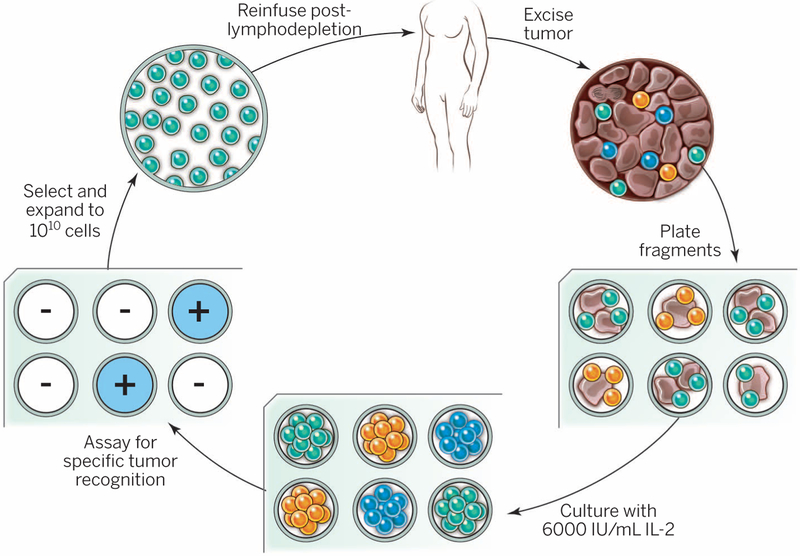
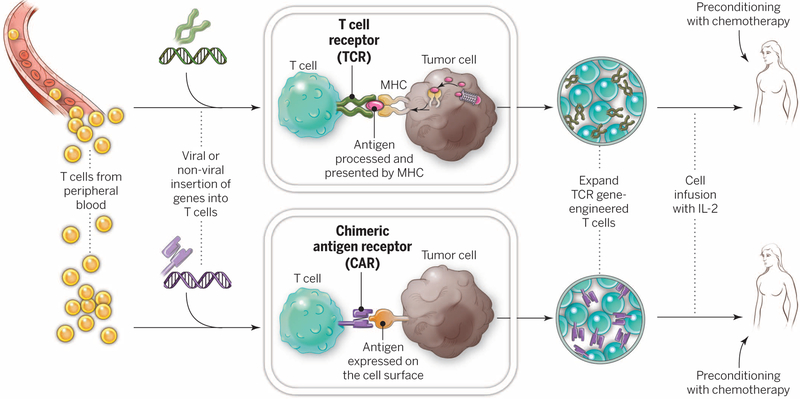
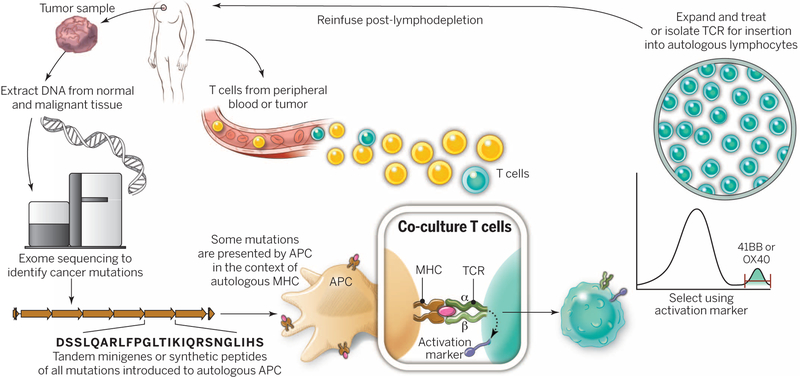
Adoptive cell therapy (ACT) is a highly personalized cancer therapy that involves administration to the cancer-bearing host of immune cells with direct anticancer activity. ACT using naturally occurring tumor-reactive lymphocytes has mediated durable, complete regressions in patients with melanoma, probably by targeting somatic mutations exclusive to each cancer. These results have expanded the reach of ACT to the treatment of common epithelial cancers. In addition, the ability to genetically engineer lymphocytes to express conventional T cell receptors or chimeric antigen receptors has further extended the successful application of ACT for cancer treatment.
过继性细胞疗法(ACT)是一种高度个性化的癌症治疗方法,涉及向荷瘤宿主输注具有直接抗癌活性的免疫细胞。使用天然存在的肿瘤反应性淋巴细胞的ACT已使黑色素瘤患者实现持久、完全缓解,这可能是通过靶向每种癌症特有的体细胞突变来实现的。这些结果将ACT的应用范围扩展到了常见上皮癌的治疗。此外,通过基因工程使淋巴细胞表达传统T细胞受体或嵌合抗原受体的能力进一步扩大了ACT在癌症治疗中的成功应用。