Cichoń Natalia, Bijak Michał, Miller Elżbieta, Niwald Marta, Saluk Joanna
Department of General Biochemistry, Faculty of Biology and Environmental Protection, University of Lodz, Pomorska 141/143, 90-236 Lodz, Poland.
Department of Physical Medicine, Medical University of Lodz, Plac Hallera 1, 90-647 Lodz, Poland ; Neurorehabilitation Ward, III General Hospital in Lodz, Milionowa 14, 93-113 Lodz, Poland.
Oxid Med Cell Longev. 2015;2015:408745. doi: 10.1155/2015/408745. Epub 2015 Mar 8.
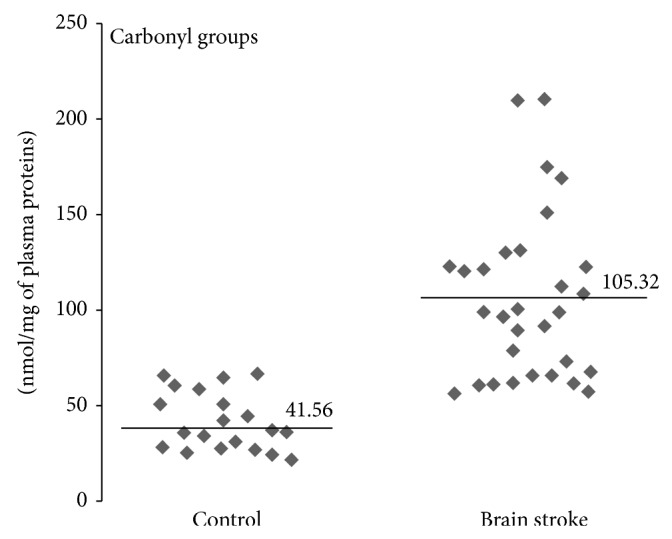
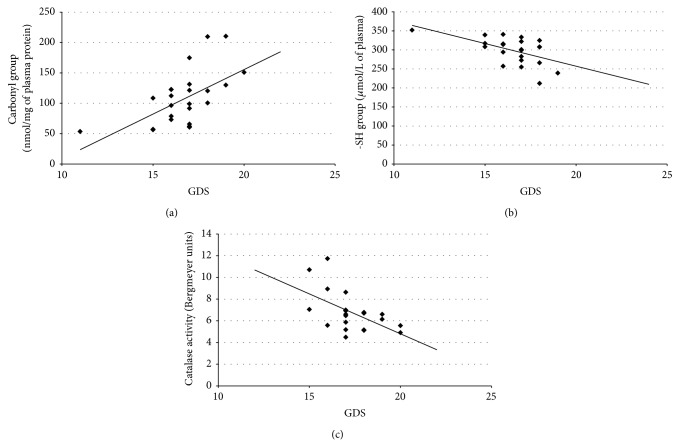
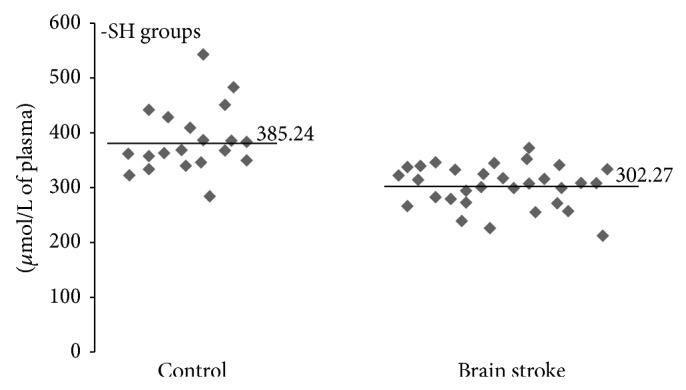
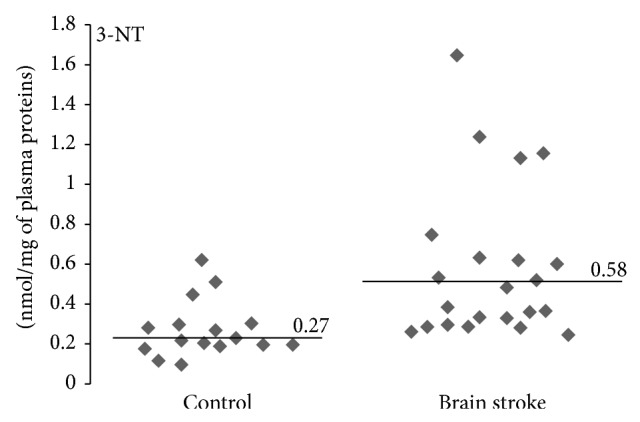
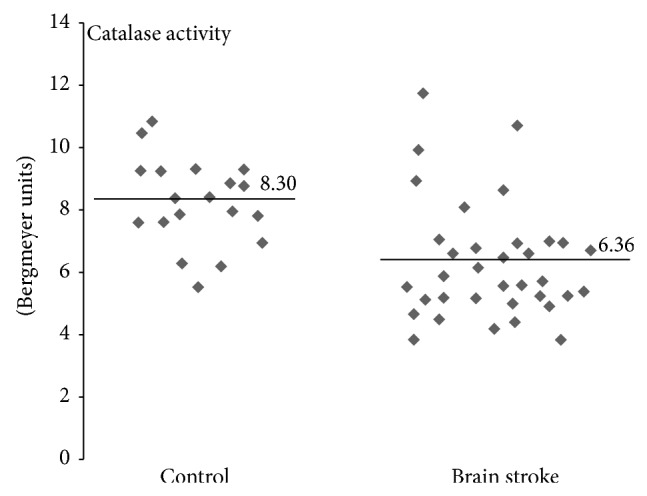
Poststroke depression, the second most serious psychosomatic complication after brain stroke, leads to delay of the rehabilitation process and is associated with an increased disability and cognitive impairment along with increase in term mortality. Research into the biochemical changes in depression is still insufficiently described. The aim of our study was therefore to evaluate the possible association between plasma protein oxidative/nitrative damages and the development of poststroke depression. We evaluated oxidative/nitrative modifications of specific proteins by measurement of 3-nitrotyrosine and carbonyl groups levels using ELISA test. Additionally, we checked differences in proteins thiol groups by spectrophotometric assay based on reaction between DTNB and thiols. We also evaluated catalase activity in erythrocytes measured as ability to decompose H2O2. Correlation analysis was performed using Spearman's rank. We observed significant (P < 0.001) differences in all oxidative/nitrative stress parameters in brain stroke patients compared to healthy group. Our research shows that oxidative damage of proteins is correlated with the degree of poststroke depression, while nitrative changes do not show any relationship. We demonstrate a positive correlation between the concentration of carbonyl groups and the Geriatric Depression Scale and a negative correlation between the degree of depression and the concentration of -SH groups or catalase activity.
中风后抑郁是脑卒中后第二严重的身心并发症,会导致康复进程延迟,并与残疾增加、认知障碍以及远期死亡率上升相关。关于抑郁症生化变化的研究仍描述不足。因此,我们研究的目的是评估血浆蛋白氧化/硝化损伤与中风后抑郁发生之间的可能关联。我们通过酶联免疫吸附测定法测量3-硝基酪氨酸和羰基水平,评估特定蛋白质的氧化/硝化修饰。此外,我们基于5,5'-二硫代双(2-硝基苯甲酸)(DTNB)与巯基之间的反应,通过分光光度法检测蛋白质巯基的差异。我们还评估了红细胞中过氧化氢酶的活性,以其分解过氧化氢的能力来衡量。使用斯皮尔曼等级进行相关性分析。与健康组相比,我们观察到脑卒中患者所有氧化/硝化应激参数存在显著差异(P < 0.001)。我们的研究表明,蛋白质的氧化损伤与中风后抑郁程度相关,而硝化变化则无任何关联。我们证明羰基浓度与老年抑郁量表呈正相关,抑郁程度与巯基浓度或过氧化氢酶活性呈负相关。